
Hosting a clothing swap is a creative way to promote sustainable fashion and build community. Start by creating a welcoming space with organized sections for different sizes and styles, ensuring all items are clean and damage-free. Encourage guests to bring gently worn, seasonally appropriate pieces that reflect current trends. Set clear rules and provide mirrors or styling tips for trying on items. Keep exploring to discover how you can make your swap fun, eco-friendly, and impactful for everyone involved.
Key Takeaways
- Create a welcoming and organized space with labeled sections to facilitate easy browsing and sharing of pre-loved clothing items.
- Promote sustainable fashion by encouraging participants to bring gently worn, seasonally appropriate, and damage-free clothing.
- Set clear ground rules for clothing quality, cleanliness, and style to ensure a positive experience for all attendees.
- Foster community engagement by sharing stories, connecting neighbors, and turning the wardrobe exchange into a social event.
- Highlight the environmental benefits of swapping, emphasizing waste reduction, eco-friendliness, and supporting mindful consumption.

A clothing swap is a fun and eco-friendly way to refresh your wardrobe without spending a dime. When you organize a clothing swap within your community, you’re not only giving your wardrobe a needed update, but you’re also championing sustainable fashion. Instead of constantly buying new pieces, you and your neighbors can exchange clothes you no longer wear, reducing waste and making a positive environmental impact. It’s a smart way to breathe new life into your closet while promoting mindful consumption.
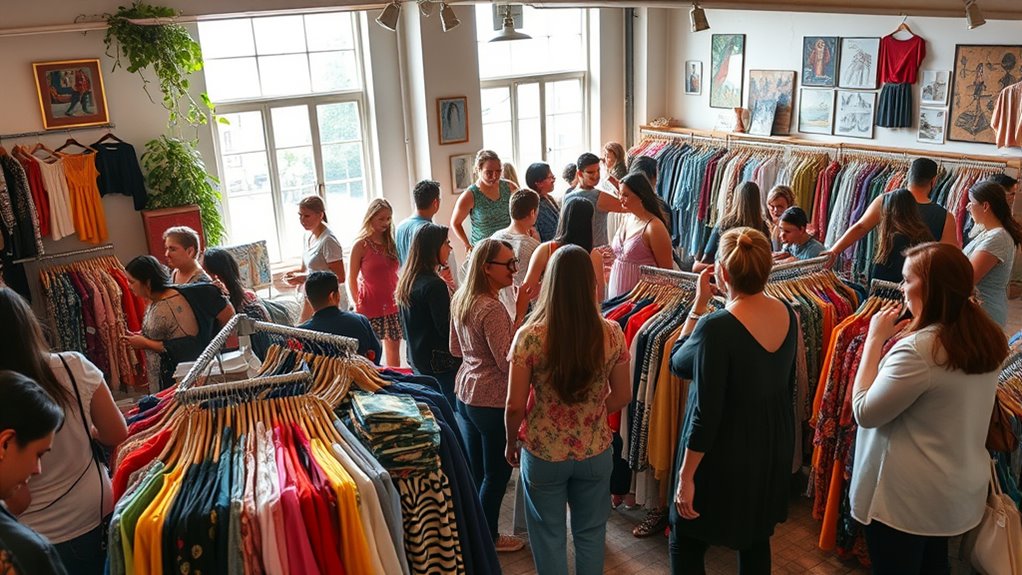
Hosting a clothing swap encourages a sense of community and shared responsibility. Everyone brings their gently used clothing, accessories, and even shoes, creating a diverse selection for all participants. As you set up the event, be sure to create a welcoming space where people feel comfortable browsing and trying on items. Label sections by size or type to make the process smooth and enjoyable. This not only keeps things organized but also helps everyone find what they’re looking for quickly, making the entire experience more satisfying. Additionally, ensuring proper organization can help the event run more efficiently and encourage more participation.
Create a welcoming space with organized sections to encourage browsing and sharing among participants.
A key benefit of a clothing swap is that it allows you to explore sustainable fashion firsthand. Instead of supporting fast fashion brands that often produce cheaply made, disposable clothing, you’re opting for pre-loved items that have already stood the test of time. It’s a conscious decision that promotes a wardrobe refresh without contributing to the environmental harm caused by mass production. Plus, you might discover unique pieces that you wouldn’t have bought otherwise, adding personality to your wardrobe and reducing the urge to constantly chase new trends.
To ensure the event runs smoothly, communicate clearly about what types of clothing are acceptable—clean, gently worn, and free of damage. Encourage participants to bring items that fit current styles and seasons, which increases the likelihood of finding something appealing. You can also set some ground rules, like no stained or overly worn clothing, to keep the selection quality high. Consider providing mirrors, hangers, and some basic styling tips to boost confidence and help everyone find their perfect match.
Most importantly, hosting a clothing swap is about creating an experience that’s both sustainable and social. It’s a chance to connect with neighbors, share stories behind your favorite pieces, and support a greener way of dressing. Every item exchanged is a step toward a more mindful wardrobe, one that values quality over quantity. By turning your closet into a community hub, you’re actively participating in a movement that makes fashion more sustainable, affordable, and fun for everyone involved.
Frequently Asked Questions
How Do I Organize a Clothing Swap Event?
To organize a clothing swap event, start by selecting a date and venue, then promote it through social media and community boards. Collect clothing donations ahead of time, focusing on quality and variety. During the event, set up sections for different clothing types, and encourage guests to bring a clothing selection to swap. Make it fun and eco-friendly, ensuring everyone leaves with something new and sustainable.
What Should I Do With Leftover Clothing?
You should upcycle ideas like transforming leftover clothing into reusable bags, patchwork quilts, or stylish accessories. Consider donation options such as local shelters, charities, or community centers that could benefit from your excess items. Repurposing, recycling, and donating keep your unused clothes out of landfills, support others, and extend their life. By taking these steps, you turn leftovers into valuable resources and help create a more sustainable, compassionate community.
How Many Participants Are Ideal for a Swap?
For a successful swap, aim for about 10 to 20 participants. This size allows for manageable participant limits while ensuring a diverse swap size, giving everyone enough options without feeling overwhelmed. If you have more, consider dividing into smaller groups or hosting multiple sessions. Keep the group intimate enough for meaningful exchanges, but large enough to provide variety. Adjust based on your space and resources for the best experience.
Can Clothing Swaps Be Held Virtually?
Yes, clothing swaps can be held virtually. You can manage virtual logistics by creating an online platform or event space where participants can showcase their items through photos or videos. To boost online engagement, encourage participants to share stories about their clothes and interact via chat or video calls. This approach makes the swap accessible, eco-friendly, and fun, connecting your community regardless of physical distance.
How Do I Ensure Clothing Quality and Hygiene?
To guarantee clothing quality and hygiene, you should start with thorough clothing inspection, checking for damages, stains, or odors. Set clear hygiene standards, requiring participants to wash or dry-clean items before donating. Encourage proper packaging to prevent dirt transfer. During the swap, regularly monitor items for cleanliness, and provide hand sanitizer or sanitation stations. These steps help maintain high hygiene standards and ensure participants feel comfortable and safe.
Conclusion
Hosting a clothing swap not only refreshes your wardrobe but also supports sustainability. Did you know that the fashion industry is responsible for about 10% of global carbon emissions? By participating in a swap, you help reduce waste and extend the life of clothes. So, gather your friends, set a date, and start swapping—it’s a fun, eco-friendly way to reinvent your style and make a positive impact on the planet!