
Layering rugs over old floors instantly refreshes your space by adding texture, color, and warmth while concealing imperfections. You can achieve a stylish look by stacking smaller rugs, mixing textures, or combining neutral bases with patterned accents. Selecting durable, high-quality pieces guarantees they last and maintain visual appeal. This flexible approach allows you to define zones, add personality, and improve comfort effortlessly. Keep exploring to discover even more tips for transforming your floors with layered rugs.
Key Takeaways
- Use layered rugs to add depth, texture, and visual interest, effectively disguising worn or outdated flooring.
- Select complementary rugs that enhance existing floor colors and furniture for a cohesive, refreshed look.
- Combine different textures and patterns to create a dynamic, personalized space without major renovations.
- Incorporate rugs to define zones and improve room harmony while adding warmth and comfort.
- Invest in high-quality, durable rugs to ensure long-lasting beauty and enhance the overall room aesthetic.
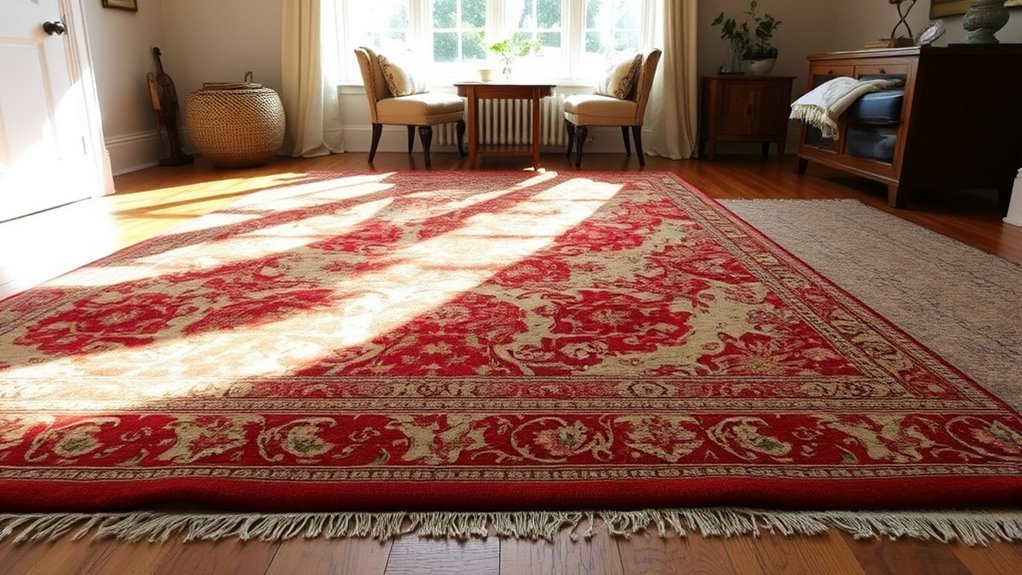
Are your floors looking worn or outdated? If so, it’s time to contemplate how you can breathe new life into your space without the hassle and expense of a full remodel. One of the simplest and most effective ways to refresh your floors is by adding area rugs. These versatile pieces can instantly transform the look and feel of a room, covering imperfections and introducing new textures, colors, and patterns. Whether you prefer a bold, statement-making rug or a subtle, neutral one, you have the power to customize your space and make it feel cozy and inviting again.
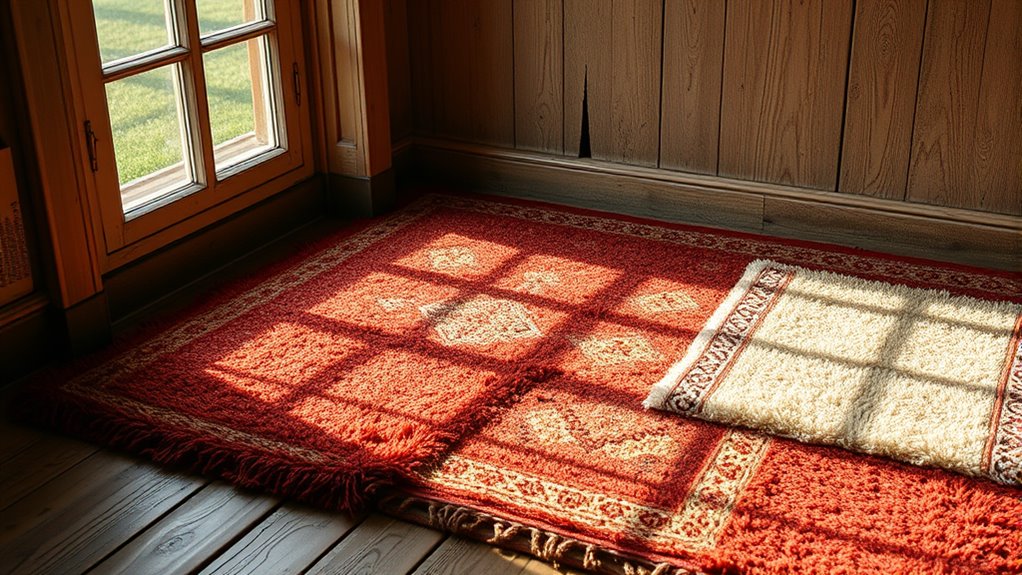
Layered decor is another fantastic approach to revitalizing your floors. Instead of relying solely on one large area rug, try stacking smaller rugs or combining different textures and styles. This layered look adds depth and dimension, making your floors appear more interesting and curated. You might start with a neutral base rug and then add a patterned accent rug on top, creating a dynamic visual that draws the eye and breaks up the monotony of worn flooring. This technique not only covers up blemishes but also showcases your personal style, allowing you to experiment with different colors and textures without committing to a major change.
Layering smaller rugs creates depth, covers blemishes, and showcases your style without a major overhaul.
When choosing your area rugs and layered decor, think about how they interact with your overall room design. Pick rugs that complement your furniture and wall colors, creating harmony rather than chaos. For example, if your floors are a neutral tone, a rug with vibrant hues or intricate patterns can add a splash of personality. Conversely, if your floors are dark or busy, opt for lighter or more subdued rugs to balance the space. Layering different rugs can also help define specific zones within a room, making open-plan areas feel more organized and intimate.
Don’t forget the practical benefits, either. Rugs provide insulation, reduce noise, and improve comfort underfoot. Plus, they’re easy to move and swap out, letting you change your decor seasonally or whenever you want a fresh look. You can add warmth and texture simply by layering a soft rug over a sleek, hard surface, creating a tactile contrast that invites foot traffic and conversation. Incorporating rug quality assessment into your selection process ensures you choose durable pieces that will last and maintain their beauty over time.
Frequently Asked Questions
How Do I Prevent Rugs From Slipping on Polished Wood Floors?
To prevent rugs from slipping on polished wood floors, use a rug pad designed for hardwood surfaces. Opt for a non-slip rug pad, such as rubber or felt-backed options, and guarantee it fits well under your rug. Follow rug placement tips like smoothing out wrinkles and positioning the rug flat on the pad. These steps keep your rug secure, safe, and looking fresh without damaging your floors.
What Are the Best Rug Materials for High-Traffic Areas?
For high-traffic areas, choose rugs made from durable materials like nylon or wool, which stand up well to wear. Look for rugs with stain-resistant treatments to keep them looking fresh despite spills and dirt. These materials offer excellent rug durability and stain resistance, making them ideal for busy spaces. Additionally, opt for rugs with a non-slip backing or add grip pads to prevent slipping and keep your floors safe.
How Often Should I Rotate Layered Rugs for Even Wear?
Imagine a colorful mosaic of layered rugs, each vibrant piece adding character to your space. You should rotate your layered rugs every 6 to 12 months to make certain of even wear. This rotation schedule prevents damage from foot traffic and sunlight, maintaining their beauty. By regularly switching their positions, you prolong the life of your rugs and keep your layered setup looking fresh and inviting, just like a well-curated gallery.
Can Layered Rugs Hide Damaged or Uneven Flooring?
Layered rugs can effectively hide damaged or uneven flooring through flooring concealment, giving your space a fresh look. By strategically placing area rugs, you draw attention away from imperfections and create visual interest. Just make certain the layers are securely arranged to prevent slipping. Keep in mind, though, that this method provides a temporary fix; for long-term solutions, consider repairing or replacing the damaged flooring.
What Maintenance Is Required to Keep Layered Rugs Looking Fresh?
Think of your layered rugs as a garden that needs regular care. You should vacuum regularly to keep dirt at bay and prevent wear, like watering your plants. When stains appear, treat them promptly to preserve their beauty. This routine keeps your layered rugs looking fresh and vibrant, ensuring they continue to symbolize comfort and style. Consistent maintenance helps your space stay inviting and well-kept.
Conclusion
Think of rugs and layers as the paintbrushes for your floor’s masterpiece. With a few well-chosen pieces, you can transform tired, dull surfaces into a vibrant canvas of comfort and style. No need to rip up old tiles or hardwood—just layer in rugs like strokes of color that breathe new life into your space. Soon, your floors will tell a fresh story, inviting everyone to step into a renewed, cozy environment.