Choosing garments made from regenerative cotton means you’re supporting farming methods that restore soil health, reduce chemical use, and protect ecosystems. This type of cotton is grown with practices like crop rotation and minimal tillage, which strengthen the environment and produce higher-quality fibers. By opting for regenerative cotton, you help promote sustainable land use and lower your fashion footprint. Interested in how this can transform your wardrobe and the planet? Keep exploring to discover more.

Get your wardrobe favorites delivered free with Prime
- Fast, free delivery on millions of items
- Prime Video, Amazon Music and more included
- Member-only deals all year
Key Takeaways
- Regenerative cotton is farmed using sustainable practices that improve soil health and reduce environmental impact.
- Wearing garments made from regenerative cotton supports eco-friendly farming methods and promotes ecosystem restoration.
- It helps produce higher-quality cotton without damaging the land, ensuring durability and sustainability for your wardrobe.
- Choosing regenerative cotton reduces reliance on harmful chemicals, benefiting both the environment and your health.
- Supporting regenerative cotton encourages responsible agriculture, contributing to healthier soils and more resilient ecosystems worldwide.
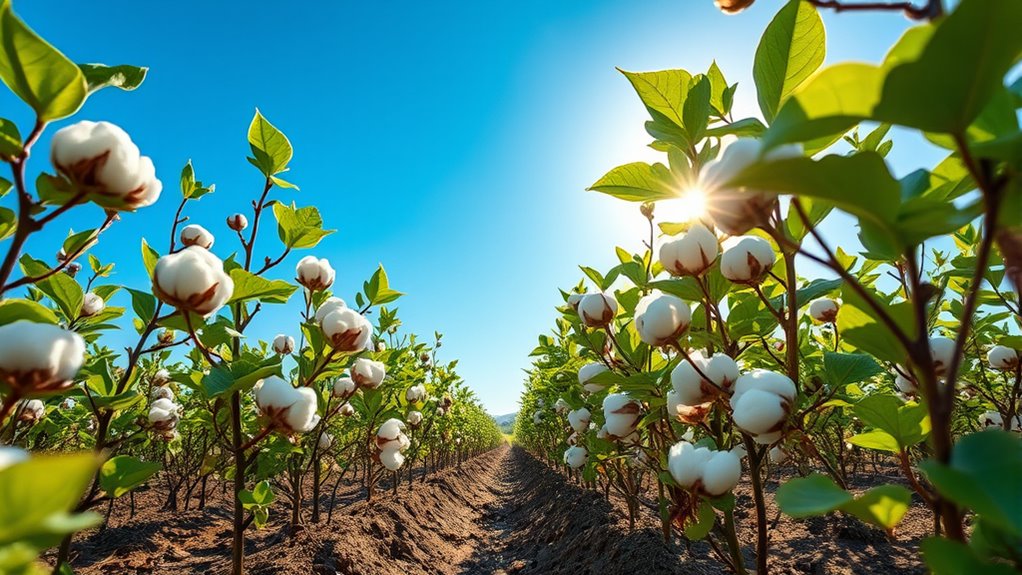
Have you ever wondered how cotton farming can actually restore the environment rather than deplete it? It’s a good question, especially as you start paying more attention to where your clothes come from. Regenerative cotton is changing the game by embracing sustainable farming practices that prioritize soil health and ecosystem balance. Unlike conventional methods that often strip nutrients from the land, regenerative farming techniques work with nature to rebuild and strengthen the soil. This approach isn’t just about growing cotton; it’s about cultivating a healthier environment that benefits everyone, including you as a conscious consumer.
Regenerative cotton restores soil health and supports a healthier environment for all.
When farmers adopt regenerative practices, they focus on enriching the soil through rotation, cover cropping, and minimal tillage. These methods help retain moisture, increase organic matter, and foster diverse microbial life beneath the surface. As a result, the soil becomes more resilient, better able to withstand droughts and heavy rains, and less prone to erosion. This sustainable farming approach creates a cycle where the land actually improves with each harvest, rather than deteriorates. It’s a stark contrast to conventional farming, which often relies heavily on chemical inputs that degrade soil health over time.
By choosing garments made from regenerative cotton, you’re supporting farming systems that prioritize long-term environmental health. This means less reliance on pesticides and synthetic fertilizers, which can cause water pollution and harm local ecosystems. Instead, regenerative cotton farms work to restore natural processes, promoting biodiversity and creating healthier rural communities. When soil health improves, it also means farmers can produce higher-quality cotton without damaging their land, ensuring that your clothing isn’t just stylish, but also eco-friendly from root to fiber.
Your decision to buy regenerative cotton supports a shift toward more responsible agriculture. It encourages farmers to adopt practices that protect the environment and secure the land’s future. This isn’t just about reducing your carbon footprint; it’s about actively participating in a movement that values the health of the planet and future generations. Every time you choose a piece of clothing made from regenerative cotton, you’re making a statement—one that says you care about sustainable farming and the preservation of soil health. It’s a small step that can have a big impact, helping to restore ecosystems and promote a more resilient, regenerative world for everyone.
As an affiliate, we earn on qualifying purchases.
Frequently Asked Questions
How Does Regenerative Cotton Impact Global Water Resources?
Regenerative cotton helps protect global water resources by promoting water conservation and ecological restoration. When you choose regenerative cotton, you’re supporting farming practices that use less water and restore soil health, reducing runoff and pollution. This sustainable approach minimizes strain on freshwater sources, ensuring cleaner water for communities and ecosystems. Your choices encourage responsible farming that benefits the planet and preserves essential water resources for future generations.
Can Regenerative Cotton Be Used in All Types of Clothing?
Sure, regenerative cotton can be used in all types of clothing, but don’t expect it to turn a tuxedo into a hemp sack overnight. Thanks to advances in textile innovation and sustainable agriculture, it’s versatile enough for everything from casual wear to high fashion. So, you can embrace eco-friendly choices across your wardrobe, knowing that regenerative cotton supports healthier farms and a greener planet, one garment at a time.
What Certifications Verify Regenerative Cotton Practices?
You can verify regenerative cotton practices through certifications like the Better Cotton Initiative (BCI) and Organic Content Standard (OCS). These certification standards guarantee sustainable farming methods, promoting soil health and water conservation. When shopping, look for labels from these organizations to guarantee the cotton you’re buying is produced using regenerative practices. This way, you support environmentally friendly farming and contribute to a more sustainable fashion industry.
How Does Regenerative Cotton Affect Farmers’ Livelihoods?
You support sustainable farming and farmer empowerment when you choose regenerative cotton, which improves farmers’ livelihoods. It encourages eco-friendly practices, reduces reliance on harmful chemicals, and promotes soil health. As a result, farmers often see better yields, increased income, and long-term resilience. Your choice helps create a more equitable and sustainable cotton industry, making a positive impact on the communities that grow your clothes.
Is Regenerative Cotton More Affordable Than Conventional Cotton?
Regenerative cotton tends to be more affordable than conventional cotton due to increasing market availability and growing demand. As more farmers adopt regenerative practices, supply rises, which helps lower costs. You might find regenerative cotton products at similar or slightly higher prices initially, but as production scales up, it becomes more competitive. Overall, the cost comparison is shifting in favor of regenerative cotton, making it a more accessible sustainable choice for your wardrobe.
Conclusion
Imagine slipping into a soft, vibrant shirt grown from regenerative cotton—a stark contrast to the barren fields of yesterday. By choosing this eco-friendly fabric, you’re not just updating your closet; you’re nurturing the earth beneath your feet. Every piece becomes a symbol of hope, a lush green promise in a world often overshadowed by pollution. Embrace regenerative cotton, and let your wardrobe stand as a proof of renewal amid the chaos.
Fall Picks
fall essentials
As an affiliate, we earn on qualifying purchases.