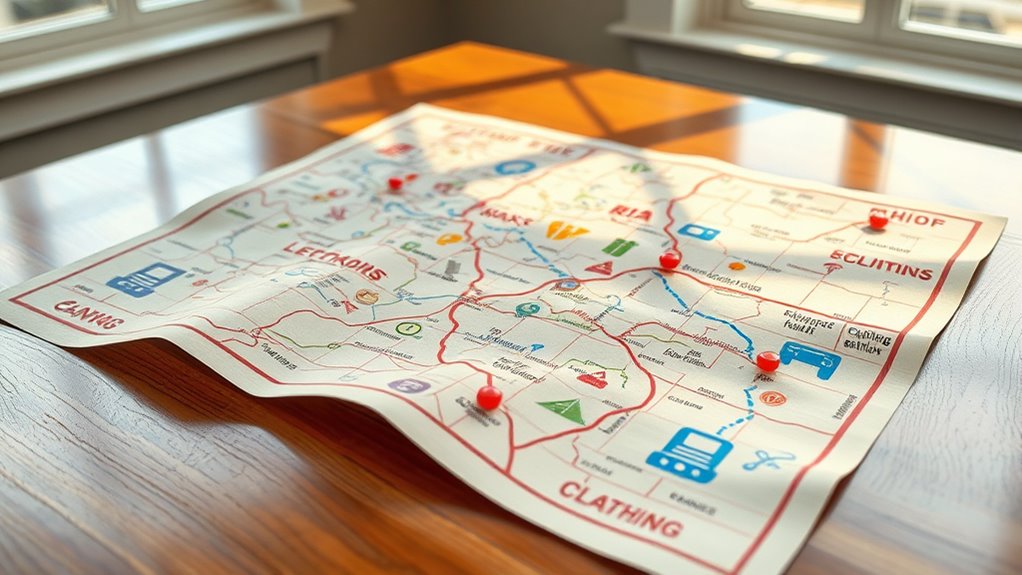

To build your weekly thrift store route, start by identifying shops known for unique, vintage finds and regularly updated inventory. Map out their locations, considering store hours, parking, and busy times to plan visits when stores are less crowded. Focus on stores with favorable pricing strategies, like sales or negotiable items, to maximize your budget. Keep notes on inventory trends for future visits. If you keep exploring, you’ll discover tips to perfect your vintage shopping strategy.

Get your wardrobe favorites delivered free with Prime
- Fast, free delivery on millions of items
- Prime Video, Amazon Music and more included
- Member-only deals all year
Key Takeaways
- Identify and list your favorite thrift stores based on vintage selection, pricing, and inventory rotation.
- Map out store locations, considering hours, parking, and less busy times for efficient visits.
- Organize a weekly route focusing on stores with the best vintage finds and favorable pricing strategies.
- Update your map regularly with new or changed stores to optimize your shopping routine.
- Schedule visits during optimal times to maximize selection, savings, and enjoyable thrift store hunting.
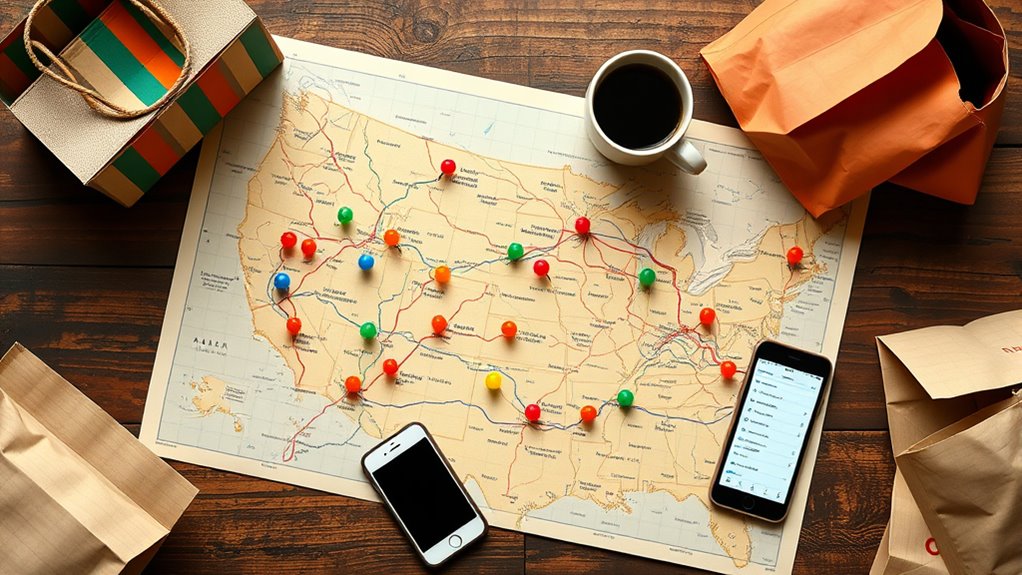
Ever wondered where to find the best thrift stores in your area? Building a weekly route around thrift stores can be a game-changer, especially if you’re hunting for vintage gems. Knowing where to go and what to look for helps you make the most of your time and budget. The key is to map out your route strategically, focusing on stores that offer unique finds and favorable pricing strategies. Not all thrift shops are created equal, so understanding each store’s strengths and quirks can help you score those hidden treasures.
Start by identifying the thrift stores renowned for their vintage gems. These are the stores that regularly stock one-of-a-kind clothing, accessories, and home decor from past decades. When you visit, keep an eye out for items that stand out — whether it’s a 70s boho dress, retro jewelry, or antique furniture. Many of these stores have rotating inventories, so frequent visits increase your chances of catching new arrivals. To maximize your success, consider creating a list of these standout shops and organizing your route around their locations, so you spend less time traveling and more time hunting.
Identify thrift stores known for vintage treasures and plan your route to maximize your hunting time.
Pricing strategies play a vital role in your thrift shopping success. Some stores price vintage items based on their rarity, condition, or brand, which can be higher than typical thrift store prices. Others might have regular sales or discount days that make vintage gems more affordable. Learning each store’s pricing approach can help you decide where to spend more and where to look for deals. For example, some shops mark up rare items but offer discounts on everyday pieces, while others may have clear pricing tags that help you quickly determine if an item fits your budget. Keep a mental note or jot down your observations about pricing strategies at different stores, so you can plan your visits accordingly.
Creating a thrift store map tailored to your interests allows you to build a consistent routine. It saves you from aimlessly wandering and guarantees you don’t miss out on stores that specialize in the kinds of vintage finds you love. As you develop your route, consider the store hours, parking options, and the typical flow of customers. This way, you can visit during less busy times for a more relaxed shopping experience. Additionally, understanding the various pricing strategies employed across stores can help you better negotiate deals or identify the best days for shopping. Over time, you’ll refine your weekly route, focusing on stores with the best vintage gems and fair pricing strategies. With a well-planned map, you’ll turn thrift shopping into an efficient and enjoyable weekly adventure, consistently uncovering those special pieces that make your collection truly unique.
vintage thrift store shopping bag
As an affiliate, we earn on qualifying purchases.
As an affiliate, we earn on qualifying purchases.
Frequently Asked Questions
How Often Should I Update My Thrift Store Route?
You should update your thrift store route regularly, ideally every few months, to keep route optimization effective. Store frequency can change due to new openings or closures, so staying current ensures you visit the right stores at ideal times. By reviewing and adjusting your route periodically, you maximize efficiency, save time, and ensure you don’t miss out on the best deals or new inventory. Keep your route fresh for the best results.
Can I Customize the Map for Special Events or Sales?
Yes, you can customize your thrift store map for special events or sales. Use map customization tools to add markers or highlights for event dates and locations. Incorporate your event scheduling to plan visits around these days, ensuring you don’t miss limited-time deals. Regularly update your map so it reflects upcoming sales or events, making your route more efficient and tailored to your shopping goals.
Is the Map Available for Mobile Devices?
Yes, the map is available for mobile devices, so you can access it anytime, anywhere. You’ll enjoy seamless mobile access and easy navigation, making it simple to plan your thrift store visits on the go. The app is compatible with most smartphones and tablets, ensuring you stay connected and organized. With mobile access and app compatibility, you’ll always have your customized route at your fingertips, ready whenever you need it.
How Do I Add New Thrift Stores to My Route?
To add new thrift stores to your route, start by selecting stores through the store selection feature. Input their locations and details, then save them to your list. The map will automatically optimize your route for efficiency, considering the new additions. This way, you streamline your route, save time, and cover more stores each week. Regularly update your store selection to keep your route fresh and effective.
Are There Any Cost Associated With Using the Map?
There are no cost considerations or map subscription fees when using the thrift store map. You can access and utilize the map freely, which makes planning your weekly route easy and budget-friendly. Just log in or download the app if needed, and you’re good to go. This way, you save money while efficiently organizing your thrift store visits without worrying about any hidden charges.
Conclusion
Now that you’ve got your thrift store map, think of it as your treasure map guiding you through a world of hidden gems. Every stop is a new discovery, a chance to unearth unique finds that make your weekly routine feel like a thrilling adventure. Embrace the journey, enjoy the surprises, and let your route become a map to your personal treasure chest. Happy hunting—your next great find is just around the corner!
Fall Picks
fall essentials
As an affiliate, we earn on qualifying purchases.