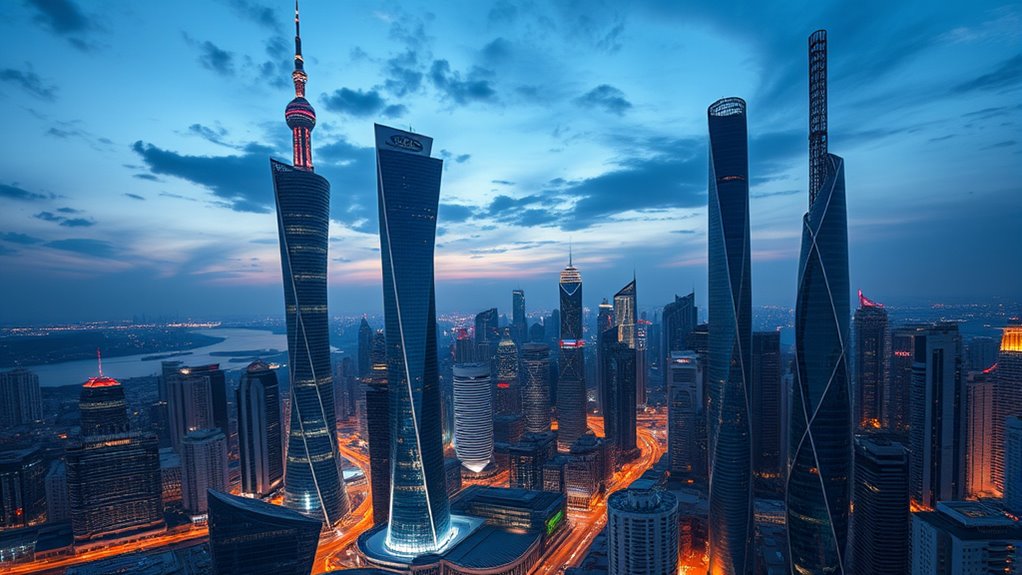

Shanghai’s development efforts go well beyond just boosting the economy. The city focuses on innovative urban planning, heritage preservation, and community-centered projects that aim to create a sustainable and culturally vibrant environment. Major infrastructure, new city districts, and revitalized historic areas all serve to enhance quality of life and preserve its unique history. If you stick around, you’ll discover how these bold initiatives are shaping a city that balances progress with tradition.
Key Takeaways
- Shanghai emphasizes cultural preservation and urban revitalization alongside infrastructure, fostering a vibrant, historically rich cityscape.
- Major projects include eco-friendly developments and sustainable urban spaces, highlighting environmental and social goals.
- The city promotes innovation hubs and creative arts spaces that integrate tradition with modern technological progress.
- Community-centered initiatives, like underpass hubs, enhance social cohesion and improve residents’ quality of life beyond economic metrics.
- Strategic urban planning balances economic growth with cultural, ecological, and social resilience for sustainable city development.

Shanghai is transforming beyond just boosting its economy by launching ambitious projects across multiple sectors. You can see this in the 186 major initiatives launched in 2025, which span science, technology, advanced manufacturing, modern services, education, healthcare, culture, infrastructure, ecological civilization, and rural revitalization. These projects are not solely about growth; they reflect a broader vision to create a sustainable, innovative, and culturally vibrant city. In the technology sector alone, 66 major projects align with national strategies, including Tesla’s gigafactory and cutting-edge R&D centers. Seven new projects focus on aviation materials, pharmaceutical R&D, intelligent medicine manufacturing, superconductors, integrated circuits, and shipbuilding research, emphasizing the city’s commitment to becoming a global leader in innovation. Effective leadership in these initiatives ensures alignment with national goals and community needs.
Shanghai’s 2025 initiatives showcase a bold push into innovation, technology, and sustainable urban development.
Urban infrastructure developments are equally impressive, with 65 projects dedicated to improving railways, roads, bridges, and energy security. Major metro expansions and railway station connections are set to be completed within the year, facilitating seamless mobility for residents and visitors alike. These efforts balance economic progress with enhanced public utilities and ecological resilience, ensuring that growth benefits everyone. Beyond infrastructure, Shanghai is actively developing five “new cities” in suburban areas—Jiading, Qingpu, Songjiang, Fengxian, and Nanhui—aiming for these to become self-sufficient nodes within the Yangtze River Delta by 2035. These towns are designed to blend technology, culture, and natural waterscapes, creating vibrant urban ecosystems where innovation and tradition coexist. The 2025 action plan outlines eight initiatives across spatial layout, economic innovation, ecological protection, and social integration. Collaboration between municipal and district governments drives a bottom-up approach, ensuring tailored local development. Qingpu, for example, has made significant progress with innovation hubs, sports and youth facilities, and R&D centers, fostering sustainable community growth.
Meanwhile, Shanghai’s historic neighborhoods and industrial sites are being revitalized, emphasizing heritage preservation as a crucial part of its cultural identity. Since 2010, urban renewal efforts have focused on adaptive reuse of historic districts and industrial heritage sites, transforming old zones into creative arts spaces, community hubs, and mixed-use developments. Waterfront areas like Xuhui and Yangpu now host galleries, museums, and lively dining spots, blending industrial architecture with modern cultural venues. Heritage buildings have been converted into multifunctional commercial and cultural spaces that preserve the city’s history while supporting socioeconomic vitality. This holistic approach integrates social, economic, and environmental goals, fostering a city that values its past as much as its future.
Additionally, underutilized urban spaces, such as the underpasses along the Suzhou River, are being transformed into community-centered hubs. These “Underpass Hubs” combine recreation, culture, and social activities, featuring sports facilities like basketball courts, soccer fields, and running tracks. Designed with local input, these spaces address outdoor recreation shortages while promoting community engagement. These innovative spaces also serve as models for sustainable urban design, demonstrating how resource-conscious strategies can effectively revitalize neglected areas. Overall, Shanghai’s bold builds reflect a city shifting focus from pure economic gain to creating a resilient, inclusive, and culturally rich urban environment that embraces both innovation and tradition.

Trellises, Planters & Raised Beds for Beginners: 30+ Easy, Unique, and Useful Projects You Can Make with Common Tools and Materials
As an affiliate, we earn on qualifying purchases.
As an affiliate, we earn on qualifying purchases.
Frequently Asked Questions
How Does Shanghai Incorporate Sustainability Into Its Urban Development?
You see Shanghai incorporates sustainability into its urban development by adopting green building standards like the Nearly Zero Energy Building Standard and Zero Carbon Building Standard. It invests heavily in public transportation, electric buses, and bike-sharing programs to cut emissions. The city also expands green spaces, uses ecological infrastructure like sponge cities, and develops self-sufficient new urban centers. These efforts create an eco-friendly, resilient, and livable urban environment.
What Cultural Influences Shape Shanghai’s Architectural Projects?
You see Shanghai’s architecture blending old and new, where Haipai culture’s traditional Jiangsu-Zhejiang roots intertwine with Western styles like Art Deco and Beaux-Arts. This juxtaposition creates vibrant, eclectic skylines that celebrate history while embracing innovation. You’re immersed in a city that values cultural preservation, yet constantly pushes boundaries, making its architecture a reflection of diverse influences and a demonstration of Shanghai’s dynamic, cosmopolitan identity.
How Does Shanghai Balance Modernization With Historical Preservation?
You see Shanghai balances modernization with preservation by respecting its historic character while embracing new developments. You’ll notice that projects like Xintiandi preserve traditional facades and layouts, adapting interiors for modern use. The government partners with private sector players to guarantee heritage conservation aligns with urban growth. This approach maintains cultural identity, blends old and new seamlessly, and promotes sustainable development without sacrificing the city’s rich historical layers.
What Community Benefits Stem From Shanghai’s Ambitious Building Initiatives?
Did you know over 60% of Shanghai’s public spaces are now accessible to all ages? Your community benefits from these initiatives through better green parks, child-friendly zones, and elderly-friendly facilities, fostering social bonds and inclusivity. You’ll find vibrant public areas that encourage interaction, recreation, and cultural exchange. These improvements boost quality of life, promote health, and create a more connected, welcoming city for everyone.
How Do Shanghai’s Projects Impact Regional Environmental Health?
Your projects in Shanghai considerably impact regional environmental health, often increasing air and water pollution, and generating substantial construction waste. While the city aims to improve sustainability through initiatives like recycling and environmental projects, rapid urbanization and infrastructure development still strain resources. You need to prioritize sustainable practices, adopt innovative technologies, and support policies that balance growth with environmental protection to mitigate negative effects on regional health.

Cultural Heritage Site Protection Notice Sign 8"x12" Rust-Free Aluminum, Indoor Outdoor Use For Fence Yard Heritage Area Preservation Alert
【Durable Aluminum Construction】Crafted from heavy-duty aluminum alloy, this 12×8 inch metal sign features exceptional durability that resists bending…
As an affiliate, we earn on qualifying purchases.
As an affiliate, we earn on qualifying purchases.
Conclusion
As you walk through Shanghai’s skyline, it’s as if the city is reaching for the heavens, echoing Icarus’s daring flight—bold and unbound by mere profit. These ambitious builds aren’t just about economic gain; they’re about shaping a future that dares to dream bigger. Just like the city’s shimmering towers, your own aspirations can soar beyond limits, reminding you that true progress comes when you build not just for today, but for generations to come.

Wonderjune 3-in-1 Little Library Box Outdoor with Bench & Planter DIY Paintable Lending Free Library Pine Wood Neighborhood Share Box Ground Mount Kit for Yard Garden Community School(Black and White)
What You Get: this outdoor library kit includes everything to create a charming library and cozy reading look!…
As an affiliate, we earn on qualifying purchases.
As an affiliate, we earn on qualifying purchases.

Internet of Things and Fog Computing-Enabled Solutions for Real-Life Challenges
As an affiliate, we earn on qualifying purchases.
As an affiliate, we earn on qualifying purchases.