When researching fashion sites, look for reviews that are detailed and balanced, with specific insights on fit, fabric, and comfort, rather than generic praise. Verify that reviews are from confirmed buyers and watch for sudden surges of overly positive comments. Spot suspicious language or repetitive phrasing, which may indicate manipulation. By applying these filters, you’ll better identify genuine opinions. Keep exploring to learn more about effectively filtering fake reviews and making smarter shopping choices.
Key Takeaways
- Look for verified purchase badges to ensure reviews are genuine and confirm the reviewer bought the product.
- Prioritize detailed reviews that mention specific aspects like fit, fabric, and comfort over generic praise.
- Watch for patterns such as sudden influxes of overly positive reviews or similar language across multiple comments.
- Analyze the review date distribution to spot unnatural spikes in positive feedback.
- Cross-reference reviews across different sites to verify consistency and authenticity of customer experiences.
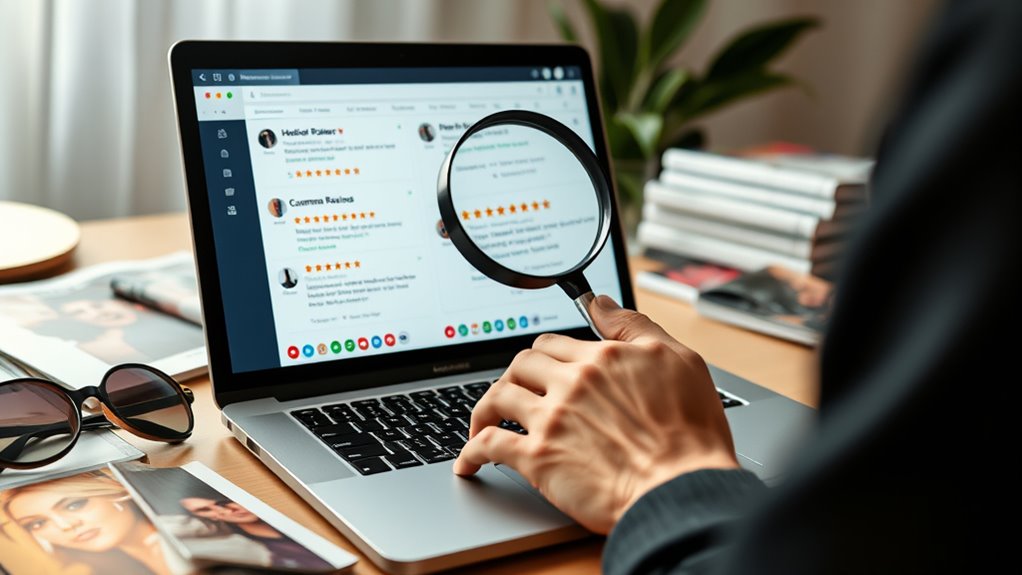
With the rise of online shopping and review platforms, fake reviews have become a prominent problem that can mislead consumers and distort a product’s reputation. When researching fashion sites, it’s essential to focus on filtering out these deceptive comments so you can make informed decisions. One of the most effective ways to do this is by paying close attention to product authenticity. Fake reviews often target products that are counterfeit or poorly made, aiming to boost sales or clear out inventory. If a review seems overly positive without mentioning specific details or seems too good to be true, it might be a fake. Authentic reviews tend to include particular insights about fit, fabric, and comfort, giving you a clearer picture of what to expect.
Fake reviews often target counterfeit or poorly made products, aiming to boost sales or clear inventory.
Review verification plays an important role in this process. Many reputable platforms now implement verification systems that confirm whether a reviewer has purchased the product. Look for badges or labels indicating verified purchase status. These badges mean that the review comes from someone who has actually bought and used the item, reducing the likelihood of fake feedback. When you see verified reviews, you gain a higher level of confidence that the opinions expressed are genuine and useful. It’s also helpful to scan multiple reviews from different users, especially those with detailed descriptions. If a product has a high number of reviews all echoing the same sentiment, whether positive or negative, it’s more likely that the feedback is legitimate.
Authentic reviews often include specific details about the reviewer’s experience, which can help you gauge the true quality of the product. Beyond verification badges, analyze the language used in reviews. Authentic reviewers tend to provide balanced feedback, mentioning both pros and cons, and sometimes sharing personal experiences. Fake reviews, on the other hand, often use generic or overly promotional language, with little depth or specificity. Be wary of reviews that are excessively glowing without any mention of flaws or that seem scripted. Cross-referencing reviews across different sites can also help you spot inconsistencies or patterns that suggest manipulation.
Additionally, consider the review date distribution. A sudden surge of highly positive reviews within a short period might be suspicious, especially if they all sound similar. This can be a tactic used to artificially inflate a product’s reputation. Use your judgment to sift through reviews critically, focusing on those that provide detailed, balanced, and verified feedback. By doing so, you’re more likely to find authentic insights that help you determine the true quality and product authenticity of fashion items before making a purchase. Filtering fake reviews isn’t foolproof, but combining these strategies makes it considerably easier to separate genuine opinions from deceptive ones.

OFEEFAN Fall Tunics for Women Travel Essentials Women's Clothing V Neck Blouses Casual 3/4 Length Sleeve Tops Beige Printed M
♥Tips– Machine wash in cold water/ Hang or line dry/ Do not bleach. The 3/4 length womens tops…
As an affiliate, we earn on qualifying purchases.
As an affiliate, we earn on qualifying purchases.
Frequently Asked Questions
How Can I Identify Verified Purchase Reviews?
To identify verified purchase reviews, look for verified badges next to reviews, indicating the reviewer bought the item. Check their reviewer history to see if they post consistently about similar products and provide detailed feedback. Verified badges help confirm authenticity, while a detailed reviewer history suggests credibility. Trust reviews from verified purchasers to make better-informed decisions and avoid fake or biased opinions.
Are Negative Reviews More Trustworthy Than Positive Ones?
Negative reviews can sometimes be more trustworthy because they often reveal genuine issues, whereas fake review patterns tend to show overly emotional language or exaggerated praise. When analyzing reviews, pay attention to emotional language analysis, as authentic reviews usually have balanced, specific details. Trust your instincts and look for consistent, credible feedback. Remember, both positive and negative reviews can be fake, but negative ones often highlight real problems if carefully examined.
What Tools Can Automatically Detect Fake Reviews?
You can use review analysis tools like Fakespot or ReviewMeta, which automatically detect fake reviews through scam detection algorithms. These tools analyze review patterns, identify suspicious activity, and filter out potentially fake feedback, helping you trust genuine opinions. By integrating such tools into your research process, you guarantee more reliable insights, making it easier to distinguish authentic reviews from scams when researching any online platform.
How Do Review Scams Typically Operate?
Think of review scams as masked actors behind a curtain of review manipulation, aiming to deceive you. Scam tactics often include fake reviews, paid endorsements, and biased ratings designed to boost or tarnish products unfairly. These tactics hide the truth, making it hard to see genuine quality. By understanding these schemes, you can better spot the signs of deception and protect yourself from falling for dishonest reviews.
Can Reviewer Profiles Indicate Authenticity?
You can assess reviewer credibility by analyzing profiles for consistency and detail. Look for extensive profile information, such as previous reviews and activity patterns, which suggest authenticity. Profile analysis helps identify fake reviews by spotting suspiciously new or overly generic profiles. Trustworthy reviewers often have diverse, detailed histories, so pay attention to these signs. Active, consistent profiles are usually more reliable than those with limited or repetitive information.

LitLook DTY Double Brushed Knit Fabric by The Yard – 60" Wide Super Soft 180GSM 4-Way Stretch Polyester Spandex Fabric for Leggings, Dresses, T-Shirts, Yoga Wear, Throws – Ink
Ultra-Soft Double Brushed Comfort: LitLook DTY Double Brushed Knit Fabric features a luxuriously soft, double-brushed surface on both…
As an affiliate, we earn on qualifying purchases.
As an affiliate, we earn on qualifying purchases.
Conclusion
By mastering the art of filtering fake reviews, you’ll avoid falling for scams that could cost you a fortune—like trusting a wolf in sheep’s clothing. Always scrutinize reviews carefully, look for patterns, and rely on trusted sources. Remember, in the vast jungle of fashion sites, fake reviews are more common than stars in the sky. Stay vigilant, and your shopping experience will be as smooth as silk, saving you from countless fashion faux pas and wallets emptying scams.

Authentic Victorian Fashion Patterns: A Complete Lady's Wardrobe (Dover Fashion and Costumes)
As an affiliate, we earn on qualifying purchases.
As an affiliate, we earn on qualifying purchases.
filter fake reviews on clothing sites
As an affiliate, we earn on qualifying purchases.
As an affiliate, we earn on qualifying purchases.