
To safely remove pills from your sweaters without damaging fibers, use gentle tools like fabric shavers or sweater stones designed specifically for delicate fabrics. Avoid sharp scissors or razors that can cause tears, and always glide these tools lightly over the surface. Proper technique, combined with careful washing and storing, helps maintain your sweater’s look and prolongs its lifespan. Keep exploring to discover more tips on effectively caring for your knitwear.

Get your wardrobe favorites delivered free — and shop member deals
- Fast, free delivery on millions of items
- Access to Prime Big Deal Days deals on October 6–7
- Prime Video, Amazon Music and more included
Key Takeaways
- Use fabric shavers or gentle sweater stones designed for delicate fibers.
- Avoid scissors or razors to prevent cutting or damaging the fabric.
- Gently glide tools over the sweater with light pressure to lift pills safely.
- Follow proper washing and drying techniques to minimize pilling and fiber stress.
- Regular maintenance with suitable tools keeps sweaters smooth without fiber damage.

Pilling on sweaters is a common annoyance that can make even your favorite pieces look worn out. Luckily, there are effective ways to restore their smooth appearance without damaging the fibers. When tackling pills, it’s crucial to use tools that won’t harm your sweater’s delicate fabric. Many people overlook the importance of fabric softening and proper cleaning tips, which can influence how easily pills form and how well you can remove them. By paying attention to these details, you’ll keep your sweaters looking fresh and extend their lifespan.
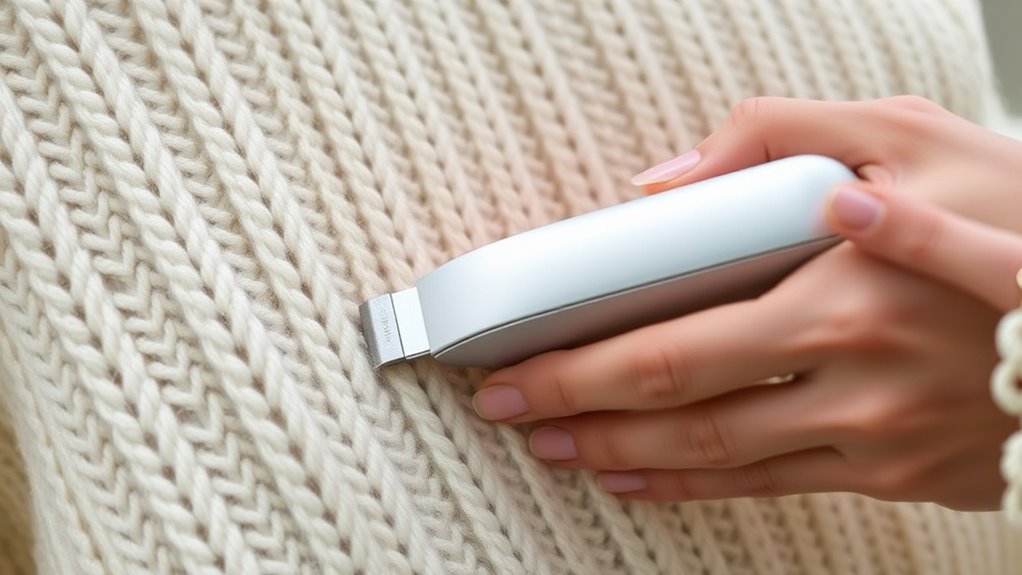
First, choose the right de-pilling tool. A quality fabric shaver or a gentle sweater stone can safely remove pills without pulling or damaging the fibers. Unlike scissors or razors, these tools are designed specifically for fabric, making the process safer and more effective. When using a fabric shaver, gently glide it over the surface of your sweater, applying light pressure. You’ll notice pills lift away effortlessly, revealing a smoother surface underneath. Be cautious not to press too hard, as excessive force can cause snags or tears, especially on fragile knits.
In addition to using the right tool, consider your cleaning tips to prevent excessive pilling in the first place. Always follow the care label instructions and wash your sweaters inside out to reduce friction. Opt for cold or lukewarm water, and use a mild detergent that contains fabric softening agents. These ingredients help reduce static and friction during washing, which directly contributes to less pilling. Avoid overloading your washing machine, as overcrowding increases rubbing and pill formation. Hand washing can be a gentle alternative if you’re concerned about preserving fibers, especially for delicate sweaters. Proper washing and drying techniques can significantly reduce pilling and keep your sweaters looking their best.
Once washed, lay your sweaters flat to dry rather than hanging them. Hanging can stretch the fibers and create more opportunities for pills to form. When you’re ready to wear or store your sweater, keep it folded in a cool, dry place. If pills reappear over time, repeat the de-pilling process with a clean, sharp tool. Regular maintenance keeps your sweaters looking their best and reduces the need for aggressive removal methods.
As an affiliate, we earn on qualifying purchases.
Frequently Asked Questions
Can De‑Pilling Tools Remove All Types of Fuzz?
De-pilling tools can’t remove all types of fuzz, especially stubborn or deeply embedded pills. While they excel at fabric smoothing and fiber restoration, some fuzz may require specific tools or methods. You’ll want to select the right de-pilling tool for your fabric type to avoid damage. Regular use helps maintain your sweater’s appearance, but understanding its limits ensures you don’t accidentally harm delicate fibers.
How Often Should I De‑Pill My Sweaters?
Did you know that wool sweaters can develop pills after just three wears? You should de-pill your sweaters as needed, typically after 3-5 wears, to keep them looking fresh. Avoid over-washing, as frequent washing with fabric softeners can weaken fibers and cause more fuzz. Using a gentle de-pilling tool every few wears helps maintain your sweater’s quality without damaging fibers, extending its lifespan and keeping it cozy.
Are Electric De‑Pillers Safe for Delicate Fabrics?
Electric de‑pillers are generally safe for delicate fabrics if you use them carefully, but they can sometimes cause damage or fabric softening if used improperly. Look for eco-friendly options with gentle blades and adjustable settings to protect fibers. Always test on a small, inconspicuous area first. This way, you can effectively remove pills without risking fabric damage or compromising the sweater’s softness.
Can De‑Pilling Damage the Sweater’S Fibers?
You might wonder if de-pilling can harm your sweater’s fabric integrity or reduce fiber longevity. Generally, gentle de-pilling tools are designed to remove pills without damaging fibers, helping preserve your sweater’s quality. However, aggressive or improper use can cause fibers to break or weaken over time. To protect your sweater, always choose the right tool, follow instructions carefully, and avoid excessive pressure, ensuring your fabric stays intact and fibers last longer.
What’S the Best Way to Store Sweaters to Prevent Pilling?
To prevent pilling, you should focus on proper sweater storage. Fold your sweaters carefully to avoid stretching or wrinkling, and store them in breathable storage containers or bins. Avoid hanging sweaters, as this can cause them to stretch and pill more easily. Keep them in a cool, dry place, and consider using drawer dividers to keep them neat. Proper folding and storage help maintain your sweaters’ quality and reduce pilling over time.
Conclusion
So, next time you grab your sweater, don’t be surprised if a little fuzz decides to stick around—after all, that’s just fabric’s way of saying it’s lived a little. With the right tools, you can banish those pills without turning your cozy sweater into a frayed mess. Ironically, the very effort to keep your sweater looking fresh might leave it with a few tiny battle scars—proof that even in caring, perfection remains just out of reach.
Fall Picks
fall essentials
As an affiliate, we earn on qualifying purchases.