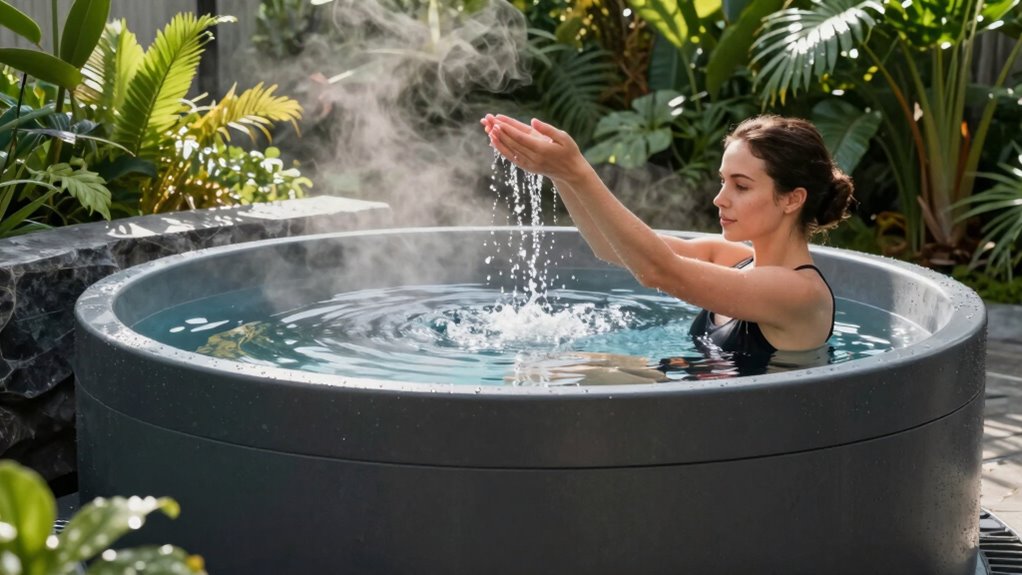

Cold plunge tubs are becoming a common part of daily wellness routines, moving beyond just trendy gyms and luxury spas into many homes. You can now experience the health benefits like improved circulation, faster muscle recovery, and boosted immune function right at home. It’s important to start gradually and listen to your body for safety. Staying consistent can help you enjoy long-term mental clarity and resilience. If you want to explore how to make cold plunges a safe habit, keep exploring further.
Key Takeaways
- Cold plunge tubs are becoming a daily wellness habit due to their proven health and recovery benefits.
- Increasing affordability and availability enable more people to incorporate cold water immersion into routines.
- Regular use enhances mental clarity, reduces inflammation, and boosts immune function over time.
- Safety protocols and gradual adaptation make cold plunging accessible for beginners.
- The aesthetic appeal of modern tubs encourages integration into home wellness spaces.
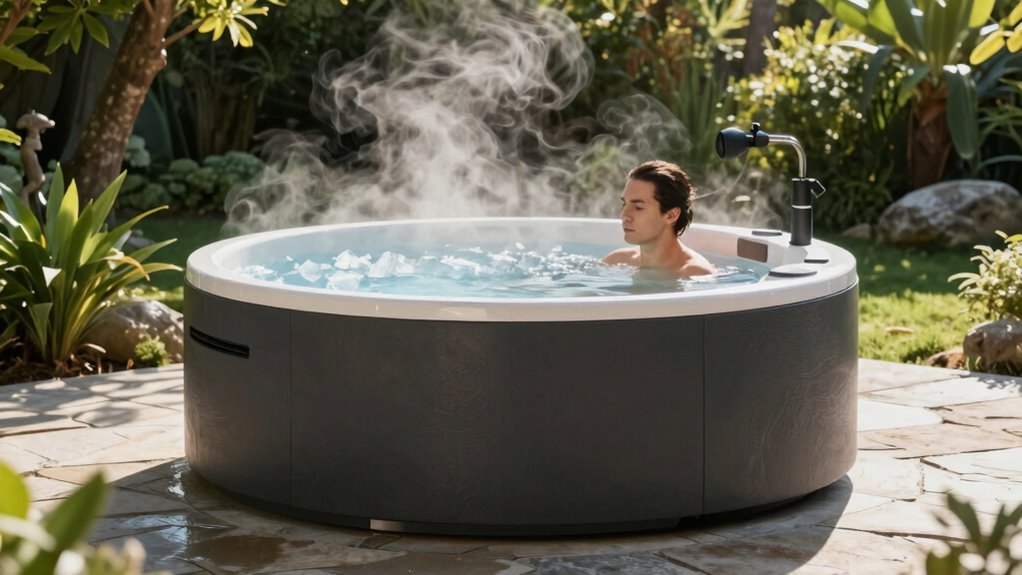
In recent years, cold plunge tubs have shifted from being a trendy wellness fad to an accessible part of daily routines. You might have seen them in high-end gyms or luxury spas, but now, more people are integrating cold plunges into their everyday lives at home. The appeal lies not just in the cool aesthetic but in the potent health benefits they offer. One of the main reasons to consider incorporating a cold plunge is the hydrotherapy benefits. Cold water immersion can boost circulation, reduce inflammation, and promote faster recovery after workouts. By immersing yourself in cold water, you activate your body’s natural healing processes, which can help ease muscle soreness and improve overall physical resilience. Additionally, many users report improved sleep quality and mental clarity as a result of regular cold plunge sessions. Incorporating cold plunges into your routine can also support your body’s natural healing processes, making it an effective addition to your wellness practices. To maximize these benefits, understanding proper cold exposure safety techniques is essential. Regular exposure to cold water can also enhance your body’s ability to adapt to stress, further supporting your overall health. Recognizing the importance of hydration during cold exposure can help prevent dehydration and ensure a safe experience.
Cold plunge tubs are now a daily wellness essential, offering hydrotherapy benefits like improved circulation and faster recovery.
However, jumping into a cold plunge isn’t just about reaping benefits; it’s equally important to prioritize cold exposure safety. You should approach cold plunges gradually, especially if you’re new to cold exposure. Start with shorter sessions and lower water temperatures, and always listen to your body’s signals. If you experience dizziness, excessive shivering, or discomfort, it’s best to exit the tub and warm up slowly. It’s also wise to consult with a healthcare professional beforehand, particularly if you have underlying health conditions like cardiovascular issues or hypertension. Understanding your limits helps prevent any adverse effects, and maintaining proper safety protocols ensures that cold exposure remains a health-enhancing activity instead of a risky venture.
The beauty of making cold plunge therapy part of your daily routine is how manageable it becomes once you’re familiar with it. Over time, your body adapts, and you may find yourself able to stay in the water longer or tolerate colder temperatures. This consistency can amplify the health benefits, such as improved mental clarity, reduced stress levels, and enhanced immune function. Plus, integrating cold plunges into your wellness regimen can be as simple as setting aside a few minutes after exercise or during your morning routine. The key is safe cold exposure practices and respecting your own limits. Developing a routine can help solidify this health habit, making it easier to maintain over the long term.
As you consider making a cold plunge tub a staple in your daily life, remember that safety and patience are crucial. The hydrotherapy benefits are well worth the effort, but they come with the responsibility of practicing cold exposure safety. With a mindful approach, you’ll find that cold plunges are not just a passing trend but a sustainable, health-boosting ritual that can improve your overall well-being.

The Pod Company Standard Ice Bath Tub, 84 Gallon Cold Plunge Tub with Cover Lid, Portable Inflatable Ice Plunge Tub for Adults, Side Drain, Chiller Compatible (Requires Conversion Kit)
- Capacity: 84-gallon cold plunge tub
As an affiliate, we earn on qualifying purchases.
As an affiliate, we earn on qualifying purchases.
Frequently Asked Questions
How Long Should I Stay in a Cold Plunge Tub?
You should stay in a cold plunge tub for about 1 to 3 minutes to enjoy hydrotherapy benefits without risking cold exposure safety. This duration helps reduce inflammation, improve circulation, and boost recovery. Listen to your body—if you start feeling numb or uncomfortable, exit immediately. Beginners might start with shorter times and gradually increase as they become more accustomed. Always prioritize safety and consult a healthcare professional if unsure.
Are Cold Plunge Tubs Suitable for Beginners?
Diving into cold plunge tubs as a beginner is like stepping into a brisk mountain stream—refreshing but startling. Cold plunge safety is key, so start slow with shorter durations, maybe just a minute, and listen to your body. Follow beginner tips like warming up beforehand and gradually increasing exposure. With patience and caution, you’ll build resilience and enjoy the benefits without feeling overwhelmed.
Can Cold Plunges Help With Mental Health?
Yes, cold plunges can boost your mental health by promoting mindfulness practice and stress reduction. When you immerse yourself in cold water, you focus on your breath and sensations, helping clear your mind. Regular cold plunges may lower anxiety, improve mood, and increase resilience to stress. Incorporate this calming routine into your self-care to experience mental clarity and emotional balance, making it a powerful tool for overall well-being.
What Is the Ideal Water Temperature for Cold Plunges?
Imagine a medieval alchemist’s lab—now, your cold plunge’s ideal water temperature is between 50-59°F (10-15°C). You should aim for precise temperature regulation, ensuring water conductivity stays consistent for safety and comfort. Too cold, and it becomes a shock; too warm, and benefits diminish. Keep the water within this range to maximize recovery, mental clarity, and resilience, turning your plunge into a revitalizing, ritualistic experience.
How Often Should I Use a Cold Plunge Tub?
You should use a cold plunge tub about 3 to 4 times a week, allowing your body to enjoy the hydrotherapy benefits without overdoing it. Regular cold exposure can boost circulation, reduce inflammation, and enhance recovery. Always prioritize cold exposure safety by listening to your body—don’t stay in too long or at too low a temperature. Consistency helps you maximize the benefits while minimizing risks.
Conclusion
As more people embrace cold plunge tubs as part of their daily routine, it’s clear this trend isn’t fading anytime soon. In fact, a recent survey found that 65% of users report increased mental clarity and reduced stress after regular plunges. This shift from trend to ritual shows how simple cold exposure can boost your well-being. So, why not take the plunge yourself? Incorporate it into your day and experience the benefits firsthand.