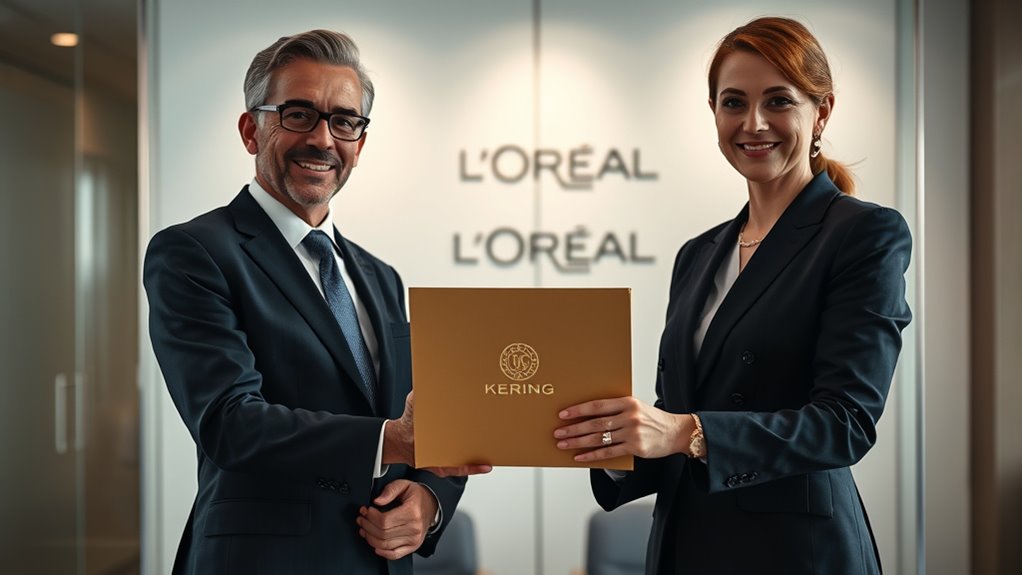
Kering and L’Oréal have established a groundbreaking 50-year licensing partnership that reshapes luxury brand management. Through this deal, L’Oréal will develop and distribute fragrances and beauty products for Kering’s iconic brands like Gucci, Bottega Veneta, and Balenciaga, while Creed joins as a high-end fragrance brand. This strategic move allows Kering to focus on fashion, while L’Oréal enhances its luxury portfolio. To discover how this partnership could impact the industry, keep exploring the full details.
Key Takeaways
- Kering has licensed its brands Creed, Gucci, Bottega Veneta, and Balenciaga to L’Oréal for 50 years.
- The licensing agreement covers creation, development, and distribution of fragrances and beauty products.
- The deal is valued at approximately €4 billion and is expected to close by mid-2026.
- It includes a cash payment to Kering and ongoing royalties from L’Oréal.
- This partnership signifies a strategic shift toward long-term licensing in the luxury beauty industry.
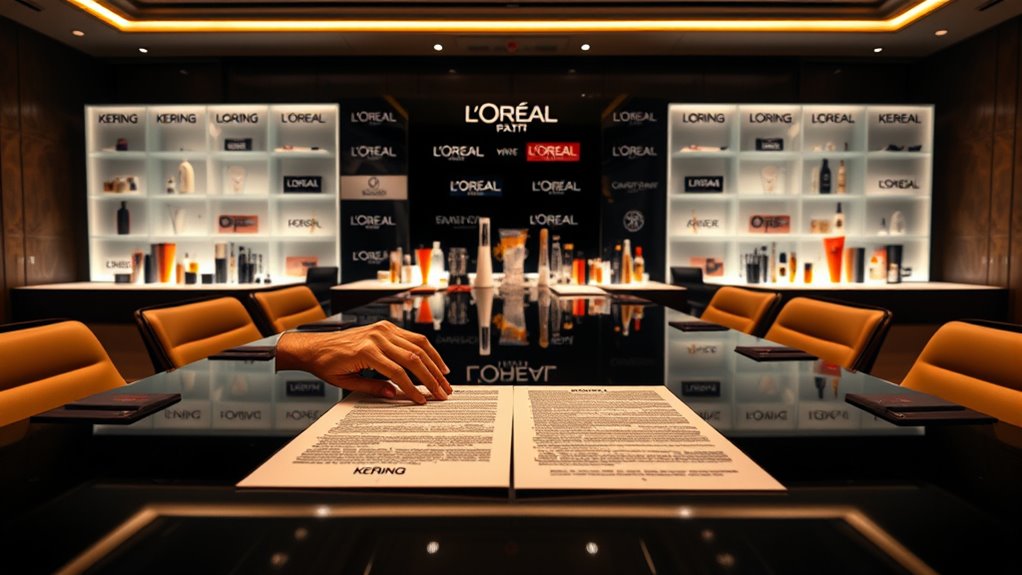
Is the luxury beauty industry about to see a major shift? It certainly seems so with Kering’s recent move to license its iconic brands to L’Oréal in a deal valued at €4 billion, expected to close by mid-2026. This strategic shift marks a notable change in how these luxury giants approach their beauty divisions. Instead of building in-house teams, Kering is opting for a licensing model that’s less capital intensive and offers higher margins. You’ll notice that Kering will sell its House of Creed and grant exclusive 50-year fragrance and beauty licenses for Gucci, Bottega Veneta, and Balenciaga to L’Oréal. The deal involves a cash payment upon closing, with royalties flowing from L’Oréal to Kering for the use of these brands. Importantly, Gucci’s license will activate only after Coty’s current agreement expires, while Bottega Veneta and Balenciaga licenses start immediately once the deal closes.
Kering licenses luxury brands to L’Oréal, signaling a major shift in the beauty industry with high-margin, capital-light strategies.
For Kering, this move allows them to focus on their core luxury fashion business, especially at a time when Gucci’s sales in China are stagnating, and markets elsewhere are slowing down. They’re reducing their debt and capex risks by stepping back from the capital-heavy beauty manufacturing sector. This shift is especially noteworthy under the leadership of their new CEO, Luca de Meo, who’s steering the company toward a more streamlined, risk-managed approach. You can see this as a strategic pivot to optimize their assets, maintaining brand value without the burden of in-house production and distribution. The industry is witnessing a trend toward licensing as a strategic tool, which could reshape traditional brand management models. Additionally, this move allows Kering to focus on brand value while leveraging external expertise in beauty.
L’Oréal, on the other hand, stands to gain considerably. By fully acquiring Creed, a niche luxury fragrance house, they instantly expand their presence in the high-end fragrance market. They also secure 50-year exclusive rights to develop and distribute beauty and fragrance products for Gucci, Bottega Veneta, and Balenciaga. These brands boost L’Oréal’s portfolio with luxury icons, opening new opportunities for innovation and premium distribution. The deal not only enhances their market position but also enables L’Oréal to leverage Kering’s luxury expertise in a new joint venture focused on wellness and longevity. This partnership aligns perfectly with L’Oréal’s goal of strengthening its high-end beauty segment, tapping into the growing luxury consumer base.
The scope of products in this agreement covers creation, development, and distribution of fragrances for the three brands, along with beauty products beyond fragrances. The acquisition of Creed further cements L’Oréal’s luxury credentials. The timeline indicates the deal was announced on October 19, 2025, with completion expected in the first half of 2026, pending approvals. A strategic committee will oversee the partnership, ensuring smooth coordination. Market reactions show optimism: Kering’s shares jumped up to 5.5%, while L’Oréal’s gained 1.4%. Overall, this deal signals a major strategic recalibration for both companies, reshaping the landscape of luxury beauty.
Top picks for "seal year licens"
Open Amazon search results for this keyword.
As an affiliate, we earn on qualifying purchases.
Frequently Asked Questions
How Has the Licensing Agreement Impacted Brand Innovation?
You see that the licensing agreement boosts brand innovation by giving you access to L’Oréal’s advanced R&D, enabling cutting-edge formulations and new product categories. It allows you to focus your creativity on core luxury identities while L’Oréal handles scale and technological development. This partnership also opens opportunities in emerging markets and niche segments, helping you deliver innovative, desirable products that meet evolving consumer demands and strengthen brand appeal across the luxury beauty landscape.
What Are the Future Plans for the Partnership?
You can expect the partnership to focus on expanding luxury fragrance and beauty lines by leveraging L’Oréal’s innovation and distribution strengths. You’ll see a push into wellness and longevity, creating new products and experiences that blend beauty with health. The joint venture aims to explore new markets and sectors, while strategic governance guarantees brand integrity. Overall, the goal is to accelerate growth and reinforce the leadership of Kering’s brands in the global luxury market.
How Do Licensing Terms Benefit Both Companies?
The licensing terms benefit both companies by providing long-term stability and predictable revenue streams, reducing financial risks. You gain access to each other’s strengths—L’Oréal’s extensive distribution network and Kering’s luxury branding—enhancing market reach and brand prestige. The shared investment and operational efficiencies lower costs, while the exclusive 50-year deal creates high barriers for competitors, ensuring both parties can focus on innovation, growth, and maintaining a competitive edge over the long term.
What Challenges Have Arisen During the Collaboration?
You face challenges like managing differing margin profiles and operational systems, which complicate integration. You must also handle simultaneous license transitions, risking disruptions in product launches and brand consistency. Balancing the preservation of each luxury brand’s exclusivity while leveraging L’Oréal’s scale adds complexity. Additionally, cultural differences and regulatory hurdles can slow progress, requiring careful coordination to facilitate smooth collaboration without diluting brand prestige or consumer trust.
How Does This Partnership Influence Market Competition?
This partnership acts like a powerful tide, shifting market competition in your favor. You benefit from expanded reach, faster innovation, and exclusive access to luxury brands. It raises entry barriers for new players and intensifies rivalry among existing competitors. By combining resources, you can set higher industry standards, but regulatory scrutiny may slow your momentum. Overall, you strengthen your position, creating a competitive landscape that’s harder for others to navigate.
Conclusion
This 50-year partnership between Kering and L’Oréal celebrates shared vision, mutual trust, and enduring innovation. It reflects a commitment to excellence, a dedication to sustainability, and a passion for creativity. As you witness this collaboration thrive, remember that unity fuels progress, diversity sparks inspiration, and partnership drives success. Together, they set a standard for excellence, inspire future generations, and show that enduring relationships are built on trust, innovation, and a shared pursuit of beauty.