
Japanese fashion has shaped global style for decades, from the avant-garde runways of Rei Kawakubo to the meticulous vintage-denim culture of Tokyo’s streets. But when you go looking for the best Japanese fashion brands in book form, you quickly run into a fork in the road: do you want to make Japanese-inspired clothing, understand the designers behind it, or trace the history that made it all matter? The five books I compare here each answer a different question, and picking the wrong one is the most common mistake buyers make.

Get your wardrobe favorites delivered free — and shop member deals
- Fast, free delivery on millions of items
- Access to Prime Big Deal Days deals on October 6–7
- Prime Video, Amazon Music and more included
If you want a single recommendation, Make Your Own Japanese Clothes is my top pick for practical learners because it’s the only option here that puts patterns and construction in your hands rather than pictures on a page. For readers who want the broadest narrative sweep, Japanese Fashion: A Journey from Tradition to Iconic Designers covers the most ground, moving from kimono to street style. And for the menswear obsessive, Ametora is the most focused and rewarding read of the group.
The main tradeoff throughout this lineup is breadth versus depth versus practicality. The broad histories give you context but little detail on any single designer; the designer-focused studies go deep but skip street style and tradition entirely; and the sewing guide teaches a skill but won’t tell you who Yamamoto is. My ranking below reflects who each book serves best, not which is objectively “better.”
Key Takeaways
- Only one of the five books is a hands-on guide — Make Your Own Japanese Clothes — while the other four are reading material, so match your goal before buying.
- Ametora is the narrowest pick but the most engaging read, focusing entirely on how Japan absorbed and re-exported American menswear.
- Japanese Fashion Designers is the only option centered on Miyake, Yamamoto, and Kawakubo specifically, making it the deep-dive choice for avant-garde fashion.
- Future Beauty sits in the middle of the lineup: visually driven and exhibition-based, stronger for browsing than for narrative history.
- The two history-driven picks overlap the most, so buying both Japanese Fashion and Future Beauty risks redundancy unless you want text-heavy and visual treatments respectively.
| Make Your Own Japanese Clothes: Patterns and Ideas for Modern Wear |  | Best Overall — the only hands-on option in the lineup | Format: Book | Focus: Sewing patterns and garment construction | Style Covered: Traditional Japanese garments adapted for modern wear | VIEW LATEST PRICE | See Our Full Breakdown |
| Ametora: How Japan Saved American Style | 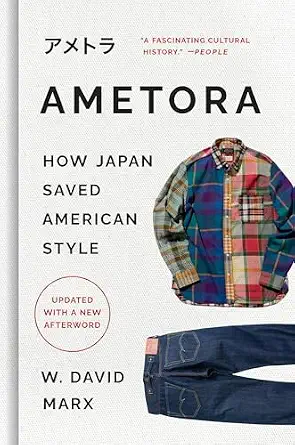 | Best for Menswear Enthusiasts — the most focused read | Format: Book | Genre: Cultural history | Focus: Japanese adoption and refinement of American style | VIEW LATEST PRICE | See Our Full Breakdown |
| Japanese Fashion: A Journey from Tradition to Iconic Designers, Street Style to Global Influence |  | Best for Beginners — the broadest overview | Format: Book | Genre: Fashion history and overview | Coverage Span: Traditional dress through contemporary global influence | VIEW LATEST PRICE | See Our Full Breakdown |
| Japanese Fashion Designers: The Work and Influence of Issey Miyake, Yohji Yamamoto, and Rei Kawakubo |  | Best Deep Dive — the designer-study choice | Format: Book | Genre: Designer study and analysis | Subjects: Issey Miyake, Yohji Yamamoto, Rei Kawakubo | VIEW LATEST PRICE | See Our Full Breakdown |
| Future Beauty: 30 Years of Japanese Fashion |  | Best Visual Reference — the exhibition catalog | Format: Book (exhibition companion) | Genre: Fashion retrospective | Coverage Span: 30 years of Japanese fashion | VIEW LATEST PRICE | See Our Full Breakdown |
| Japanese fashion brand | Format | Genre | Audience |
|---|---|---|---|
| Make Your Own Japanese Clothes | Book | — | — |
| Ametora: How Japan Saved Ameri | Book | Cultural history | — |
| Japanese Fashion: A Journey fr | Book | Fashion history and overview | General readers and beginners |
| Japanese Fashion Designers: Th | Book | Designer study and analysis | Students, researchers, serious enthusiasts |
| Future Beauty: 30 Years of Jap | Book (exhibition companion) | Fashion retrospective | Fashion enthusiasts, design students |
More Details on Our Top Picks
Make Your Own Japanese Clothes: Patterns and Ideas for Modern Wear
This is the book I’d point most people toward first, and the reason is simple: it’s the only entry here that teaches you to actually make Japanese clothing rather than read about it. While the other four titles put designers and history on a pedestal, this one puts patterns on your cutting table. That makes it a fundamentally different purchase, and for the majority of buyers curious about Japanese fashion, doing beats observing.
Where a book like Ametora tells you why Japanese craftsmanship became legendary, this one shows you the construction techniques that produce that reputation. The garments covered follow traditional Japanese lines — think rectangular construction and minimal waste — but adapted for modern wearability, which means you end up with pieces you can actually wear to dinner rather than costume-like replicas.
The tradeoff is real, though. This book won’t teach you a single thing about Yamamoto or Kawakubo, and if your interest in Japanese fashion is intellectual rather than practical, you’ll close it unsatisfied. Compared with Japanese Fashion: A Journey, which spans centuries of style history, this book has almost no cultural context at all. It also assumes basic sewing comfort; absolute beginners with no machine experience will need supplementary help.
Pros:- Includes clear patterns designed for home sewers
- Bridges traditional Japanese design and modern wearability
- Teaches construction techniques, not just inspiration
- The only practical, hands-on title in this comparison
Cons:- Provides no history or designer context
- Assumes prior sewing comfort
- Won’t satisfy purely intellectual interest in Japanese fashion
Best for: Home sewers, makers, and anyone who wants to wear Japanese-inspired clothing they built themselves
Not ideal for: Readers seeking fashion history, designer profiles, or cultural analysis
- Format:Book
- Focus:Sewing patterns and garment construction
- Style Covered:Traditional Japanese garments adapted for modern wear
- Skill Level:Confident beginner to intermediate sewer
- Includes Patterns:Yes
- Best Use:Hands-on garment making
- Cultural History Content:Minimal
Our verdict“If your goal is to engage with Japanese fashion through your hands rather than your bookshelf, this is the clear pick.”
Ametora: How Japan Saved American Style
Of the four history titles here, Ametora is the one I’d hand to a friend and say “read this weekend.” It tells a single, gripping story: how postwar Japan fell in love with American style — vintage denim, ivy league prep, workwear — studied it with almost religious intensity, and then re-exported it back to the world in refined form. If you’ve ever wondered why the best denim comes from Okayama, this book explains it.
Compared with Japanese Fashion: A Journey, which spreads itself across tradition, designers, and street style, Ametora goes deep on one lane and is far more satisfying for it. The narrative momentum here is unmatched in this lineup; the broader histories inform, but this one entertains. It’s also the only book in the comparison that seriously engages with menswear, which the designer-focused and tradition-focused picks largely ignore.
The drawback is scope. If your passion is avant-garde womenswear, kimono history, or contemporary street brands, this book will feel narrow — a point worth accepting before buying. It’s also more journalistic than academic, so readers wanting rigorous design analysis will find Japanese Fashion Designers better suited to that need. And if you never wear or care about menswear, half the payoff evaporates.
Pros:- Engaging, story-driven cultural history
- Well-researched account of the Japan-America style exchange
- The only menswear-focused book in this lineup
- Explains the origins of Japan’s denim and prep obsession
Cons:- Niche topic with limited appeal outside menswear
- No coverage of avant-garde or traditional Japanese design
- Journalistic rather than academic in tone
Best for: Menswear fans, denim heads, and readers who love a well-told cultural story
Not ideal for: Readers focused on womenswear, avant-garde design, or traditional Japanese dress
- Format:Book
- Genre:Cultural history
- Focus:Japanese adoption and refinement of American style
- Key Topics:Vintage denim, ivy/prep, workwear, street culture
- Perspective:Journalistic narrative
- Coverage Period:Postwar to modern era
- Gender Focus:Menswear-centered
Our verdict“The most entertaining read in the lineup — buy it if menswear or denim culture is anywhere on your radar.”
Japanese Fashion: A Journey from Tradition to Iconic Designers, Street Style to Global Influence
If you’re new to Japanese fashion and want one book to orient you, this is the smartest starting point among the reading titles. Its structure moves from traditional dress through iconic designers to street style and global influence, which means you get the full arc in a single volume. Compared with Ametora’s tight focus, this book trades depth for sweep — and for a newcomer, that trade is worth making.
Where Future Beauty concentrates on thirty years of designer work, this title widens the lens to include the tradition-to-street pipeline, giving you context the exhibition-derived book lacks. That makes it the best map of the territory: after finishing it, you’ll know which corners of Japanese fashion you want to explore next, whether that’s a designer study or a sewing project.
The downside of breadth is thinness. No single designer, era, or movement gets the treatment that Japanese Fashion Designers gives Miyake, Yamamoto, and Kawakubo, so readers who already know the basics may find it repetitive. The listing itself is also light on detail, which makes it hard to verify depth before buying. Think of this as your orientation course, not your thesis.
Pros:- Covers the full arc from traditional dress to global influence
- Includes street style, which the designer-focused books skip
- Good orientation for choosing deeper follow-up reading
- Approachable structure for newcomers
Cons:- Broad coverage means limited depth on any single topic
- Light on detailed listing information
- Redundant for readers already familiar with the field
Best for: Beginners who want a single, wide-ranging introduction to Japanese fashion
Not ideal for: Experienced enthusiasts who already know the major names and movements
- Format:Book
- Genre:Fashion history and overview
- Coverage Span:Traditional dress through contemporary global influence
- Topics Included:Kimono tradition, iconic designers, street style
- Depth Level:Introductory to intermediate
- Audience:General readers and beginners
Our verdict“The best first book on Japanese fashion — buy it to learn the map, then specialize.”
Japanese Fashion Designers: The Work and Influence of Issey Miyake, Yohji Yamamoto, and Rei Kawakubo
This is the specialist’s pick. Where Japanese Fashion: A Journey gives each designer a chapter at most, this book devotes its entire length to the trio who upended Paris fashion in the 1980s: Issey Miyake, Yohji Yamamoto, and Rei Kawakubo. For fashion students and serious enthusiasts, that focus is the whole point — these three names are the backbone of Japanese fashion’s global reputation, and this is the only title here built around them.
Compared with Future Beauty, which also centers on designer work, this book appears more analytical than visual, examining design philosophies and industry impact rather than serving as an exhibition catalog. That makes the two complementary rather than interchangeable: one for reading closely, one for looking at. If you must choose a single designer-focused book and your interest is conceptual, this is the one.
Be aware of two things before buying. The academic register will feel dry to casual readers — Ametora reads like a magazine feature by comparison. And the listing is thin on detail, so the exact balance of biography, analysis, and imagery is hard to confirm in advance. Casual browsers should start elsewhere; this book rewards readers who already care about the subject.
Pros:- Focused entirely on Miyake, Yamamoto, and Kawakubo
- Analyzes design philosophies and long-term industry impact
- The only dedicated designer study in this lineup
- Strong companion to broader histories like Japanese Fashion: A Journey
Cons:- Academic tone may feel dry to general readers
- No coverage of street style or traditional dress
- Limited listing detail makes depth hard to verify pre-purchase
Best for: Design students and enthusiasts who want concentrated analysis of Japan’s big three avant-garde designers
Not ideal for: Casual readers wanting light, visual, or story-driven content
- Format:Book
- Genre:Designer study and analysis
- Subjects:Issey Miyake, Yohji Yamamoto, Rei Kawakubo
- Key Topics:Design philosophy, avant-garde fashion, industry influence
- Depth Level:Advanced / academic
- Audience:Students, researchers, serious enthusiasts
- Coverage Period:1980s onward, designer careers
Our verdict“For readers who already know they love the avant-garde big three, this is the concentrated study the other books only gesture at.”
Future Beauty: 30 Years of Japanese Fashion
Future Beauty earns its place as the visual anchor of this lineup. Born as the companion to a major exhibition, it captures three decades of Japanese fashion design in a format meant to be looked at as much as read. If your relationship to fashion is primarily visual — silhouettes, fabric treatments, runway moments — this pick makes more sense than any text-heavy alternative here.
Its closest rival is Japanese Fashion Designers, which covers overlapping territory through analysis rather than imagery. I’d describe the split this way: Future Beauty for the eye, the designer study for the mind. Compared with the broad Japanese Fashion: A Journey, Future Beauty is narrower in scope but richer per page, documenting designers’ actual output across thirty years rather than summarizing movements.
The limitations follow from its format. As an exhibition companion, it’s structured around a show rather than a narrative, so readers wanting a story with a beginning and end will prefer Ametora or the overview title. The listing offers limited detailed information, which is a genuine buying risk if you expect sustained text. And it’s arguably the most redundant purchase if you already own the designer study, since the subject matter overlaps considerably.
Pros:- Documents three decades of Japanese fashion design
- Exhibition-quality visual presentation
- Strong browsable reference for design students
- Complements text-heavy picks like Japanese Fashion Designers
Cons:- Catalog structure lacks narrative flow
- Limited detailed listing information
- Overlaps heavily with the designer-study pick, risking redundancy
Best for: Visual learners, design students, and readers who want a browsable archive of Japanese fashion imagery
Not ideal for: Readers wanting narrative history or a storyline
- Format:Book (exhibition companion)
- Genre:Fashion retrospective
- Coverage Span:30 years of Japanese fashion
- Origin:Companion to a major museum exhibition
- Presentation:Visually driven, image-heavy
- Audience:Fashion enthusiasts, design students
- Best Use:Visual reference and browsing
Our verdict“Choose this when you want to see thirty years of Japanese design rather than read about it — and pair it with a text-based title for the full picture.”

How We Picked
Since every product in this category is a book rather than a garment, I judged them on how well they serve distinct buyer intentions rather than on shared specs. My criteria fell into four buckets.
First, scope of coverage. Some buyers want a centuries-spanning overview, others want a single decade or designer covered in detail. I ranked books that clearly define their lane higher than those with vague framing.
Second, practical utility. A sewing guide with usable patterns delivers something a history book cannot, and I weighted that hands-on value heavily for beginners and makers.
Third, audience fit. A design student, a menswear enthusiast, and a home sewer each need completely different books, so I assigned each pick a role and stated plainly who should skip it.
Finally, readability and re-read value. Cultural histories live or die on their storytelling, while visual books depend on imagery and production quality. Where listing information was thin — as it was for several of these titles — I flagged that as a drawback rather than glossing over it, because uncertain depth is a real buying risk.
| Japanese fashion brand | Format | Genre | Audience |
|---|---|---|---|
| Make Your Own Japanese Clothes | Book | — | — |
| Ametora: How Japan Saved Ameri | Book | Cultural history | — |
| Japanese Fashion: A Journey fr | Book | Fashion history and overview | General readers and beginners |
| Japanese Fashion Designers: Th | Book | Designer study and analysis | Students, researchers, serious enthusiasts |
| Future Beauty: 30 Years of Jap | Book (exhibition companion) | Fashion retrospective | Fashion enthusiasts, design students |
Factors to Consider When Choosing Best Japanese Fashion Brands
Choosing among these five books comes down to one question: what do you want Japanese fashion to do for you? Here’s how I’d work through the decision.Decide Between Making and Reading
The single biggest fork is between the sewing guide and everything else. If you own a sewing machine and want wearable results, Make Your Own Japanese Clothes is your answer regardless of anything else in this guide. If you’d rather understand the culture, skip it — the four history titles will serve you far better.
Match the Book to Your Fashion Interest
Within the reading titles, your interest determines the pick. Menswear and denim culture point straight to Ametora. Avant-garde and conceptual design point to the Miyake/Yamamoto/Kawakubo study. Street style and tradition together point to the overview title. And a preference for imagery over text points to Future Beauty. None of these books substitutes cleanly for another, which is why I’ve ranked them by audience rather than quality alone.
Consider Depth Versus Breadth
Beginners should generally start broad and specialize later. The overview title teaches you the map; the designer study and Ametora teach you the territory. Buying two narrow books before understanding the landscape often means duplicated content and gaps elsewhere. If you only ever buy two, I’d suggest one broad book plus one focused one that matches your strongest interest.
Weigh the Information Gap
Several of these listings are light on detail, which is an honest risk in niche fashion publishing. Where a book’s exact depth is uncertain, check the page count and publisher description carefully before buying, and favor returns-friendly purchases. Books with academic origins tend to be denser but drier; exhibition companions tend to be beautiful but light on sustained text.
Fall Picks
fall essentials
As an affiliate, we earn on qualifying purchases.