Digital try-on tools excel at providing quick, engaging virtual fitting experiences and making browsing more convenient, helping you visualize outfits easily. However, they often fall short in accurately capturing fabric textures, movement, and perfect fit due to display quality and lighting effects. While you can get a good idea of style, these tools aren’t flawless. If you keep exploring, you’ll discover how these limitations are evolving and what’s coming next to improve your virtual fitting experience.
Key Takeaways
- Virtual try-on tools offer quick, engaging, and convenient browsing experiences, enhancing initial product selection.
- They rely heavily on device display quality and lighting, affecting color accuracy and realism.
- Struggle to accurately depict fabric textures and garment movement, limiting true visual realism.
- Face challenges in accurately capturing body shapes and fit, impacting overall fit visualization.
- While helpful, they cannot fully replace in-person try-ons and are best used as supplementary tools.
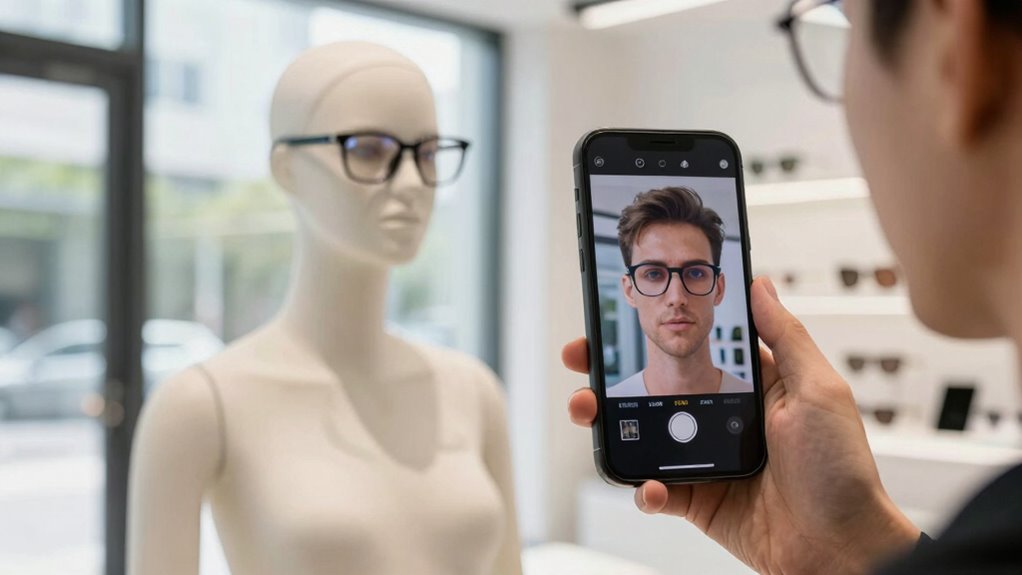
Digital try-on tools depend heavily on the quality of your device’s display and lighting conditions. Sometimes, the colors shown virtually don’t match the actual product, leading to disappointment upon delivery. Additionally, the technology can struggle with details like fabric texture or how the garment moves when you adjust your pose. This limitation makes it difficult to fully visualize how an item will look and feel during everyday use. Furthermore, advancements in body shape capture technology are needed to improve fit accuracy and user satisfaction. As the technology evolves, the integration of realistic rendering techniques could significantly enhance the overall experience, making virtual try-ons more reliable and immersive. Improving visual realism is crucial for bridging the gap between virtual and real-world appearance. Improving lighting conditions within the app can also help create a more accurate representation of colors and textures. Additionally, addressing device variability is essential to ensure consistent experiences across different smartphones and tablets.
In the end, digital try-on tools are a promising step toward more convenient shopping, but they’re not foolproof. They excel in providing a quick, engaging virtual fitting that enhances the user experience, especially for browsing and initial selections. Still, they can’t fully replace the tactile and visual accuracy of trying on clothes or accessories in person. As technology improves, expect these tools to get better at mimicking real-world fit and feel, but for now, it’s wise to approach virtual try-ons as helpful guides rather than definitive solutions.

Virtual Dressing Room
- Try clothes on your phone: Virtual dressing experience on mobile
- Experiment with new styles: Explore different fashion looks
- Access hundreds of outfits: Try diverse clothes without leaving home
As an affiliate, we earn on qualifying purchases.
As an affiliate, we earn on qualifying purchases.
Frequently Asked Questions
How Accurate Are Digital Try-On Tools for Different Skin Tones?
Digital try-on tools can be quite accurate for different skin tones, but their skin tone accuracy varies. You might notice some inconsistencies in color matching, especially with darker or more complex skin tones. These tools improve as algorithms learn, but always double-check the color matching against real-life samples. For the best results, choose tools that specify their ability to handle diverse skin tones effectively.
Do Try-On Tools Work Equally Well on All Device Types?
Try-on tools work differently across device types due to variations in user interface and camera quality. On smartphones with high-resolution cameras and intuitive interfaces, you’ll notice better color accuracy and smoother experiences. Desktop devices with larger screens can offer more detailed views, but may lack the portability. Overall, the effectiveness of try-on tools depends heavily on device capabilities, so expect some differences in accuracy and usability depending on what you’re using.
How Do Digital Try-On Tools Handle Lighting Variations?
Digital try-on tools handle lighting variations by trying to maintain lighting consistency through advanced algorithms. They often use real-time calibration challenges to adjust for differences in ambient light, ensuring that virtual products appear as realistic as possible. You’ll notice that some tools automatically adapt to your environment, but others might struggle with drastic lighting changes, which can affect the accuracy of how items look on you.
Can These Tools Recommend Personalized Product Sizes?
Yes, digital try-on tools can recommend personalized product sizes by analyzing your body measurements and fit preferences. They leverage data and algorithms to improve size recommendations, enhancing fit accuracy. This helps you find products that suit your size better, reducing returns and increasing satisfaction. However, the effectiveness depends on the quality of input data and technology, so some tools may still struggle with perfect fit accuracy for every individual.
What Privacy Measures Are in Place for User Data?
Think of your data like a precious gem—protect it carefully. Digital try-on tools use data encryption to safeguard your personal info and require your explicit user consent before collecting any data. For example, many platforms now prioritize transparent privacy policies, ensuring you control what info is shared. These measures help prevent unauthorized access, giving you peace of mind that your virtual wardrobe experiments stay private and secure.
Conclusion
Imagine slipping into a new pair of glasses without leaving your couch—that’s the promise of digital try-on tools. While they often nail the fit and style, sometimes they miss the mark on true-to-life accuracy. Think of it like trying on shoes through a foggy mirror—you get the idea, but not the full picture. As technology improves, these tools will better reflect reality, helping you make smarter, more confident choices from wherever you are.