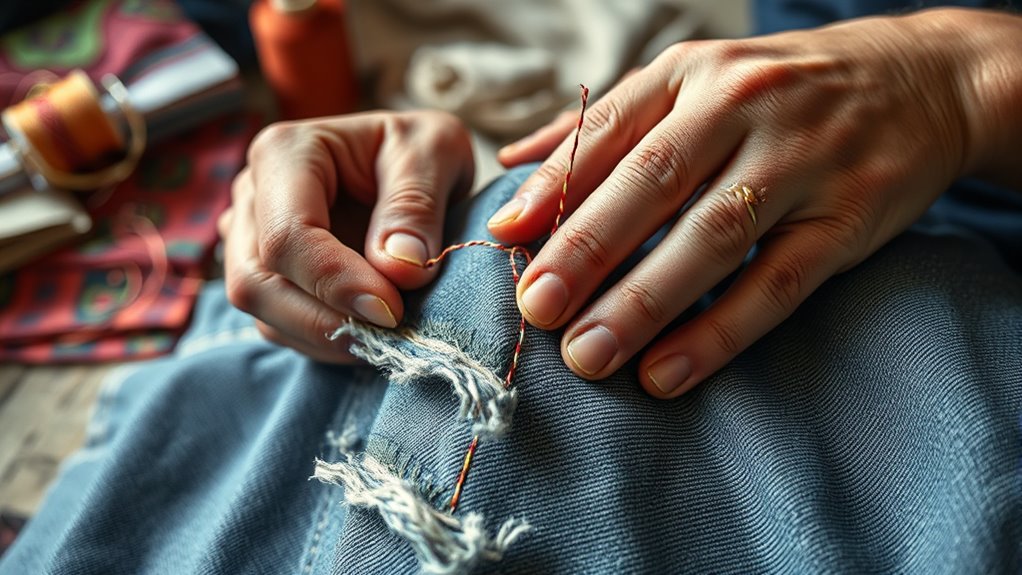

Building a mending routine helps you save money, reduce waste, and develop valuable skills. Start by evaluating whether a repair is feasible before considering replacement. Gather basic tools and learn simple DIY techniques online to handle common issues. Regularly repairing items fosters a mindset of resourcefulness and sustainability. Over time, you’ll become more confident in maintaining your household efficiently. To learn how to create a consistent repair routine that benefits your budget and environment, keep exploring these strategies.
Key Takeaways
- Establish a regular assessment routine to evaluate whether items can be repaired or should be replaced.
- Learn basic repair skills through tutorials to confidently tackle common household issues.
- Prioritize repairing minor damages to save costs and reduce environmental waste.
- Develop a toolbox with essential repair tools to streamline the mending process.
- Track repair costs and savings over time to reinforce the benefits of a consistent repair routine.
Have you ever wondered whether repairing something is better than replacing it? Making that choice often comes down to a balance between effort, expense, and long-term value. When you contemplate fixing items instead of discarding them, you open the door to a more sustainable and budget-friendly approach. Building a mending routine starts with understanding the power of DIY techniques. These methods empower you to troubleshoot and fix common issues on your own, saving you money and reducing waste. Whether it’s patching a ripped jeans seam, unclogging a drain, or refurbishing an old piece of furniture, learning simple repair skills can make a significant difference. You don’t need to be a professional to master basic DIY techniques; many tutorials and online resources walk you through every step. As you develop your skills, you’ll find that tackling small repairs becomes less intimidating and more rewarding.
When weighing repair versus replacement, a key factor is the cost comparison. Replacing an item often involves a higher upfront expense, especially if it’s a major appliance or piece of electronics. For example, buying a new microwave might cost more than repairing the existing one, especially if the repair is straightforward. Additionally, replacement costs don’t end with the initial purchase. You also have to consider disposal fees, the environmental impact, and the time spent shopping for a new product. On the other hand, fixing an item can be considerably cheaper, especially if you already have some basic tools or can borrow them. Even if you need to purchase replacement parts, these are usually inexpensive compared to the cost of a new purchase. Over time, consistently opting for repairs when possible adds up to substantial savings.
Furthermore, understanding the financial aspects of repairs can help you make more informed decisions that align with your budget and values. However, it’s essential to evaluate the extent of the damage or wear. Some items may be beyond repair or no longer efficient to fix. For instance, if a small appliance keeps breaking down despite repeated repairs, replacing it might be more practical in the long run. But for many everyday items, DIY techniques and a clear cost comparison favor repair. Developing this routine means you’ll become more comfortable appraising whether a fix makes sense or if replacement is the smarter choice. It’s about creating a mindful approach: weighing effort, cost, and environmental benefits before jumping to replace. Ultimately, embracing repair over replace can lead to a more sustainable lifestyle, savings, and a sense of accomplishment in managing your belongings wisely.
Frequently Asked Questions
How Do I Determine if a Repair Is Worth the Cost?
To decide if a repair is worth the cost, do a quick cost benefit analysis. Consider the repair’s cost versus the potential increase in repair longevity. If the repair extends the item’s life considerably at a reasonable price, it’s likely worth it. However, if costs outweigh benefits or the item’s condition suggests frequent repairs, replacing might be smarter. Trust your judgment based on these factors.
What Tools Are Essential for Beginner Mending?
You’ll want a good needle and thread to start with, along with scissors for clean cuts. Pliers and a seam ripper are handy for more detailed diy techniques, and a fabric glue can help with quick fixes. Keep your tools well-maintained to guarantee smooth mending sessions. With these essentials, you’re set to build a routine that saves you money and extends your clothes’ lifespan.
How Can I Identify When a Repair Is Temporary?
Sometimes, a quick patch might seem like a solid solution, but it’s just a whisper of a longer story. You’ll notice temporary fixes often lack durability, showing signs of wear or coming loose sooner. To gauge repair longevity, check if the mend holds under daily use and if it needs frequent touch-ups. Trust your instincts—if it feels fragile or unreliable, it’s a sign you might need a more lasting solution.
Are There Eco-Friendly Repair Options Available?
Yes, you can find eco-friendly repair options by using sustainable materials like bamboo, recycled metals, or organic fabrics. Employ eco-friendly techniques such as natural adhesives, low-impact dyes, and minimal waste methods. When you choose these options, you’re reducing environmental impact and promoting sustainability. Always look for products with eco-certifications and prioritize local, renewable resources to guarantee your repairs are both effective and environmentally responsible.
How Do I Prioritize Repairs Versus Replacements in My Home?
Think of your home as a garden needing care. To prioritize repairs versus replacements, assess each item’s age, condition, and repair costs. Focus on cost-effective upgrades and DIY maintenance tips to extend lifespan. Repairs should be your first choice when fixing minor issues, saving money and reducing waste. Replace only when repairs become too costly or ineffective. This approach keeps your home healthy and sustainable, like a well-tended garden.
Conclusion
Remember, when something breaks, it’s often better to repair than replace. Not only do you save money, but you also give new life to your belongings and reduce waste. Think of it as turning over a new leaf—you’ll develop a mending routine that’s both satisfying and eco-friendly. Don’t let fear of fixing things hold you back; with a little effort, you’ll find that repairing is truly worth your while. Stay the course and keep mending!