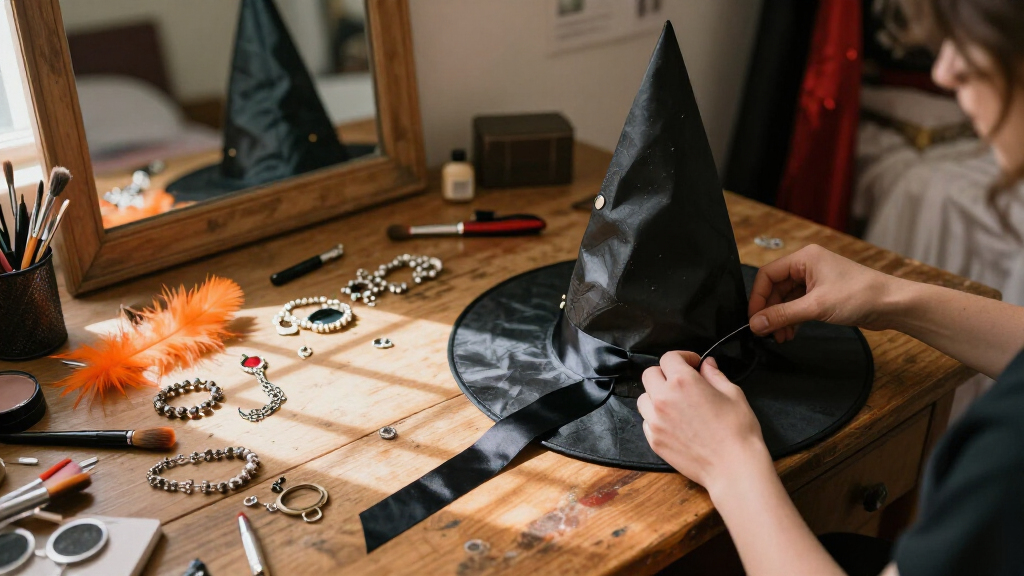

Choose, assemble, and test Halloween costume accessories that complete your outfit without blocking your vision, restricting movement, or creating hazards. This guide is for beginners putting together a costume from items they own, store-bought accessories, or simple handmade pieces. Allow 30-90 minutes, depending on whether you need to make or alter anything.

Get your wardrobe favorites delivered free — and shop member deals
- Fast, free delivery on millions of items
- Access to Prime Big Deal Days deals on October 6–7
- Prime Video, Amazon Music and more included
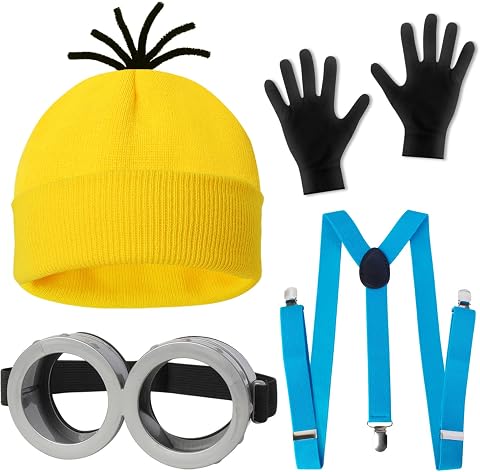
CONGRU Halloween Costume Accessory Set for Adults, 4 Pieces
- ✔ Included items: Yellow beanie, blue suspenders, goggles, and one pair of black gloves
- ✔ Fabric: Polyester
- ✔ Fit: One size fits most adults and kids

JOYEONDEF 4-Piece Halloween Knife Headband Set
- ✔ Quantity: Four headbands
- ✔ Included designs: Scissor, chopping knife, hatchet, and long knife
- ✔ Material: Plastic
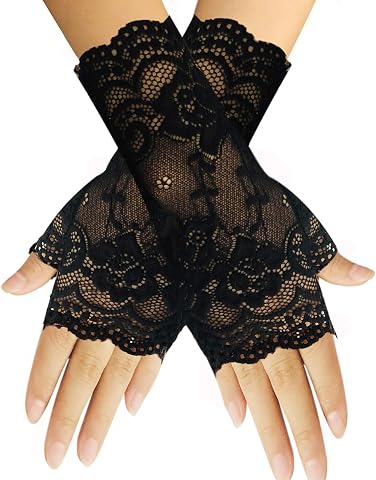
Women’s Short Fingerless Lace Gloves
- ✔ Material: Lace
- ✔ Style: Fingerless floral fishnet
- ✔ Length: Approximately 7.1 inches (18 cm)
Difficulty: Beginner | Time: 30-90 minutes
What You’ll Need
Tools & Materials:
- Costume clothing and any accessories already on hand
- Full-length mirror and a small hand mirror
- Tape measure or ruler
- Safety pins, sewing kit, or skin-safe costume adhesive, as appropriate
- Scissors for craft materials
- Comfortable shoes suitable for walking
Knowledge:
- Basic ability to try on clothing and check fit
- Ability to follow product labels for adhesives, cosmetics, and accessories
Check the event venue’s rules before choosing props, masks, or imitation weapons. Use only cosmetics and adhesives labeled for skin, keep small parts away from young children and pets, and avoid open flames around fabric, wigs, or decorations. If you are making an accessory, use a soft, lightweight material and test it before wearing it for a long event.
CONGRU Halloween Costume Accessory Set for Adults, 4 Pieces
When we want accessories to do more than add one decorative detail, the CONGRU four-piece set has the clearest advantage in this group. A yellow beanie, blue suspenders, adjustable goggles, and black gloves give us several visual cues to build around, making the set a practical shortcut for Halloween, cosplay, or a themed performance. Compared with the lace gloves, it contributes much more to the overall silhouette; compared with the JOYEONDEF headbands, it is less locked into a single horror concept.Adjustable suspenders and a strap on the goggles offer some room to adapt the fit, while the stretchy beanie and gloves are intended to accommodate a range of wearers. That is useful when accessories are being shared or when we are assembling a costume without exact measurements. Still, one size fits most is not a guarantee of a comfortable fit, especially for buyers who need specific sizing. The goggles are plastic, too, so we should view them as costume pieces rather than premium eyewear. This is the most balanced pick for putting together a look, but not the best match for subtle styling or shoppers who want refined materials.
Pros:
- Four coordinated pieces provide a stronger costume foundation than a single accessory.
- Adjustable suspenders and goggles allow some fit flexibility.
- Stretchy beanie and gloves are designed to suit a range of wearers.
- Can be styled for Halloween, cosplay, parties, and performances.
Cons:
- One-size sizing may not suit every adult or child.
- Plastic goggles have a novelty-accessory feel rather than a premium finish.
Best for: Shoppers who want several coordinated accessories to create a recognizable Halloween or cosplay look without assembling each piece separately.
Not ideal for: Anyone who needs precise sizing, wants high-end prop materials, or is looking for a subtle accessory to finish an existing outfit.
Bottom line: We recommend the CONGRU set when we want the most complete and adaptable costume starting point in this lineup.
“We recommend the CONGRU set when we want the most complete and adaptable costume starting point in this lineup.”
JOYEONDEF 4-Piece Halloween Knife Headband Set
The JOYEONDEF set is the most direct route to a scary costume in this comparison. Each of its four plastic headbands features a different prop—a scissor, chopping knife, hatchet, or long knife—with blood-splatter effects. That makes the pack more immediately expressive than the CONGRU set, whose pieces can suggest a character but leave more interpretation to us. It is also more Halloween-specific than the lace gloves: these headbands announce a horror or crime-scene concept as soon as they go on.We can use the different designs to change the effect or share options among a group, and the lightweight, flexible plastic is intended to make them easy to wear. But this focus is also the main drawback. The horror theme is narrow, and the plastic may look or feel less convincing than more substantial props. These headbands are costume accessories, not realistic prop replacements. They are a good choice when a quick visual gag or zombie-style look matters more than subtlety; for a character that needs a broader outfit foundation, the CONGRU set is more useful. Anyone after an accessory that can move between gothic, formal, and everyday costume concepts should consider the lace gloves instead.
Pros:
- Four distinct headband designs provide variety within one horror-themed set.
- Blood-splatter details make the scary concept clear at a glance.
- Lightweight, flexible plastic is designed for easy wear.
- Fits most head sizes, according to the product description.
Cons:
- The designs are strongly tied to horror and crime-scene costumes.
- Plastic construction may feel inexpensive beside more substantial props.
- Hand-wash-only care may be less convenient after an event.
Best for: Halloween shoppers who want a fast, recognizable horror or crime-victim detail, or a set of varied headband props for a group.
Not ideal for: Buyers seeking realistic, premium-feeling props or accessories that can transition easily to non-horror costumes.
Bottom line: We choose these headbands when horror impact and variety matter more than broad costume versatility or premium prop realism.
“We choose these headbands when horror impact and variety matter more than broad costume versatility or premium prop realism.”
Women’s Short Fingerless Lace Gloves
These short fingerless lace gloves serve a different purpose from the two multi-piece sets: they refine an outfit rather than establish its character. The floral fishnet pattern and approximately 7.1-inch length can add a gothic, romantic, or theatrical note while leaving the fingers uncovered. Compared with the CONGRU accessories, they are less likely to transform an outfit on their own, but they are also less visually dominant. Against the JOYEONDEF headbands, they offer a quieter effect that can work with more formal or costume-party styling.The stretchy, lightweight lace is a sensible choice when we want hand coverage without a bulky glove, and the product description also positions the pair for performances, parties, and formal events. That wider use makes them the most adaptable accessory for buyers who already own a costume and need a finishing detail. The tradeoff is equally clear: one pair cannot substitute for a full costume kit, and the one-size fit may not work for every hand. Care is another consideration, since the gloves require cold hand washing and hanging to dry. Choose them for atmosphere and detail, not for an all-in-one Halloween solution.
Pros:
- Floral fishnet lace adds a distinctive, dressy costume detail.
- Fingerless design leaves fingers uncovered.
- Lightweight, stretchy construction is suited to layered styling.
- Can complement costumes, performances, parties, and formal outfits.
Cons:
- The single pair adds detail but does not create a complete costume look.
- One-size stretch may not fit every wearer comfortably.
- Hand washing and hang drying require extra care.
Best for: Shoppers completing a gothic, romantic, formal, or theatrical costume who want a lightweight accessory that leaves the fingers free.
Not ideal for: Anyone who needs a complete costume look from the accessory purchase or prefers machine-washable pieces and specific sizing.
Bottom line: We recommend these gloves as a restrained finishing detail when the costume is already in place, not as a standalone Halloween solution.
“We recommend these gloves as a restrained finishing detail when the costume is already in place, not as a standalone Halloween solution.”
As an Amazon Associate we earn from qualifying purchases.
Before You Start
Set aside the complete outfit, including outerwear and the bag or container you will carry. Accessories that look suitable on a table may snag, slide, or become uncomfortable once you walk, sit, and reach. Plan for the weather and the event: a lightweight indoor costume may need a warm layer outside, while a crowded event calls for props that are small, soft, and easy to carry. Do not use accessories that obscure your vision or hearing, catch on other people, or have sharp edges.
Step-by-Step Instructions
Step 1: Set the costume’s main idea
Put on the clothing that forms the base of the costume, then name the character, creature, or theme you want people to recognize. Choose a small set of accessories that support that idea, such as a hat and badge for a detective or ears and a tail for an animal. Prioritize items that make the costume recognizable rather than adding every themed object you can find.
Tip: Limit the main accessories to a few coordinated pieces. Too many competing colors, props, or dangling parts can make the outfit harder to read and wear.
Check: Someone looking at the outfit can identify the intended theme without needing a long explanation.
Step 2: Check the event and weather
Find out whether the venue restricts masks, props, face coverings, or replica weapons. Check the forecast and decide whether you will need a coat, umbrella, or warmer layers. Choose accessories that fit those conditions, and leave prohibited or impractical items at home.
Tip: A mask may not be allowed at a venue or may become uncomfortable in a warm room. Plan an alternate accessory, such as a headband or face paint, if needed.
Check: Your selected items meet the venue’s rules and can be worn with any necessary weather clothing.
Step 3: Choose accessories for fit and comfort
Try on each accessory with the complete costume. Check that hats and headbands do not pinch, jewelry does not pull, belts do not restrict breathing, and straps do not rub. Wear the shoes you plan to use and check that hems, capes, tails, and long scarves stay clear of your feet.
Tip: Avoid accessories with sharp points, heavy dangling parts, tight neck ties, or small pieces that could detach. For children, choose lightweight items without long cords or loose parts.
Check: You can stand, sit, bend, and take several steps without pain, pinching, tripping, or catching the costume.
Step 4: Check visibility and movement
Look straight ahead, down, and to both sides while wearing the full outfit. If you plan to wear a mask, test it in good light and confirm that you can see the floor, stairs, and people around you. Check that you can hear nearby speech and breathe comfortably. Remove or alter any item that blocks your view, hearing, or movement.
Tip: Do not rely on a narrow eye opening that looks clear in a mirror but limits side vision. Use face paint or a partial headpiece instead if the mask is unsafe.
Check: You can see your walking path, hear ordinary conversation, breathe freely, and move your arms and legs normally.
Step 5: Secure loose accessories
Fasten each item with a suitable method: pin fabric from the inside, use a clip on a sturdy seam, or attach a lightweight piece with adhesive made for the surface. Keep pins closed and pointed away from skin. Follow adhesive directions, including drying time, and never put craft glue on skin. Tug each attachment gently to check that it stays in place.
Tip: Test skin-safe adhesive on a small area first and stop using it if irritation occurs. Do not attach heavy objects to delicate fabric or rely on tape alone for a load-bearing prop.
Check: Accessories remain attached during gentle movement, with no exposed sharp ends, sticky residue on skin, or strain on the clothing.
Step 6: Prepare props and carried items
Choose props made from soft, lightweight materials and check them for sharp edges, splinters, or loose parts. Confirm the venue permits them. Decide where each item will go when you need your hands free, and keep an accessible pocket or small bag for essentials such as keys, phone, and identification. Do not carry a prop that could be mistaken for a real weapon in public.
Tip: Use a clearly playful, soft prop rather than a realistic replica. Leave anything sharp, heavy, or difficult to control at home.
Check: You can carry the prop without striking people or objects, and you have a secure place for essentials.
Step 7: Do a full movement test
Wear the entire costume and accessories for 10-15 minutes. Walk, turn, sit, stand, reach, and go up and down a step if you will encounter stairs. Check for slipping straps, loose fasteners, blocked vision, overheating, or pieces that drag or snag. Make adjustments now, then repeat the movements that revealed a problem.
Tip: Test in the shoes and outerwear you will actually use. A costume that works indoors may become unsafe with a long coat or in low light.
Check: The outfit stays in place throughout the test, and you can move comfortably without needing to hold an accessory in place.
Step 8: Pack a small repair kit
Pack a few items suited to your costume, such as spare safety pins, a small roll of fabric tape, a hair tie, or a replacement fastener. Keep the kit separate from sharp objects and put it somewhere you can reach. If someone else will help with repairs, tell them where it is.
Tip: Do not pack tools or adhesives that the venue prohibits. For a child’s costume, give the repair kit to an adult rather than placing it in a small child’s bag.
Check: You can access a simple repair item without unpacking or removing the whole costume.
Common Mistakes to Avoid
- Adding accessories before checking the venue’s rules. — Review the venue policy first, especially for masks, props, and imitation weapons. Choose a permitted backup if needed.
- Choosing a mask or headpiece that blocks side vision. — Test visibility while wearing it, including looking down and to both sides. Replace it with face paint or a partial headpiece if your view is limited.
- Using heavy or sharp accessories that pull, snag, or hurt someone. — Choose soft, lightweight pieces with smooth edges, and attach them to sturdy parts of the costume.
- Skipping a full costume test until the event. — Wear everything for 10-15 minutes and walk, sit, and reach before leaving. Fix slipping or rubbing while you still have time.
Troubleshooting
Problem: A headband, hat, or mask keeps slipping.
Solution: Adjust its size or add a suitable fabric grip or soft fastening. Avoid tightening it until it pinches. If it still slides or affects vision, swap it for a lighter or more stable option.
Problem: An accessory pulls on the clothing or causes discomfort.
Solution: Remove it and reduce its weight, reposition the attachment onto a sturdier seam, or use a softer material. Do not keep wearing a piece that causes pain or restricts breathing.
Problem: An adhesive irritates skin or does not hold.
Solution: Remove the item and follow the product directions for cleaning the area. Stop using the adhesive if irritation develops. Attach the accessory to clothing with a clip or sewn fastening instead; use only products labeled for skin on skin.
Problem: A cape, tail, scarf, or long hem catches underfoot.
Solution: Shorten or secure the loose length so it clears the ground and shoes while walking. Retest turns and stairs before wearing the costume out.
What Success Looks Like
The finished costume communicates its theme, follows venue rules, and feels comfortable during the movement test. Accessories stay attached without pulling or snagging, your view and hearing remain usable, and you can walk, sit, reach, and climb steps safely. You also have a practical way to carry essentials and fix a minor problem.
Next Steps
Before leaving, check fasteners, footwear, and weather layers once more, and tell your group where your phone and essentials are. At the event, remove any accessory that becomes uncomfortable, blocks your view, or starts to come loose. Afterward, remove pins and adhesives carefully, clean reusable accessories according to their labels, and store delicate pieces in a dry container so they are ready for another use.
Frequently Asked Questions
How many Halloween costume accessories should I wear?
Use enough to make the costume recognizable, but keep the set manageable. A few coordinated pieces are often easier to wear than many competing or dangling items. Choose comfort and safe movement over completeness.
Can I wear a mask while trick-or-treating?
Only wear one that leaves your vision, breathing, and hearing clear, and check whether the event permits it. Test it before going out. Face paint or a partial headpiece is a safer choice if a mask limits your view.
How can I attach costume accessories without damaging clothes?
Use clips on sturdy seams or sew-on fasteners for reusable pieces. For temporary fabric attachments, choose suitable fabric tape and test it on an inconspicuous area. Keep pins closed and away from skin, and follow the garment’s care label.
What should I do if a costume accessory irritates my skin?
Take it off as soon as you notice irritation. Wash the area gently if a product label calls for it, stop using the product, and choose an attachment that stays on clothing instead. Seek medical advice for a severe or persistent reaction.
Fall Picks
fall essentials
As an affiliate, we earn on qualifying purchases.