To use size charts like a pro, start by knowing your precise measurements—bust, waist, hips, and inseam—using a reliable tape and standing relaxed. Compare these numbers directly to each brand’s chart, paying attention to fit notes and sizing tips. Keep your preferences in mind—whether you want a snug or loose fit—and double-check the chart every time you shop. If you stick to these steps, you’ll confidently find the perfect fit—more tips await if you keep exploring.
Key Takeaways
- Always measure your bust, waist, hips, inseam, and sleeve length in a relaxed stance for accuracy.
- Compare your measurements directly to the retailer’s size chart to find the best fit.
- Note brand-specific fit notes like “fits true to size” or “runs small” to adjust your size choice.
- Use multiple measurements to verify the size, avoiding reliance on size labels alone.
- Keep your measuring tape handy and double-check size charts before purchasing to minimize returns.
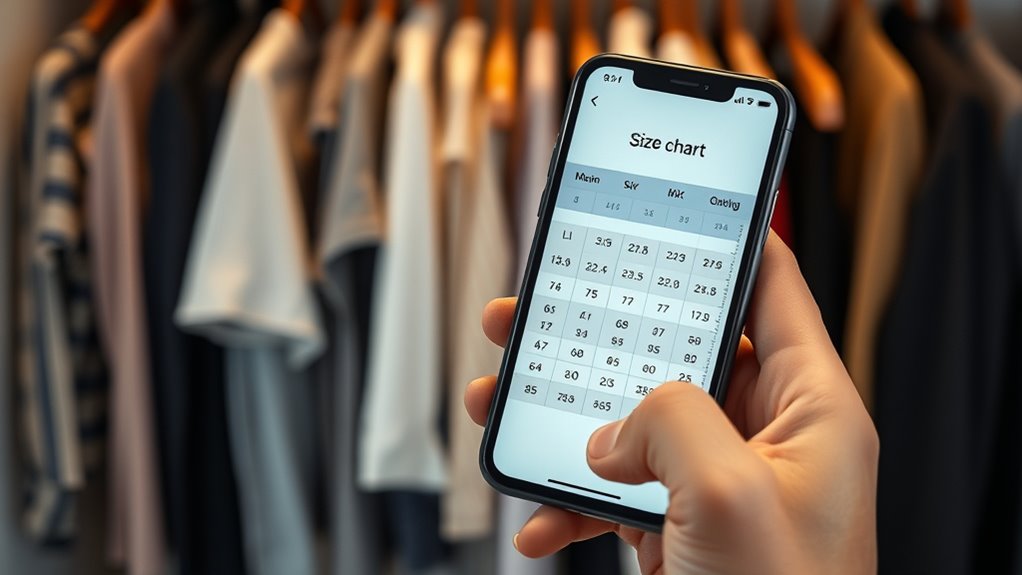
When shopping for clothing online, using size charts can be your best tool to guarantee a perfect fit. Unlike shopping in-store, where you can try things on, online shopping demands a bit more preparation. The key is understanding your measurements and how they relate to the size chart provided by each brand or retailer. To do this accurately, you’ll want a reliable measuring tape. Keep it close, and remember to measure yourself in a relaxed state, standing straight, with no bulky clothing that could distort your measurements. Focus on key areas such as your bust, waist, hips, inseam, and sleeve length, depending on what you’re purchasing. Taking precise measurements ensures you compare your actual size to the retailer’s chart, reducing the chances of ordering the wrong size.
Once you have your measurements, consider your fit preferences. Some people like a snug fit, while others prefer a looser, more relaxed look. Many size charts show standard measurements, but your ideal size might vary based on personal style and comfort. For example, if you’re between two sizes, think about whether you want a tighter or looser fit, and choose accordingly. Some brands also include notes on their fit, such as “fits true to size” or “runs small,” which can influence your decision. Knowing your fit preferences means you can adjust your size choice when comparing measurements to charts, ensuring your new clothes match your comfort expectations.
When consulting size charts, pay close attention to the specific measurements listed. Don’t just look at the number for your size; compare your measurements to each listed measurement for that size. For instance, if your bust measures 36 inches, check the chart to see which size corresponds to that measurement. If the chart shows a 36-inch bust fits a medium, then that’s your best choice for that style. Some brands include multiple measurements, like waist and hips, so take all relevant measurements before making a decision. This detailed approach helps you avoid guesswork and ensures a better fit.
Finally, remember that sizing can vary by brand and style, so always double-check the specific size chart for each item. Keep your measuring tape handy and your fit preferences clear in your mind. By combining precise measurements with a good understanding of how you like your clothes to fit, you’ll shop smarter and more confidently online. Understanding sizing differences can save you from costly returns and exchanges, making your shopping experience more efficient. This method saves you time, money, and frustration, making your online shopping experience more successful and enjoyable.

iBayam 2 Pack Tape Measure Measuring Tape for Body Fabric Sewing Tailor Cloth Knitting Vinyl Home Craft Measurements, 60-Inch Soft Fashion Pink & Retractable Black Double Scales Rulers for Body Weight
2 Pack Soft Fashion Measuring Tape Set. Double sided, 60 inch / 150 cm, portable,durable tape measure. Small…
As an affiliate, we earn on qualifying purchases.
As an affiliate, we earn on qualifying purchases.
Frequently Asked Questions
How Do I Measure Myself Accurately at Home?
To measure yourself accurately at home, grab reliable measuring tools like a flexible tape measure. Stand straight with proper body positioning—keep your shoulders relaxed and arms at your sides. Measure key areas like your bust, waist, and hips, ensuring the tape is snug but not tight. Take measurements twice for consistency. Accurate measurements help you compare with size charts and find the perfect fit when shopping online.
What Should I Do if My Measurements Fall Between Sizes?
If your measurements land between sizes, think of it like choosing between two favorite songs—you might enjoy both. Use fit tips like sizing up for a looser, more comfortable fit or consult style advice for a tailored look. Remember, sometimes a slight size difference can enhance your style, so don’t hesitate to read reviews or try on similar items for better confidence in your decision.
Are Size Charts Consistent Across Different Brands?
Size charts aren’t always consistent across brands due to differences in brand consistency and measurement accuracy. You should always check each brand’s specific size guide, as sizing can vary. Rely on your measurements rather than assumptions, and compare them carefully to the brand’s chart. This way, you guarantee the best fit and avoid surprises, even when brands have different sizing standards.
How Often Do Size Charts Get Updated?
Size chart updates happen more often than you’d think, sometimes every few months, to keep up with brand consistency. Since brands frequently refresh their sizing to reflect new fits or trends, it’s essential to check for updates before making a purchase. Staying aware of these updates helps you avoid surprises, ensuring your chosen size fits perfectly. Always double-check the latest size chart to shop confidently and avoid sizing mishaps!
Can I Rely Solely on Size Charts for Perfect Fit?
You can’t rely solely on size chart reliability for a perfect fit because fit consistency varies between brands. Use size charts as a helpful guide, but also read reviews for insights on sizing accuracy. Measure yourself carefully and compare those measurements to the chart. Remember, trying on items or checking the return policy can save you from disappointment, ensuring you get the best fit possible even when size charts are not 100% accurate.

Magnetic 8.5×11 FODMAP Food Guide – IBS-Friendly Diet Poster & Chart, Safe Foods List, Digestive Health Guide, Dietary Restriction Nutrition Reference, Educational Waterproof Fridge Magnet for Kitchen
FODMAP Cheat Sheet Magnet – Essential for anyone managing digestive health, this Low FODMAP food guide serves as…
As an affiliate, we earn on qualifying purchases.
As an affiliate, we earn on qualifying purchases.
Conclusion
Mastering size charts online isn’t just useful—it’s like wielding a secret weapon against ill-fitting clothes. When you measure yourself accurately and compare those numbers confidently, you’ll never have to suffer through the agony of returns or guesswork again. Think of size charts as your personal blueprint for perfect fits, transforming you into a shopping ninja. So, embrace these tips, and watch your online shopping game become unstoppable—because nothing beats the thrill of snagging the perfect size on the first try.

Perfect Body Tape Measure – 80 Inch Automatic Telescopic Tape Measure – Retractable Measuring Tape for Body: Waist, Hip, Bust, Arms, and More (White – 80 inch)
DUAL COLOR/DUAL FUNCTION FULL BODY MEASURING TAPE – Only body tape with dedicated yellow side for easy error…
As an affiliate, we earn on qualifying purchases.
As an affiliate, we earn on qualifying purchases.

1750 PCS Clear Clothing Size Strip Labels, Tear-Resistant, Residue-Free, Black and White Fonts, 250 Strips Per Roll (7 Rolls, 1.25" X 5")
1750 Pieces! 7 rolls contains 7 different sizes from XS, Small, Medium, Large, XL, XXL, to 3XL, 250…
As an affiliate, we earn on qualifying purchases.
As an affiliate, we earn on qualifying purchases.