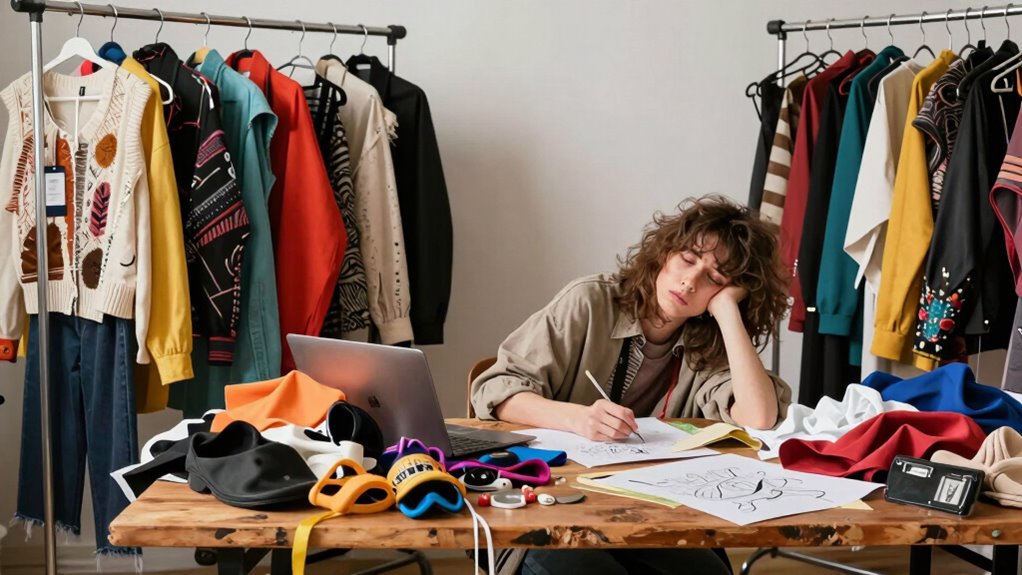
Fashion burnout happens when you constantly chase trends and make impulsive buys, leaving you overwhelmed, tired of your wardrobe, and cluttered with clothes that no longer suit your style. To fix it, focus on reevaluating what truly works for you, invest in quality pieces, set shopping limits, and embrace a more mindful approach. By doing so, you’ll enjoy dressing more and feel more connected to your personal style—discover how to make this change last.
Key Takeaways
- Constant trend-chasing and impulsive shopping cause decision fatigue and wardrobe clutter.
- Overexposure to fast fashion leads to exhaustion and disconnection from personal style.
- Reassessing and curating a wardrobe with quality, versatile pieces boosts satisfaction and reduces stress.
- Setting shopping boundaries and focusing on sustainable, timeless items promotes mindful wardrobe habits.
- Incorporating self-care practices and authentic style focus enhances confidence and enjoyment in dressing.

Have you ever felt exhausted or uninspired by the endless cycle of fashion trends? It’s a common experience, especially when it seems like new styles pop up every week, urging you to keep up. This constant chase can lead to what’s known as fashion burnout—a sense of fatigue and disconnection from your own style. One big reason behind this burnout is the pressure to stay trendy, which often results in cluttered closets filled with clothes you no longer love or wear. Instead of feeling excited about your wardrobe, you might find yourself overwhelmed by the sheer volume of choices and the fleeting nature of fashion trends. To combat this, shifting toward sustainable fashion can be incredibly helpful. Focus on quality over quantity, investing in timeless pieces that truly reflect your style. This approach encourages a wardrobe refresh that’s meaningful rather than impulsive, helping you feel more confident and less stressed about what to wear each day. Incorporating sustainable fashion principles can also lead to a more intentional wardrobe, reducing the impulse to frequently replace items and fostering a greater appreciation for your clothing.
Another key to overcoming fashion burnout is reassessing your wardrobe and doing a wardrobe refresh. Instead of constantly chasing after the latest trends, take a step back and identify what truly works for you. Keep pieces that fit well, make you feel good, and suit your lifestyle, and consider donating or selling items that no longer serve you. A curated closet reduces decision fatigue and makes dressing up more enjoyable. This process not only streamlines your wardrobe but also encourages you to buy smarter in the future—favoring sustainable fashion choices that last longer and have a smaller environmental footprint. When your wardrobe reflects your genuine preferences, dressing becomes less of a chore and more of an expression of yourself. Exploring sound healing science principles, like mindful engagement with your environment, can also enhance your overall relationship with fashion and self-care. Additionally, understanding how fashion industry standards influence trends and consumer behavior can empower you to make more conscious choices. Recognizing the impact of fast fashion practices can motivate you to seek out brands committed to ethical production. Incorporating knowledge of industry practices into your shopping habits can help you make more informed decisions, reducing waste and supporting sustainability. Remember, a mindful approach to shopping and wardrobe management can significantly decrease the likelihood of burnout and increase your satisfaction with your style choices.
Additionally, try to set boundaries around shopping. Limit yourself to specific times or a certain budget, and focus on investing in versatile, durable pieces rather than quick-fix trends. Building a wardrobe around your personal style and values helps create a sense of authenticity and satisfaction. Remember, fashion isn’t just about keeping up; it’s about feeling good in what you wear. Taking a mindful approach to your clothes, embracing sustainable fashion principles, and refreshing your wardrobe regularly can help you reconnect with your style and banish burnout. Once you shift your mindset from consumption to conscious curation, dressing becomes a fulfilling act rather than an exhausting race. You’ll find joy in having fewer, better pieces that truly resonate with you, making fashion a source of confidence and creativity instead of stress.
timeless wardrobe staples
As an affiliate, we earn on qualifying purchases.
As an affiliate, we earn on qualifying purchases.
Frequently Asked Questions
Can Fashion Burnout Affect Mental Health Long-Term?
Yes, fashion burnout can impact your mental health long-term. Experiencing style fatigue and wardrobe overload may lead to feelings of frustration, anxiety, or low self-esteem. When you constantly struggle with outfit choices or feel uninspired, it can diminish your confidence and overall well-being. Recognizing these signs early allows you to take steps to refresh your wardrobe and regain joy in your personal style, promoting better mental health.
How Quickly Can Someone Recover From Fashion Burnout?
You can often recover from fashion burnout in a few weeks with a wardrobe overhaul and style revitalization. Studies show that taking intentional breaks and invigorating your wardrobe reduces stress and boosts confidence. By decluttering and exploring new styles, you’ll rekindle your love for fashion faster. Remember, patience and self-care are key; your sense of style will bounce back, making dressing fun again in no time.
Are There Specific Age Groups More Prone to Fashion Burnout?
You’re more likely to experience fashion burnout if you’re in younger age groups, especially teens and young adults, due to intense fashion obsession and constant social media influence. These age groups often chase trends quickly, leading to exhaustion and disinterest. As you grow older, you might find it easier to develop a more sustainable wardrobe, reducing the risk of burnout. Being mindful helps you enjoy fashion without feeling overwhelmed.
Does Social Media Increase the Risk of Experiencing Fashion Burnout?
Yes, social media can increase your risk of experiencing fashion burnout. Influencer impact often pushes you to constantly chase new trends, leading to trend fatigue. As you scroll through endless outfits and styles, you might feel overwhelmed or uninspired, making fashion feel less fun. This relentless exposure to ever-changing trends can drain your enthusiasm, causing burnout. To avoid this, consider curating your feeds and focusing on personal style rather than constantly following influencers.
Can Changing Fashion Trends Help Prevent Burnout?
Can changing fashion trends really help prevent burnout? Absolutely. By embracing thrift shopping and creating capsule wardrobes, you can stay fresh without feeling overwhelmed by constant shifts. These strategies encourage mindful choices, reducing decision fatigue and helping you enjoy your style more. When you adapt to trends at your own pace and focus on versatile pieces, you prevent burnout and keep fashion fun and sustainable for you.

Build Your Sustainable Fashion Brand: A Guided Workbook to Plan, Design & Launch Your Eco-Friendly Fashion Brand: A printable workbook for ethical fashion designers, students, and entrepreneurs
As an affiliate, we earn on qualifying purchases.
As an affiliate, we earn on qualifying purchases.
Conclusion
So, next time you find yourself overwhelmed by endless trends, remember that burnout often sneaks up when you least expect it—like spotting that perfect outfit you’d forgotten about in your closet. Sometimes, a simple pause and a genuine style refresh can rekindle your love for fashion. After all, it’s funny how coincidence often reminds us to slow down, breathe, and rediscover what truly makes us feel confident and alive in our wardrobe.
quality versatile clothing
As an affiliate, we earn on qualifying purchases.
As an affiliate, we earn on qualifying purchases.
minimalist wardrobe organizer
As an affiliate, we earn on qualifying purchases.
As an affiliate, we earn on qualifying purchases.