
TL;DR
A Thanksgiving table decor set is a coordinated group of items for styling a holiday table, often including a runner or placemats, napkins, and seasonal accents. Before buying, check the actual dimensions, included pieces, materials, care instructions, and space left for serving food. Repeating a few colors and textures can make a table feel finished without every piece matching.
A table can look ready for Thanksgiving before the turkey comes out of the oven: a runner in warm rust, linen napkins, and a low bowl of little gourds can do it. But the same set can crowd a small table or leave you wondering where the matching placemats went if the product photo showed pieces that were not included.

Get your wardrobe favorites delivered free with Prime
- Fast, free delivery on millions of items
- Prime Video, Amazon Music and more included
- Member-only deals all year
A Thanksgiving table decor set is a coordinated group of items used to style a holiday table. Sets may include a runner, placemats, napkins, napkin rings, a centerpiece, candles, or seasonal accents; some arrive as a bundle, while others pair pieces sold separately.
This guide helps you pick a set that fits your table and your plans, compare practical materials, and bring the look together without turning dinner into a decorating project. You’ll also see what to check before you order and how a few useful pieces can work well beyond one Thursday in November.
Read the included-items list and count the place settings; a product photo may show pieces sold separately.
Measure your table and compare the listed dimensions before ordering a runner or placemats.
Choose cotton or linen for a soft, classic look and check their care needs; polyester or coated fabric may be easier to clean.
Repeat two or three colors or materials to coordinate pieces you already own.
Keep centerpieces low and stable, leave room for serving dishes, and keep open flames away from fabric and greenery.
Choose a set that suits the meal you’re serving
A Thanksgiving table decor set is a collection of coordinated pieces that gives your holiday table a shared look. It may cover the basics, such as a runner and napkins, or add place mats, napkin rings, candles, and decorative accents. Since there’s no standard bundle, the product listing—not the attractive photo—tells you what you’ll actually receive. This matters because a set is useful only when its pieces match the way you host: a bundle with four napkins does little for a table of eight, even if its styling looks complete.
Think about what happens at your table. If your family passes bowls of potatoes, vegetables, and rolls in every direction, a wide centerpiece may get in the way; a slim runner and a few small gourds can set the scene while leaving room for dishes. For a smaller dinner, place mats and coordinated napkins may be enough to make each setting feel special. The more dishes you serve family-style, the more valuable clear tabletop becomes, so decoration should be planned around the food’s route rather than treated as a layer added afterward.
Say you already own cream plates and brass candleholders. A bundle with a rust-colored runner, olive napkins, and matching napkin rings might provide useful coordination without duplicating your tableware. Check how many napkins or place mats the set includes, especially if you’re hosting six guests but the listing pictures four. Buying extra pieces can raise the real cost, while choosing a smaller bundle may leave you with a look that feels unfinished; compare the complete cost of the setup you need.
Think of a decor set as the table’s supporting cast. It sets a mood, but it still needs to leave the people and food in the starring roles. Before buying, count the pieces, check the dimensions, and decide which items will see use after the meal. That last check helps distinguish a convenient shortcut from a box of attractive items that will mostly sit in storage.
Popular right now

LG OLED evo C4 55-Inch 4K Smart OLED TV (OLED55C4PUA) with 144Hz Refresh Rate, HDMI Cable, 24-Month Protection Plan, and Streaming Bundle

Philips 2300 Series Fully Automatic Espresso Machine with LatteGo

KitchenAid 5.5-Quart Bowl-Lift Stand Mixer, Porcelain White
As an affiliate, we earn on qualifying purchases.
Check the measurements before you trust the product photo
To choose a set that fits, measure your table and compare its dimensions with every textile in the listing. A runner should leave some tabletop visible at the ends, and placemats need enough space for a plate, cutlery, and a drink without pushing neighboring guests together. Product photos show the styling; the measurements tell you whether it will work at home. That difference affects more than appearance: the wrong size can obstruct serving, catch on laps, or make a table feel crowded before anyone sits down.
For example, if your table is 60 inches long, a 72-inch runner will hang over the ends, while a shorter runner will leave a frame of bare wood around it. Neither choice is automatically wrong, but the drape and clearance may change how the table feels—and whether someone’s knees catch the fabric. On a narrow table, a wide runner can also compete with serving platters. A longer drape can make a bare table feel dressed, but it brings fabric closer to chairs and laps; a shorter one keeps the surface practical and lets the tabletop show.
Use this quick measurement check before ordering:
- Measure the tabletop from end to end and side to side.
- Count the seats you plan to use, including extra chairs at the ends.
- Check each item’s dimensions and the bundle’s quantities against your table and guest count.
- Allow serving space for the dishes you’ll put in the middle.
Small tables often do best with a narrow runner, compact centerpiece, and restrained accents. Imagine a four-person table with a bowl of pears and a pair of flameless candles rather than a large arrangement spreading across the center. Each object uses space that could otherwise hold a dish or give guests room to reach, so editing the arrangement is a practical choice as well as a visual one. The goal is a table guests can use comfortably, not a showroom display they have to work around.
Pick fabrics and finishes that match your cleanup plans
The best material depends on how you’ll use the set and clean up afterward. Cotton and linen give you a soft, relaxed finish, but they can wrinkle and usually need laundering. Polyester and coated fabrics tend to be easier to wipe or wash, while natural pieces such as dried leaves and pinecones add texture but may shed or need replacing. The tradeoff is between feel and upkeep: a fabric that looks and drapes beautifully may ask for more care after a meal, while a practical finish can make hosting less stressful but feel less soft or natural.
Consider a household with children reaching for cranberry sauce and a gravy boat changing hands. A washable runner and napkins may feel less stressful than a delicate, embellished tablecloth. If your meal is smaller and you enjoy ironing linen, the relaxed weave and gentle wrinkles can give the table a welcoming, lived-in look. Choosing for the mess you expect means you are more likely to use the pieces confidently instead of protecting them throughout dinner.
Care instructions are part of the purchase, not an afterthought. Check whether textiles are machine washable, whether a finish requires spot cleaning, and whether decorative pieces can handle storage in a box between holidays. The same applies to dinnerware or candleholders included in a set: fragile finishes may call for careful packing. A lower purchase price may not be a saving if the item needs specialist cleaning or replacement after one spill, so compare the care effort as well as the shelf price.
Storage matters, too. Neutral linens, wood accents, and simple ceramic pieces can return for autumn dinners or winter gatherings. A highly seasonal item may be delightful for one meal but take more space the other 364 days. Think of durable decor as a guest that knows how to make itself useful all season. Versatile pieces can justify a higher upfront cost through repeated use, while a distinctly Thanksgiving design may be worth it when the holiday-specific look is exactly what you want.
Build a warm Thanksgiving palette without matching everything
A coordinated Thanksgiving table needs only a few repeated colors or materials to feel intentional. Rust, ochre, olive, cream, and brown pair naturally with fall produce and wood, while traditional orange, red, and gold can bring a brighter harvest feel. Repeat two or three choices across the runner, napkins, dishes, or centerpiece, and let the remaining pieces vary. Repetition gives the eye a path across the table; limiting it to a few elements keeps the setup from feeling overly uniform or requiring a complete matching set.
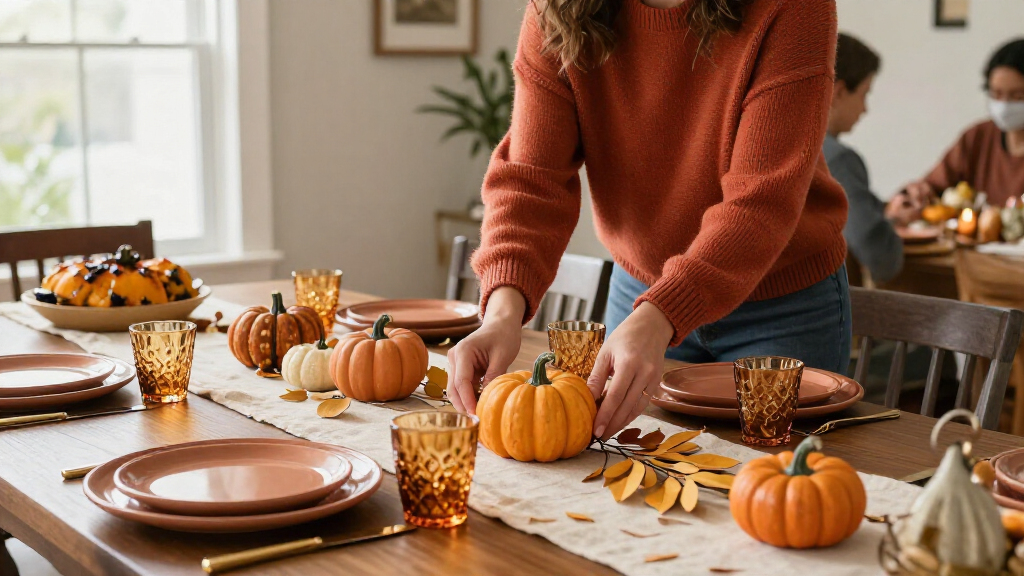
For example, start with a cream runner and olive cloth napkins, then add a low ceramic bowl filled with mini pumpkins in pale orange and white. A wooden serving board can echo the bowl’s natural feel without matching it exactly. The scene has a clear thread, but it doesn’t look as if every item came from one box. Mixing finishes also lets existing pieces contribute to the arrangement, which can save money and make the table feel more personal.
This approach works especially well if you already have dishes you like. A coordinated group of items used across the table can help tie familiar plates to seasonal accents; it doesn’t need to replace your everyday pieces. A set is one shortcut to that common thread, while separate purchases give you more freedom to pick the right size or price for each part. The choice comes down to what you value: a bundle saves time matching pieces, and separate items make it easier to adapt the look to your table and budget.
Natural and handmade-looking textures—linen, woven fibers, wood, ceramics, and dried botanicals—give a table warmth without adding more color. If you bring in real leaves or small gourds, check that they are clean and stable before placing them near food. A crisp white plate beside a rough, woven placemat can feel like a little contrast that makes both pieces more inviting. Because texture adds visual interest without another strong color, it can help a restrained palette feel layered rather than plain.
Keep the centerpiece low, stable, and easy to live with
A practical centerpiece is low enough for guests to see one another, stable enough to stay put, and small enough to leave room for serving dishes. Seasonal produce, short branches, a few little pumpkins, or a low bowl of pears can add shape and color without creating a wall between people. A decorative table still needs to work as a dinner table. Height affects conversation, while footprint affects serving space, so checking both helps avoid an arrangement that looks appealing but makes the meal harder.
Imagine your guests trying to talk across a tall arrangement of dried stems while reaching around it to pass the stuffing. The arrangement might look dramatic in a product photo, but at dinner it becomes an obstacle. A shallow bowl with gourds and a few leaves keeps the center visible and makes it easier to move when the turkey arrives. A movable centerpiece is especially useful when serving dishes need the same central space; it can be shifted without dismantling the whole display.
Leave candles clear of fabric and foliage. If you use open flames, keep them away from napkins, dried greenery, and other flammable decorations. Flameless candles offer a soft glow without adding a flame beside the runner; they can be a good choice for a crowded table or a gathering with children. The right choice depends on the setup: open flames bring a familiar atmosphere, while flameless options reduce the need to monitor nearby textiles and greenery.
It helps to arrange the table around the food’s path: where serving dishes will land, how guests will pass them, and what needs to stay within easy reach. Put decorations down first, then place the plates and serving bowls. If you have to shuffle everything before dinner begins, simplify the centerpiece. A good arrangement makes the meal feel generous, not cramped.
Compare a bundle with a mix-and-match table
A bundle makes coordination easy, while separate pieces offer more control over dimensions, materials, and budget. You can choose either route and still create a welcoming table. The better fit depends on whether the convenience of a set outweighs the freedom to reuse what you already own. A bundle reduces the work of finding pieces that look related, but it can include extras you do not need or quantities that do not match your guest count.
Suppose you’re hosting eight guests but keep finding attractive sets that include four placemats. Buying a runner and napkins separately may save you from purchasing two incomplete bundles. On the other hand, if you want matching napkin rings and a runner in one quick order, a set can spare you the hunt for pieces that share a color and finish. Think about the time you save alongside the price: assembling separate pieces may be cheaper, but the browsing and coordination take effort.
| What matters | Coordinated bundle | Separate pieces |
|---|---|---|
| Time | Quick way to establish a shared look | Needs more browsing and planning |
| Fit | Check set dimensions and quantities closely | Pick each piece to suit your table |
| Flexibility | Pieces may come in one style or colorway | Mix colors, materials, and price points |
| Reuse | Depends on how seasonal the designs are | Easy to choose versatile basics |
Product photos may show accessories that are sold separately, so read the included-items list before comparing prices. Look for quantity, material, care instructions, delivery timing, and return details. For instance, a bundle that appears to include candles might list only the runner and napkins; that changes both the look and the value of the purchase. Comparing the pieces you actually need, including any add-ons, gives you a fairer sense of whether the bundle is convenient or simply looks like a bargain.
Stretch your decor budget across more than one dinner
You can make a Thanksgiving table feel special without buying a large or elaborate set. A runner, cloth napkins, and one low centerpiece can establish the look; candles or a few seasonal accents can add detail when you have room. Reusing basic linens and dishes lets you spend on only the pieces that change the table’s mood. Prioritizing a few visible, useful items also prevents a small budget from being spread across accessories that add little function or may not fit your table.
For a simple budget example, begin with a runner you already own, fold paper or cloth napkins in a new way, and add a small group of gourds or leaves as the centerpiece. The colors can do a lot of work: cream, rust, and olive look seasonal together without requiring matching plates, napkin rings, and candleholders. Natural accents can cost little, though they may not last as long as reusable decor. That short lifespan can still make sense for inexpensive items you enjoy using, while reusable pieces offer better value when they return to the table year after year.
Before purchasing, picture the item at another meal. A cream runner and wooden candleholders might work for an autumn birthday dinner, while pumpkins printed across every napkin may have a shorter season. A decor set earns more value when the pieces can serve again, whether you use them for a casual weekend meal or another holiday. Thinking about future use turns the purchase decision from “Does it look festive?” into “Will I be glad to bring this out again?”
It’s also fine to favor convenience. If buying a ready-to-use bundle saves you a stressful hour before guests arrive, that ease can be worth the price. Choose the parts you’ll genuinely use and store; the most impressive arrangement is not always the one that makes hosting feel better. A useful set is one that fits your budget and lowers the work of preparing the table, not one that creates new care or storage chores.
Frequently Asked Questions
What should a Thanksgiving table decor set include?
There’s no fixed standard. Many sets include a runner or placemats and napkins; some add napkin rings, a centerpiece, candles, or seasonal accents. Check the item list and quantity so you know what will arrive.
How do I choose the right size runner or placemats?
Measure your table and compare those numbers with the listed dimensions. Leave room for place settings and serving dishes, and check product measurements rather than relying on a staged photo.
How can I decorate a small Thanksgiving table?
Try a narrow runner, a compact low centerpiece, and a few repeated colors. A small bowl of mini pumpkins can add seasonal detail without taking up the space a large arrangement or wide runner would use.
What colors work well for Thanksgiving table decor?
Orange, red, brown, and gold are familiar seasonal choices. Rust, olive, cream, and muted neutrals also pair well with natural materials such as wood, linen, and dried leaves.
Are Thanksgiving table decor sets washable?
It depends on the fabric and finish. Cotton and linen may need laundering or ironing, while polyester and coated fabrics can be easier to clean. Check the care label or product listing before you buy.
How do I make the table look coordinated without buying a matching set?
Repeat two or three colors or textures across pieces you already own. For example, pair a cream runner with olive napkins and a wooden serving board, then add a low bowl of seasonal produce.
Can I reuse Thanksgiving decor after the holiday?
Many neutral linens, candleholders, wood pieces, and ceramics work throughout fall and at other gatherings. Highly seasonal prints or fragile decorations may see less use and need more careful storage.
Conclusion
Choose your Thanksgiving table decor set by starting with the table you have: measure it, count the seats, and decide how much room the meal needs. Then check the contents and care instructions, and pick a few colors or textures that work with pieces already in your cupboard.
Let the decor welcome people to the table, then make space for the bowls to pass and the stories to travel. That’s when a holiday table feels ready.