
When evaluating product pages, green flags include detailed, honest descriptions, genuine customer reviews, clear pricing, and transparent policies, showing honesty and reliability. Red flags are vague descriptions, suspiciously perfect reviews, hidden fees, conflicting details, or exaggerated claims, indicating potential deception. Recognizing these signs helps you avoid scams and make smarter purchases. If you want to learn more about spotting these indicators, keep exploring the key differences that build trust and ensure quality.
Key Takeaways
- Genuine customer reviews with detailed insights indicate trustworthy product pages.
- Clear, specific descriptions with accurate measurements and features help identify authenticity.
- Transparent policies on pricing, shipping, and returns build consumer confidence.
- Vague descriptions and suspiciously perfect reviews are red flags signaling potential issues.
- Consistency between customer feedback and product details ensures reliability and transparency.
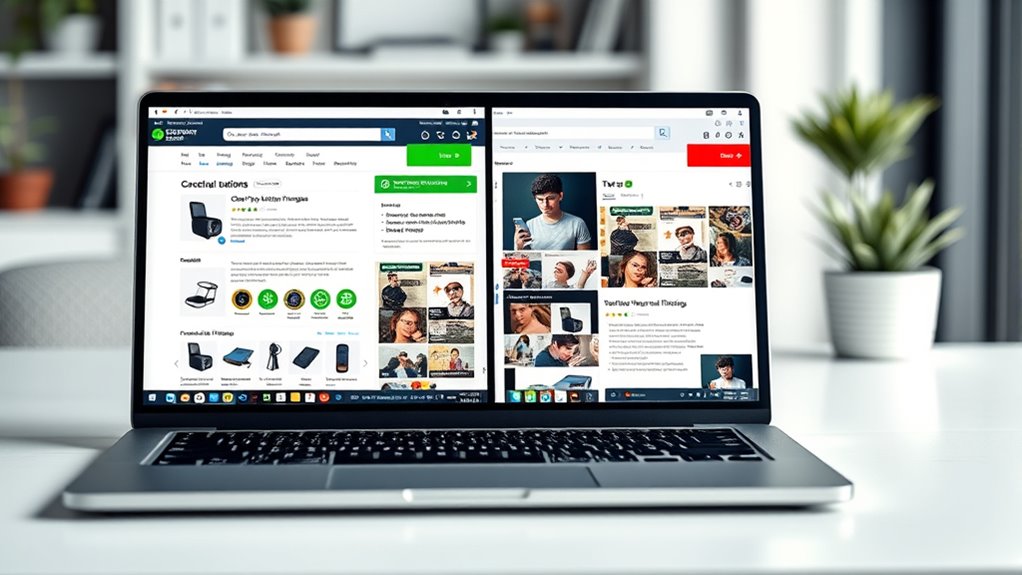
When browsing product pages, it’s essential to recognize the signals that indicate whether a page is trustworthy or potentially misleading. One of the most reliable indicators is the presence of genuine customer reviews. These reviews give you firsthand insights into the product’s actual performance, quality, and any issues you might face. Look for reviews that are detailed and balanced, not just overly positive or suspiciously perfect. If most reviews mention similar problems or praise, it’s a good sign the feedback is authentic. Conversely, a page with no reviews or only overly glowing comments might be hiding something or be too new to have genuine customer feedback. Customer reviews help you gauge whether the product lives up to its promises and if it’s worth your investment.
Another vital factor to consider is the product description itself. Trustworthy product pages provide clear, detailed descriptions that highlight key features, specifications, and intended uses. Vague or generic descriptions, on the other hand, are red flags. When a product description is filled with buzzwords or lacks specifics, it’s often a sign that the seller is trying to hide shortcomings or mislead buyers. Good descriptions also include high-quality images, accurate measurements, and relevant details like materials or compatibility info. These details show transparency and help you make an informed decision. Recognizing regional flavors and traditions in the descriptions can also be an indicator of authenticity and quality. These details demonstrate transparency and help you make an informed decision.
A trustworthy product page will also be transparent about pricing, shipping, and return policies. Hidden fees or vague policies are warning signs. If the price seems too good to be true, or if shipping costs are unexpectedly high, proceed cautiously. Red flags also include inconsistent information, such as conflicting details about the product or unrealistic claims. Always cross-reference product descriptions with customer reviews—if many reviews mention that the product didn’t match the description, that’s a clear red flag.

NFC Google Review Card – Boost Customer Reviews 300% with Tap & Scan QR – Contactless Feedback for Small Business – No Subscription (Black, 3-Pack)
NFC-enabled card for Google review collection. Customers tap their smartphone to access review page. Suitable for restaurants, retail…
As an affiliate, we earn on qualifying purchases.
As an affiliate, we earn on qualifying purchases.
Frequently Asked Questions
How Can I Identify Fake Product Pages Easily?
To spot fake product pages quickly, look for strong trust signals like secure payment options, clear contact information, and genuine reviews. Check if the pricing is transparent and consistent; suspiciously low prices or hidden fees are red flags. Also, verify the website’s domain and avoid pages with poor grammar or overly generic images. These signs help you identify authentic sites and avoid scams easily.
What Role Do Customer Reviews Play in Flagging Product Quality?
Customer reviews play a vital role in flagging product quality because they provide genuine customer feedback about their experiences. You should pay attention to the review authenticity—look for detailed, consistent comments that seem sincere. If reviews are overly vague or suspiciously positive, it might indicate fake feedback. Authentic reviews help you gauge the real quality of a product, guiding you to make smarter purchasing decisions and avoid scams.
Are Green Flags Consistent Across Different Industries?
You’ll find that green flags aren’t always consistent across industries because branding consistency and industry standards vary. For example, luxury brands emphasize premium visuals, while tech products focus on detailed specifications. Recognizing these differences helps you identify genuine green flags in product pages, ensuring you trust the quality and authenticity. Staying aware of industry standards allows you to make smarter choices and avoid misleading signals that might appear as green flags.
How Often Should Product Pages Be Updated for Accuracy?
You should update your product pages regularly to guarantee accuracy. The ideal update frequency depends on your product data, such as stock levels, pricing, and descriptions, which can change often. For most businesses, a weekly review works well, but high-turnover items or seasonal products may need updates daily or bi-weekly. Staying current with your product data helps maintain trust and improves customer experience.
Can Red Flags Indicate Potential Legal Issues?
Think of red flags as warning signs on a product page—they can signal potential legal issues. If you ignore them, you might face legal compliance problems or trademark concerns, risking fines or brand damage. For example, using a logo without permission is like ignoring a stop sign; it can lead to costly legal trouble. Always review your pages to spot and address these red flags early, safeguarding your business.

MINSA Fashion Multifunction Utility Acrylic Transparent Computer Monitors Side Panel/Memo Pads/Message Boards/Sticky Boards for Computer Screen, 1 Set (Left & Right) (Transparent)
NOTE:The product has a protective film on the surface, that is not scratches! not scratches! not scratches on…
As an affiliate, we earn on qualifying purchases.
As an affiliate, we earn on qualifying purchases.
Conclusion
Think of a product page as your trusted compass—green flags are guiding lights that lead you confidently, while red flags are warning signals cautioning you to pause. When you recognize these signs, you’re steering your ship away from storms and toward safe harbors. Trust your instincts and pay attention to these symbols; they’re the lighthouse guiding you to smart choices. With awareness, you navigate the seas of online shopping with confidence and peace of mind.
trustworthy online shopping electronics
As an affiliate, we earn on qualifying purchases.
As an affiliate, we earn on qualifying purchases.

ATTITUDE Window and Mirror Cleaner, EWG Verified, Plant- and Mineral-Based Ingredients, Vegan and Cruelty-free Household Products, Citrus Zest, 27.1 Fl Oz
· EWG VERIFIED: Clean ingredients and full transparency
As an affiliate, we earn on qualifying purchases.
As an affiliate, we earn on qualifying purchases.