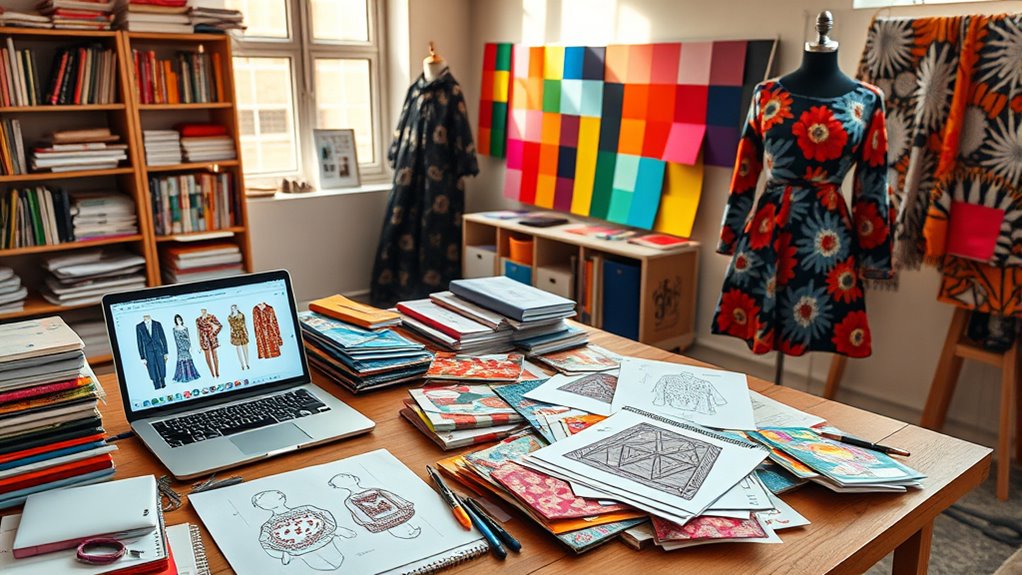

Switching from graphic to fashion print design lets you use your visual storytelling skills to craft bold, trend-driven patterns. Focus on developing a versatile portfolio that highlights your ability to create repeat patterns, motifs, and fabric-compatible designs, all informed by color theory. Seek feedback from industry pros to refine your work and understand fabric and print technology. If you explore further, you’ll discover how to build a strategic plan for a successful progression.

Get your wardrobe favorites delivered free — and shop member deals
- Fast, free delivery on millions of items
- Access to Prime Big Deal Days deals on October 6–7
- Prime Video, Amazon Music and more included
Key Takeaways
- Leverage your visual storytelling and layout skills to adapt to pattern creation and fabric considerations in fashion print design.
- Deepen your understanding of color theory to craft impactful, mood-evoking prints aligned with current fashion trends.
- Develop a diverse, trend-aware portfolio showcasing sketches, digital mockups, fabric samples, and repeat pattern work.
- Seek feedback from industry professionals to refine your portfolio and ensure it meets industry standards and market needs.
- Stay curious and innovative, continuously experimenting with new techniques, trends, and technologies to establish your presence in fashion print design.
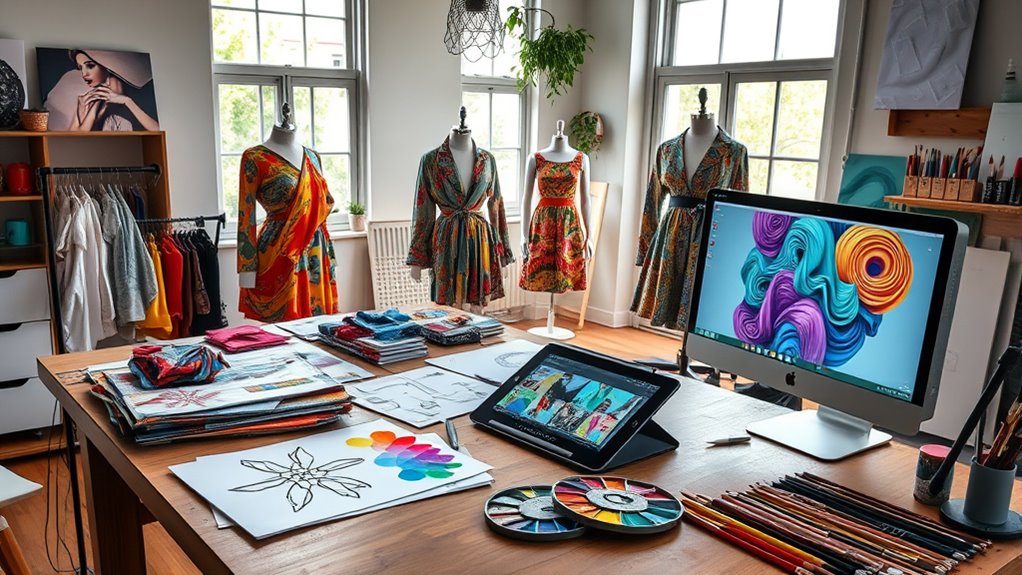
Switching careers can be both exciting and challenging, especially when shifting from graphic design to fashion print design. You already have a solid foundation in visual communication, but now you need to adapt your skills to a new industry with its own unique demands. One of the first steps is to deepen your understanding of color theory. In fashion print design, color isn’t just about aesthetics; it’s about creating mood, conveying brand identity, and ensuring your designs appeal to a target audience. You should explore how different hues interact, learn about color harmony, and understand how to use color to evoke specific emotions. This knowledge will help you craft bold, eye-catching prints that stand out on the runway or in retail displays.
Deepen your understanding of color theory to craft bold, emotionally impactful fashion prints that stand out.
Simultaneously, focus on portfolio development. As you make this career switch, your portfolio becomes your most powerful tool to showcase your skills and versatility. Unlike traditional graphic design, fashion print design demands a focus on pattern creation, fabric compatibility, and trend awareness. Start by creating a series of designs that reflect your understanding of current fashion trends, incorporating your knowledge of color theory to produce vibrant, cohesive collections. Include sketches, digital mockups, and fabric samples if possible. Your goal should be to demonstrate your ability to design repeat patterns, motifs, and print concepts that can be scaled and adapted for various fashion products.
As you develop your portfolio, seek feedback from industry professionals or mentors with experience in fashion print design. Their insights can help you refine your work and ensure it aligns with industry standards. Remember, your portfolio isn’t just a collection of pretty images; it’s a narrative that showcases your ability to think commercially, understand fabric and print technology, and stay current with fashion trends. Incorporate mood boards and design stories to give clients or hiring managers a clear picture of your creative process and strategic thinking.
Transitioning from graphic design to fashion print design requires you to adapt your skill set, but your core competencies in visual storytelling and layout will serve as a strong foundation. Mastering color theory and carefully developing your portfolio will set you apart, proving that you’re ready to bring fresh, innovative ideas into the fashion industry. Keep experimenting, stay curious about trend developments, and continually refine your work—your new career path is just beginning.
As an affiliate, we earn on qualifying purchases.
Frequently Asked Questions
What Skills Transfer Most Effectively Between Graphic and Fashion Print Design?
You’ll find that skills like understanding color theory and pattern creation shift most effectively between graphic and fashion print design. Your ability to select harmonious colors and develop compelling patterns helps in both fields. By applying your knowledge of color relationships and designing eye-catching patterns, you can create impactful visual work. These core skills form a strong foundation, making your transition smoother and enhancing your creative versatility across both disciplines.
How Can I Build a Portfolio for Fashion Print Design?
Imagine crafting a runway show’s story; your portfolio is your design debut. Focus on fashion illustration skills to showcase your creativity and understanding of garment shapes. Include fabric sourcing sketches to demonstrate your material knowledge. Curate diverse, high-quality pieces that highlight your style and technical skills. Use mood boards and concept sketches to tell a compelling visual story. Keep it updated and tailored to your dream fashion print design role.
Are There Specific Educational Programs for Transitioning Into Fashion Print Design?
You should explore fashion design programs that offer textile courses, as they’re tailored for those shifting into fashion print design. Many colleges and online platforms provide specialized courses focusing on fabric patterns, printing techniques, and textile innovation. Enrolling in these programs helps you build relevant skills and industry knowledge, making your progression smoother. Look for courses that combine practical projects with theoretical learning to strengthen your portfolio and boost your confidence in fashion print design.
What Are Common Challenges Faced When Switching From Graphic to Fashion Design?
When you switch from graphic to fashion design, you might face challenges like industry networking and technical adaptation. Building connections in the fashion world takes effort, especially if your background is in graphic design. You’ll need to learn new techniques, materials, and trends, which can be overwhelming at first. Stay proactive, attend industry events, and practice your craft to overcome these hurdles and successfully move into fashion print design.
How Do Industry Standards Differ Between Graphic and Fashion Print Design?
You’ll notice industry standards differ between graphic and fashion print design, especially in industry regulations and client expectations. In fashion print, you must adhere to textiles and manufacturing standards, ensuring your designs are fabric-friendly and print-ready. Client expectations focus on trend accuracy and visual impact. In contrast, graphic design emphasizes digital formats and branding consistency. Understanding these differences helps you meet industry-specific requirements and satisfy client needs effectively.
Conclusion
As you step from the familiar canvas of graphic design into the vibrant tapestry of fashion print, remember each skill is a thread weaving your unique story. Embrace the colors, patterns, and textures as your new palette, shaping a bold masterpiece. This shift is like turning a blank fabric into a stunning garment—full of potential and bursting with life. Trust your creativity to craft a future as vivid and dynamic as the designs you’re destined to create.
Fall Picks
fall essentials
As an affiliate, we earn on qualifying purchases.