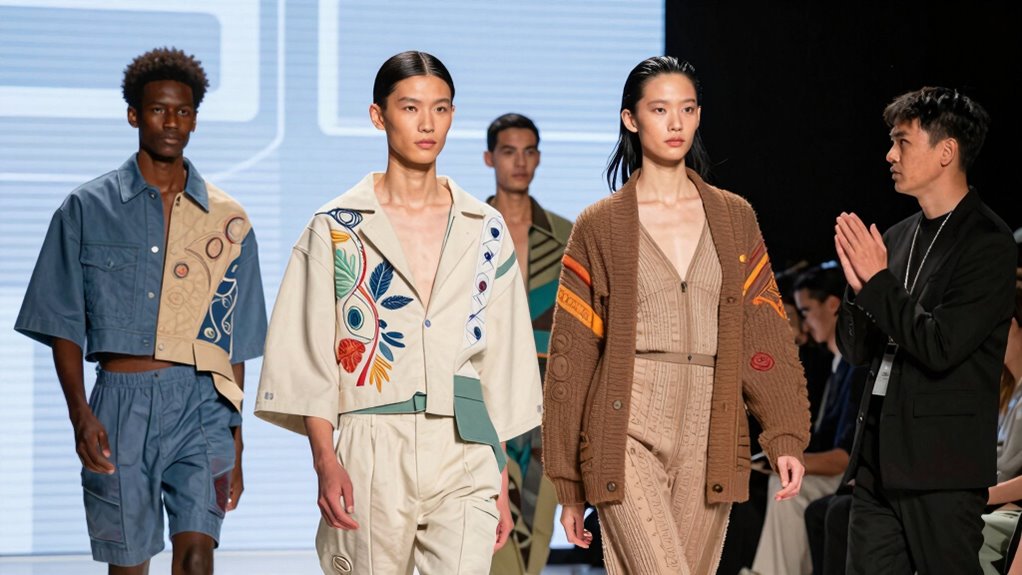

Fashion careers now go beyond traditional design and retail roles, offering opportunities in sustainability, technology, and digital innovation. You can work in eco-friendly material development, virtual fashion shows, or digital marketing campaigns. Roles in sustainability consulting, fashion tech startups, and supply chain transparency are growing fast. By combining creativity, tech skills, and environmental responsibility, you stay ahead in a rapidly evolving industry. Keep exploring to discover how you can shape the future of fashion in exciting new ways.
Key Takeaways
- New roles in sustainability consulting and eco-friendly material innovation drive environmental responsibility in fashion.
- Digital platforms and technologies create opportunities in virtual fashion shows, AR shopping, and digital brand management.
- Development of software for supply chain transparency and environmental impact tracking enhances industry accountability.
- Emerging careers in fashion tech startups and digital marketing focus on sustainable collections and online engagement.
- Combining ethics, innovation, and technology leads to broader roles beyond traditional design and production.

In recent years, the fashion industry has dramatically broadened its horizons, creating new opportunities that go far beyond traditional roles like design or retail. You now have the chance to explore careers that focus on sustainable innovation, where you can develop eco-friendly materials, implement ethical manufacturing practices, or promote circular fashion models. These roles are vital as the industry shifts toward more responsible practices, and you’re at the forefront of making a real impact by championing environmental consciousness. The emphasis on sustainability isn’t just a trend—it’s transforming how brands operate and how you can contribute to a more sustainable future in fashion.
The fashion industry is evolving, offering roles in sustainable innovation to create a more responsible, eco-conscious future.
Digital transformation is another game-changer. You might find yourself working in areas like digital marketing, virtual fashion shows, or augmented reality shopping experiences. Technology is reshaping the entire industry, allowing you to innovate in ways that weren’t possible before. You could be designing virtual garments, leveraging data analytics to predict trends, or creating immersive online storefronts. This shift not only broadens your skill set but also makes fashion careers more accessible and dynamic. You’re no longer confined to physical spaces; instead, you’re shaping the digital landscape of fashion.
The merging of sustainable innovation and digital transformation creates unique career paths. For example, you could develop digital tools that help brands track their environmental impact or design virtual collections that reduce waste. These roles demand a blend of creativity, tech-savviness, and a commitment to sustainability, giving you the opportunity to work at the cutting edge of industry evolution**. As companies increasingly recognize the importance of these areas, your expertise becomes more valuable, opening doors to roles that combine ethics and innovation. A deeper understanding of industry evolution can help you stay ahead in this rapidly changing environment. Embracing sustainable practices** within your skillset can further enhance your relevance and impact in the industry.
Furthermore, your career options are expanding into areas like fashion tech startups, sustainability consulting, and digital brand management. You might advise companies on eco-friendly practices, develop software for supply chain transparency, or run online campaigns that highlight sustainable collections. The industry is actively seeking professionals who understand both the traditional fashion landscape and the new digital-sustainable paradigm. You’re empowered to influence change while building a career that aligns with your values and passions.
Ultimately, the future of fashion is about integration — merging innovation with responsibility. Whether you’re working behind the scenes or in front of the camera, you’re part of a movement that’s reshaping the industry. Your role can go far beyond the runway or retail shelf, helping create a more sustainable, tech-enabled fashion world. This expansion isn’t just about new job titles; it’s about redefining what it means to work in fashion, offering you a broader, more meaningful career path. Embracing technology integration is essential to staying ahead in this evolving landscape.
As an affiliate, we earn on qualifying purchases.
Frequently Asked Questions
What New Skills Are Needed for Emerging Fashion Roles?
You need to develop skills in sustainable design and digital marketing for emerging fashion roles. Understanding eco-friendly materials and ethical production practices helps you stand out in sustainable fashion. Meanwhile, mastering digital marketing enables you to connect with audiences online, promote brands effectively, and leverage social media platforms. Combining these skills makes you versatile and prepared for innovative opportunities in the evolving fashion industry, where sustainability and digital engagement are key.
How Do Technology Trends Influence Non-Traditional Fashion Careers?
Technology trends like virtual fitting and AI styling considerably influence non-traditional fashion careers by enhancing customer experience and personalization. You can now leverage virtual fitting tech to offer immersive online shopping, while AI styling tools help you create tailored looks quickly. These innovations allow you to reach broader audiences, innovate your services, and stay competitive in a rapidly evolving industry. Embracing these trends positions you at the forefront of modern fashion careers.
Are There Specific Educational Paths for Unconventional Fashion Jobs?
Yes, you can pursue specialized educational paths for unconventional fashion jobs. Look for programs focusing on fashion entrepreneurship and sustainable practices, which prepare you for roles like eco-conscious designer or fashion startup founder. Courses in business management, environmental impact, and innovative design help you develop the skills needed to succeed outside traditional roles. These pathways empower you to lead with creativity and sustainability, shaping the future of fashion.
What Are Examples of Successful Careers Outside Traditional Fashion Roles?
You can thrive in roles like sustainable design, where you innovate eco-friendly fashion, or digital marketing, shaping brands’ online presence. These careers allow you to combine creativity with social responsibility and tech savviness. Success stories include designers reducing waste and digital marketers creating viral campaigns. By embracing these paths, you make a meaningful impact, prove your versatility, and redefine what it means to have a career outside traditional fashion roles.
How Can Aspiring Professionals Break Into Innovative Fashion Fields?
To break into innovative fashion fields, you should focus on building a strong portfolio in areas like fashion entrepreneurship and sustainable design. Network with industry insiders, attend relevant events, and showcase your unique ideas through social media or startup platforms. Stay updated on trends, hone your skills, and consider collaborations that highlight your innovative approach. Persistence and adaptability will help you carve out a niche in these expanding, dynamic sectors.
Conclusion
As you explore the evolving world of fashion, you’ll discover endless opportunities that gently steer away from traditional paths, inviting you to carve your own unique niche. Embrace these new horizons with confidence and an open mind, knowing that today’s fashion industry warmly welcomes innovative talents like yours. By venturing beyond the familiar, you’ll find a rewarding journey that quietly transforms your passions into inspiring career possibilities. The future of fashion is yours to shape—delicately and boldly.