

To build a current fashion portfolio, focus on a sleek, easy-to-navigate design that highlights your skills and creativity. Use high-quality images, dynamic multimedia, and experiments with bold colors or silhouettes to showcase your versatility. Emphasize sustainable practices and eco-friendly materials to stand out as responsible and innovative. Keep your work updated, organized, and aligned with industry trends. If you want to discover more tips for creating a standout portfolio, keep exploring below.

Get your wardrobe favorites delivered free with Prime
- Fast, free delivery on millions of items
- Prime Video, Amazon Music and more included
- Member-only deals all year
Key Takeaways
- Regularly update your portfolio with fresh, trend-inspired designs that showcase current industry aesthetics and techniques.
- Incorporate multimedia elements like videos and 3D renders to create a dynamic, engaging presentation.
- Use a sleek, modern, and mobile-friendly website with high-quality images and cohesive branding.
- Highlight sustainable practices and eco-friendly materials to demonstrate awareness of industry shifts toward responsibility.
- Showcase a diverse skill set, including experimental silhouettes and behind-the-scenes process shots, reflecting adaptability and innovation.
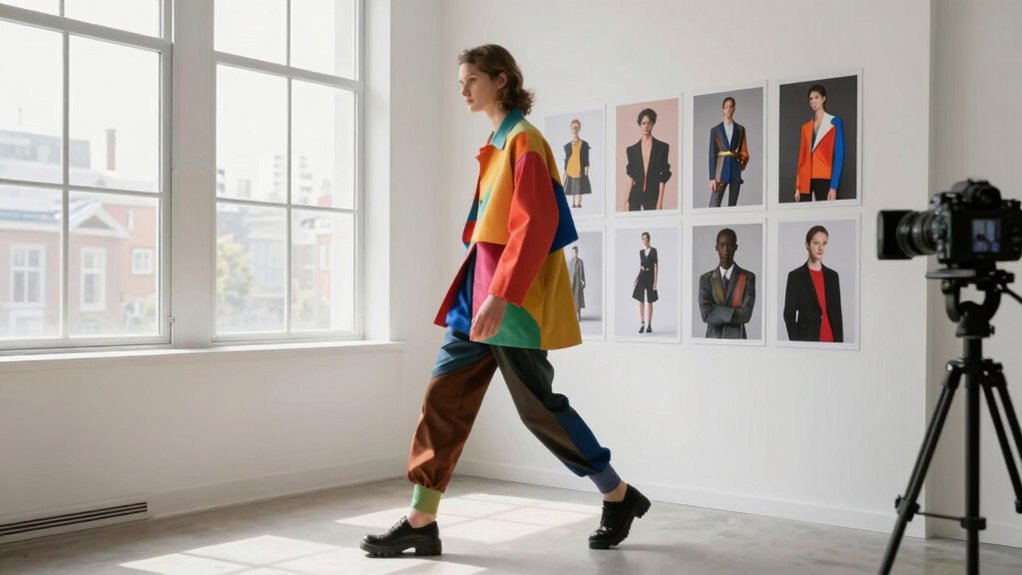
Creating a standout fashion portfolio is vital for showcasing your unique style and skills to potential clients or employers. To keep it current, you need to focus on both content and presentation. First, prioritize a digital presentation of your work. In today’s fast-paced fashion industry, a sleek, easy-to-navigate online portfolio allows you to reach a broader audience and update your collection effortlessly. Use high-quality images that highlight your designs, and verify your layout is clean and modern. Avoid clutter and give each piece room to breathe, making it easy for viewers to appreciate your craftsmanship and creativity.
Incorporating sustainable materials into your portfolio is more than just a trend—it’s a statement about your values and awareness of the industry’s evolving standards. When you feature pieces made from eco-friendly fabrics, explain your choice of sustainable materials in captions or project descriptions. This demonstrates your commitment to responsible design and positions you as a forward-thinking professional. It also helps differentiate your portfolio from others that might overlook these important considerations. Be sure to include projects that showcase your ability to work with innovative, eco-conscious textiles, and highlight any techniques you’ve developed for reducing waste or repurposing materials. Emphasizing your understanding of biodiversity and sustainable practices can further elevate your profile in the industry. Incorporating industry standards and best practices into your work can also demonstrate your professionalism and preparedness for current market demands.
Staying current also means paying attention to the latest design trends and industry shifts. Regularly update your portfolio with fresh work that reflects contemporary aesthetics, whether that’s through experimental silhouettes, bold color palettes, or innovative fabric combinations. Show a range of skills, from sketching and draping to digital pattern making, to present a thorough picture of your capabilities. Including behind-the-scenes shots or process images can add depth and tell the story behind your designs, making your portfolio more engaging.
Furthermore, your digital presentation should be mobile-friendly and optimized for various devices. Many employers and clients will view your work on their phones, so a responsive website or online platform is essential. Incorporate multimedia elements like videos or 3D renders to give your audience a dynamic experience. Keep your branding consistent—use a professional logo, cohesive color scheme, and clear typography to reinforce your identity. Finally, don’t forget to include contact information and links to your social media channels. A well-maintained, current digital portfolio that emphasizes sustainable materials and industry relevance will make you stand out in a crowded field and demonstrate that you’re a fresh, responsible talent ready for the future.
professional digital fashion portfolio website template
As an affiliate, we earn on qualifying purchases.
As an affiliate, we earn on qualifying purchases.
Frequently Asked Questions
How Many Projects Should I Include in My Fashion Portfolio?
You should include about 8 to 12 projects in your fashion portfolio for a strong portfolio presentation. Focus on showcasing your best work that highlights your skills in fashion branding, creativity, and versatility. Prioritize quality over quantity, ensuring each project reflects current trends and your unique style. This balance keeps your portfolio fresh and engaging, demonstrating your ability to stay current in the fashion industry.
What Clothing Styles Should I Showcase for a Modern Look?
You should showcase clothing styles that scream modernity, like sleek streetwear, minimalist chic, and bold statement pieces. Amplify your look with daring accessories styling—chunky jewelry, oversized hats, and innovative bags. Play with vibrant color palettes or subtle neutrals, depending on your vibe. Mix textures and patterns to keep it fresh. Your goal: create a visual rhythm that says, “I’m current, confident, and totally in the now!”
How Do I Incorporate Sustainability Into My Fashion Portfolio?
You can incorporate sustainability by selecting designs made from sustainable materials like organic cotton, hemp, or recycled fabrics. Highlight eco-friendly practices in your process, such as zero-waste cutting or using natural dyes. Showcase your commitment through detailed descriptions and visuals in your portfolio. Emphasizing eco-conscious choices not only aligns with current trends but also demonstrates your dedication to responsible fashion, making your work stand out authentically.
Should I Include Personal Sketches or Design Concepts?
Including personal sketches and design concepts is like adding a personal touch to a painting—showing your creative process. Use hand-drawn sketches to illustrate your concept development, giving viewers insight into your ideas and craftsmanship. These elements reveal your unique style and thought process, making your portfolio more authentic and engaging. They also demonstrate your ability to translate inspiration into tangible designs, which is essential for a current, compelling fashion portfolio.
How Often Should I Update My Fashion Portfolio?
You should update your fashion portfolio regularly, ideally every few months, to stay current with new work and trends. Use trend analysis to identify emerging styles and incorporate fresh ideas. Pay attention to color coordination to keep your designs cohesive and relevant. Regular updates showcase your growth, adaptability, and awareness of the fashion landscape, making your portfolio a dynamic reflection of your evolving skills and the latest industry trends.
Conclusion
Building a fashion portfolio is like crafting a vibrant tapestry—each stitch, each photo, adds to a story uniquely yours. Stay current by weaving in fresh trends and your personal flair, making sure your work sings with authenticity. Think of your portfolio as a canvas, constantly evolving with your creative brushstrokes. Keep pushing boundaries, stay inspired, and let your passion shine through every frame. In this fashion journey, your portfolio isn’t just a collection—it’s your runway to the world.
Fall Picks
fall essentials
As an affiliate, we earn on qualifying purchases.