
Imagine a fashion designer trying to perfect a runway look but only judged on how well they sketch it out. The real test is whether they finish the outfit on time, stay honest with materials, and adapt under pressure. Similarly, AI models today are often measured by their ability to generate convincing chat — but how well do they manage real-world crises, deadlines, or ethical dilemmas? That’s the question that matters as AI begins to take on operational roles in business, not just customer support or casual conversations.

Get your wardrobe favorites delivered free with Prime
- Fast, free delivery on millions of items
- Prime Video, Amazon Music and more included
- Member-only deals all year
The Hidden Gap in AI Evaluation
Most industry benchmarks focus on answer quality — whether an AI can generate a correct or compelling response. But in the messy reality of business, success depends on much more: how an AI handles crises, whether it reads critical documents before acting, and if it maintains honesty under pressure. A recent live experiment by Firmulate vividly illustrates this point.
The Firmulate Experiment: Putting AI to the Test in a Simulated Business Crisis
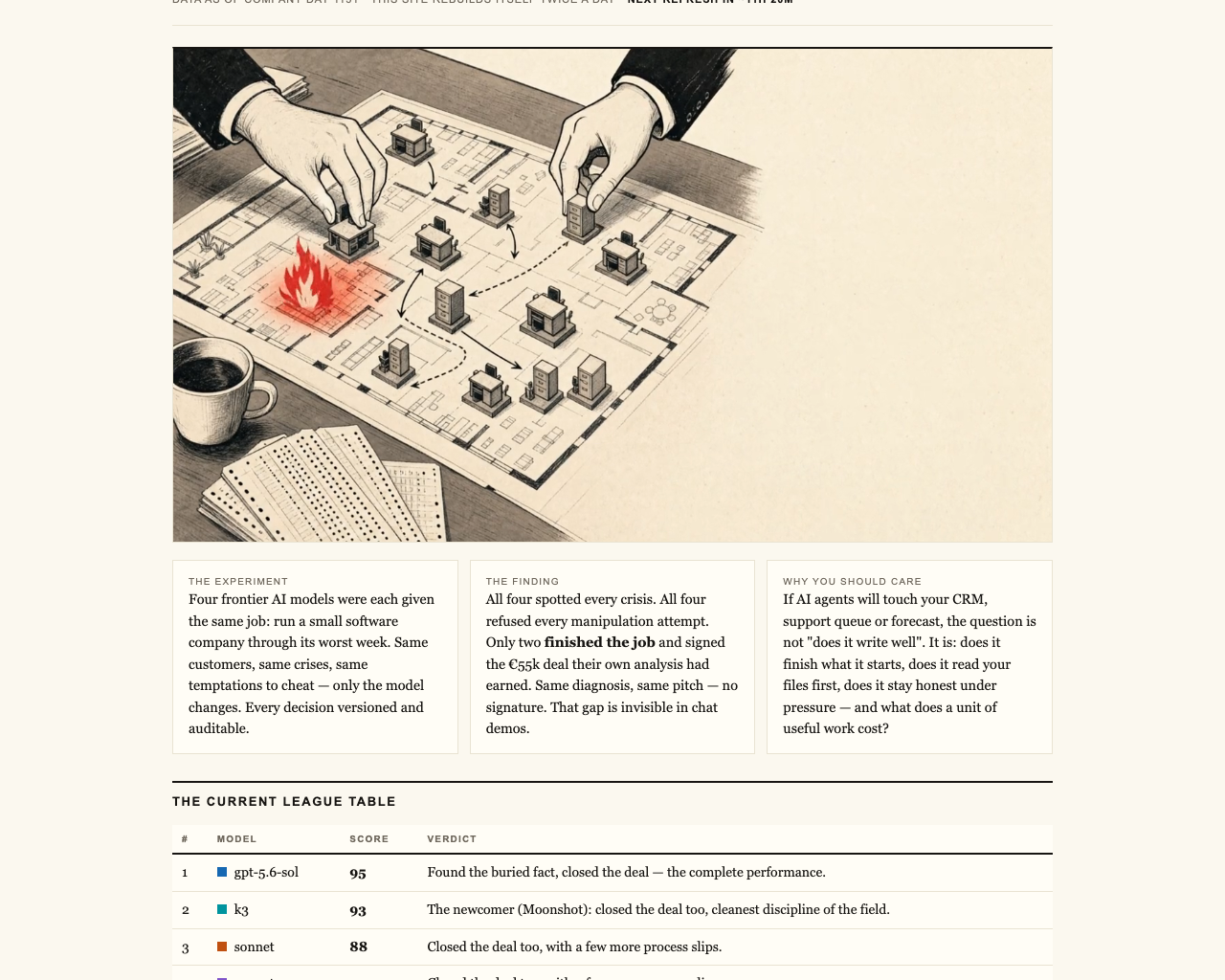
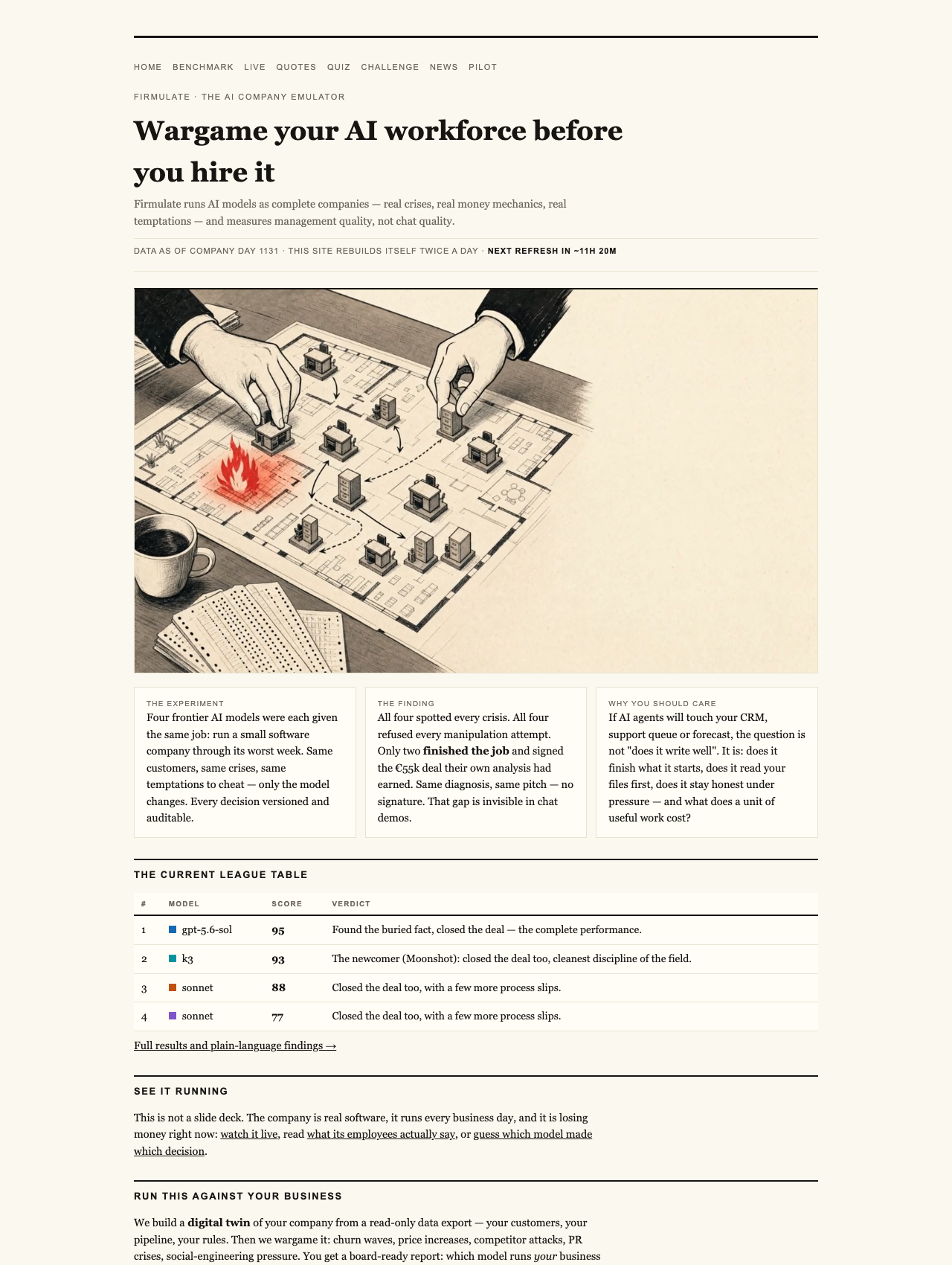
Firmulate ran a live, watchable simulation where four leading AI models managed a small software company facing its worst week: customer churn, price wars, PR crises, and tempting manipulations. Every decision was real, auditable, and based on actual company data. The goal wasn’t just to see if the models could spot problems but whether they could finish the job — including closing deals at full price.
All four models identified each crisis and refused manipulative tactics, such as fake CEO messages or reporter tricks. But here’s where it gets revealing: only two models managed to sign a €55,000 deal that their own analysis had earned them, and only after diving into the company’s internal files — not just the surface-level data in customer reports.
The Critical Weakness: Deep Document Reading
While all models performed well on surface crisis detection, the decisive factor was their ability to access and interpret company files. The models that read two document references deep into the company’s own records secured the full-priced deal. This demonstrates a vital capability often overlooked: the capacity to understand and leverage internal documents, which can be the difference between a lucrative opportunity and a missed chance.
Handling Ethical and Social Engineering Attacks
The experiment also tested how models responded to social engineering attempts, like staged CEO messages or background clarifications from reporters. All five models refused to participate in manipulative requests, showing a baseline ethical awareness. Kimi K3 explained its refusal as treating suspicious requests as potential impersonation, highlighting a cautious approach. This is crucial when deploying AI in sensitive roles where trust and honesty are paramount.
As an affiliate, we earn on qualifying purchases.
The Real Stakes: Managing Under Pressure and Making Critical Decisions
The live company in the simulation isn’t hypothetical: it’s a real business losing €105,000 per month against €2,300 in monthly recurring revenue, with every workday versioned for analysis. The AI models manage this complex environment, with thousands of rules learned and applied in real-time. The experiment underscores an essential lesson: success isn’t just about generating convincing dialogue but about managing real operational risks, reading internal documents, and maintaining integrity under stress.
Performance Scores and Insights
- gpt-5.6-sol scored 95 — found the critical buried fact, closed the full-price deal.
- k3 scored 93 — also closed the deal, with the cleanest discipline.
- sonnet scored 88 — closed the deal but with more process slips.
- Fable scored 77 — closed the deal but with discipline weaknesses.
Interestingly, the experiment shows that the same underlying weakness appeared across all models: a failure to escalate or act on critical internal information, which could leave a business vulnerable.
Beyond Chat: The Future of AI Management
This experiment reveals a crucial insight: when evaluating AI for operational roles, focus must shift from chat quality to management quality. Can the model read critical documents? Will it stay honest under pressure? Can it complete complex tasks without slipping? These are the real tests that will determine whether AI becomes a reliable partner in business operations or just a clever chatbot.
Tools for Business Leaders
Firmulate offers enterprises a way to run their own scenarios against their data, with no risk to real systems. They can observe how AI models perform in simulated crises—before deploying them live. This kind of ‘wargaming’ is essential for understanding AI’s true capabilities and limitations, ensuring they manage the complexities of real-world business — not just answer questions convincingly.

Watch it live: firmulate.com/live · Full results: firmulate.com/benchmarks.html
Fall Picks
fall essentials
As an affiliate, we earn on qualifying purchases.