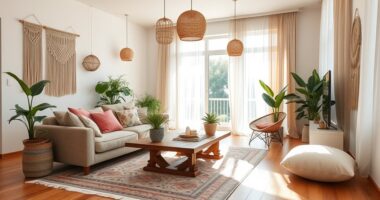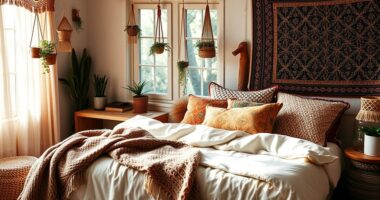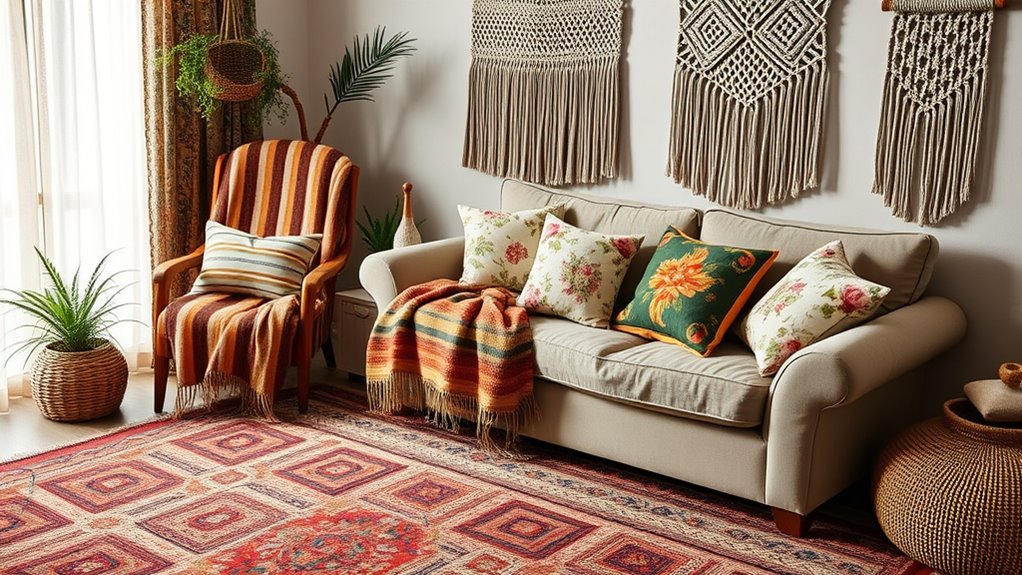

To master pattern mixing for boho rooms, start with a neutral base and layer in textiles with different patterns, scales, and textures. Mix large, bold prints with smaller, delicate motifs, ensuring they share a cohesive color palette. Combine tribal, floral, and geometric designs thoughtfully to keep the space lively yet balanced. Pay attention to how colors and patterns interact, and keep experimenting until your space feels authentic and relaxed. Keep exploring to discover more styling tips.

Get your wardrobe favorites delivered free — and shop member deals
- Fast, free delivery on millions of items
- Access to Prime Big Deal Days deals on October 6–7
- Prime Video, Amazon Music and more included
Key Takeaways
- Combine large, bold patterns with smaller, delicate ones for visual rhythm and interest.
- Use a harmonious color palette with a dominant hue to unify diverse patterns.
- Mix motifs like floral, geometric, and tribal for an eclectic, boho aesthetic.
- Ensure patterns complement in color and style, avoiding exact matches for a relaxed look.
- Regularly assess pattern distribution to maintain balance and prevent visual overload.
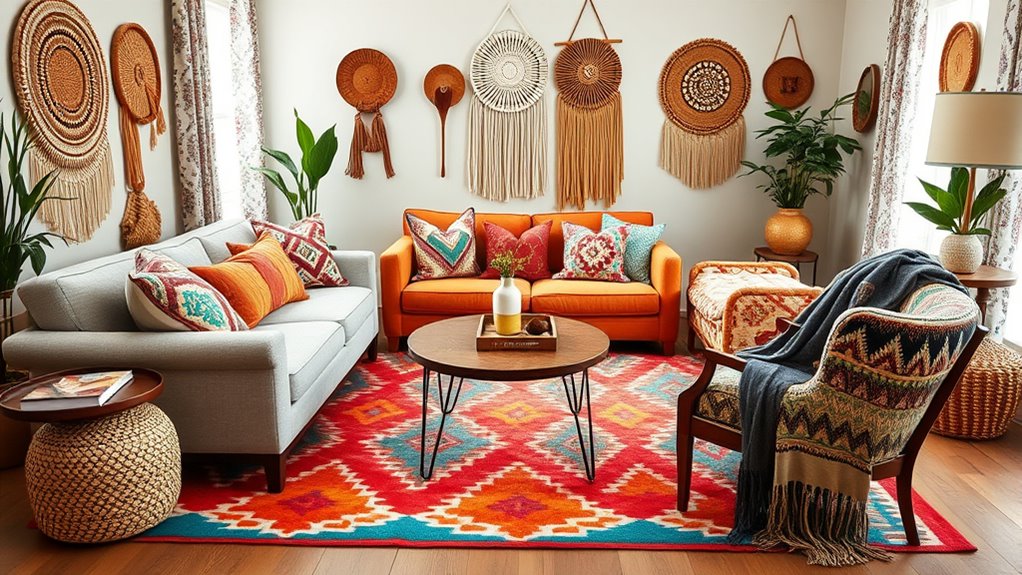
Creating a boho-inspired room often involves mixing patterns to achieve a vibrant, eclectic look. One of the key elements in this process is textile layering. You want to combine different fabrics—think rugs, throw pillows, curtains, and bedding—in a way that feels intentional yet relaxed. Start with a neutral base, like a soft beige or warm cream, then add layers of patterned textiles that vary in scale and texture. For example, pair a large, geometric rug with smaller, intricate pillow covers to create visual interest without overwhelming the space. The goal is to build depth through textile layering, making your room feel cozy and inviting. When layering textiles, pay attention to how the patterns interact. Mixing a bold, striped throw with a subtle floral pillow can work beautifully if the colors complement each other. This is where color coordination becomes essential. You don’t need everything to match perfectly, but you should aim for a harmonious palette. Choose a dominant color and incorporate it across different textiles to tie the look together. For instance, if your main color is earthy terracotta, weave it into your curtains, pillows, and rugs. Then, introduce secondary colors like teal or mustard to add dimension without clashing. This balance helps you create a lively environment that still feels cohesive. When selecting patterns, keep scale in mind. Combining large, bold patterns with smaller, more delicate ones creates rhythm and prevents the space from feeling chaotic. For example, a big floral print can anchor the room, while tiny geometric patterns on cushions can add subtle contrast. Don’t be afraid to experiment—sometimes unexpected combinations become the most striking. Also, consider the style of the patterns. Mix tribal motifs, paisleys, and florals, but keep the overall vibe relaxed and authentic. Avoid matching patterns exactly, as that can make the space feel too formal. Instead, aim for a curated, layered look that reflects your personality. To keep everything feeling balanced, step back and evaluate the overall color palette and pattern distribution regularly. If you notice one pattern dominating, add another that shares a similar color or texture to restore harmony. Additionally, be mindful of the longevity of textiles, as choosing durable fabrics ensures your layered look stays fresh over time. Remember, the boho aesthetic is all about creative freedom, so trust your instincts and let your space evolve naturally. By mastering textile layering and thoughtful color coordination, you’ll craft a boho room that’s lively, harmonious, and uniquely yours.
As an affiliate, we earn on qualifying purchases.
Frequently Asked Questions
How Do I Start Mixing Patterns in My Boho Room?
To start mixing patterns in your boho room, choose statement examples like bold rugs or throw pillows to add personality. Begin with a neutral base to create pattern balance, then layer in different designs, such as florals with geometrics. Keep your color palette cohesive, and don’t be afraid to experiment—trust your eye to find a harmonious blend that reflects your unique style.
What Colors Work Best When Combining Patterns?
When combining patterns, opt for color pairing that creates pattern harmony, like neutral tones with pops of vibrant hues. Stick to a consistent color palette to unify diverse patterns and avoid visual chaos. Soft earth tones, warm oranges, and deep blues often work well together. This approach keeps your boho room lively yet cohesive, making each pattern stand out without overwhelming the space.
How Many Different Patterns Should I Include?
Imagine inviting a parade of patterns into your room—too many, and you’ll create a chaotic pattern clash. To achieve visual harmony, stick to three or four different patterns. This balance keeps your space lively without overwhelming. Think of it as a musical ensemble: a few key instruments, not a chaotic band. So, limit your patterns, mix thoughtfully, and let your boho space sing in perfect harmony.
Can Pattern Mixing Suit Small Spaces?
Yes, pattern mixing can suit small spaces. You should use textile layering carefully to avoid pattern clash, which can make a room feel cramped. Stick to a cohesive color palette and vary pattern scales to add visual interest without overwhelming the space. Mixing patterns with different textures and sizes creates depth, making the room feel lively yet balanced. Just be mindful of proportion and harmony to guarantee your small space feels inviting and stylish.
What Accessories Complement a Patterned Boho Decor?
You can’t go wrong with accessories that dance with your textiles. Think woven wall hangings, layered throw pillows, and vibrant rugs that sing in harmony. Color coordination is your secret sauce—choose pieces that echo your room’s palette or add a splash of contrast. Incorporate plants in textured pots or vintage finds to add depth. These accents weave a tapestry of boho charm, making your space feel lively and uniquely yours.
Conclusion
Now that you’re embracing pattern mixing, remember, your boho room is a blank canvas waiting for your personality to shine. Don’t be afraid to blend bold prints and textures—think of it as a dance where every step complements the last. With each pattern you combine, you’re weaving a story uniquely yours. So go ahead, take that creative leap, and let your space reflect the vibrant, eclectic spirit that makes you, you.
Fall Picks
fall essentials
As an affiliate, we earn on qualifying purchases.