
TL;DR

Get your wardrobe favorites delivered free — and shop member deals
- Fast, free delivery on millions of items
- Access to Prime Big Deal Days deals on October 6–7
- Prime Video, Amazon Music and more included
Hypebae published a first-person review of Sofwave, an ultrasound-based skin treatment intended to stimulate collagen and improve concerns such as fine lines and texture. The reviewer reported substantial discomfort and smoother-feeling cheeks after a week, but longer-term results remain to be seen.
Hypebae published a first-person review of Sofwave, an ultrasound-based treatment promoted for concerns including fine lines and uneven skin texture, in which its editor reported that the procedure was more painful than expected and that treated cheeks looked and felt smoother after a week. The account is an individual experience, and the reviewer said the treatment’s full results may take several months to develop.
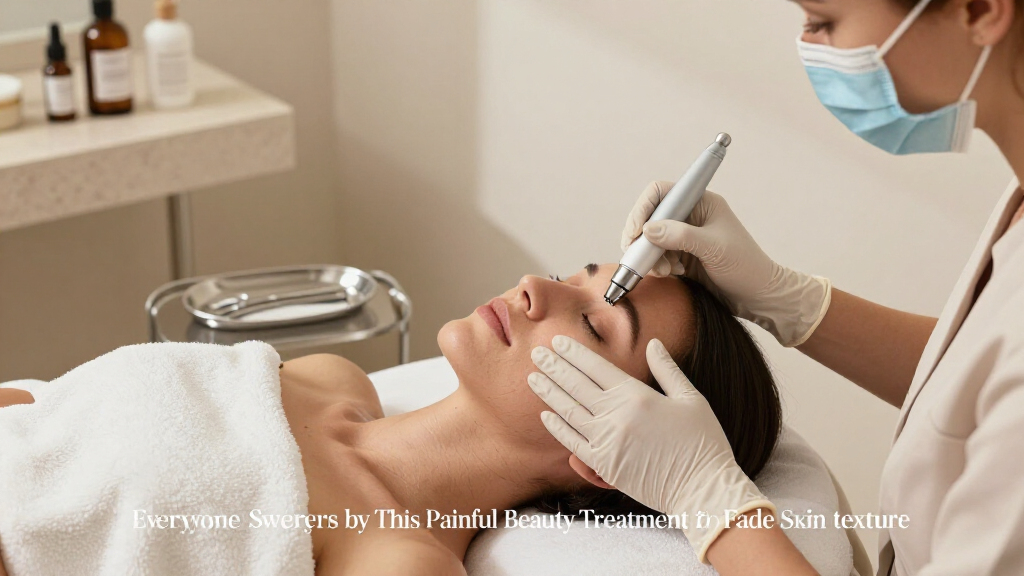
The reviewer said the treatment was performed on the inner portions of both cheeks and took about 30 minutes. Despite expecting discomfort similar to a warm laser facial, the editor described jaw-clenching pain during some passes. The account does not give a standardized pain score or compare the experience with other patients’ reports.
Board-certified dermatologist Dr. Jessica Weiser told Hypebae that Sofwave uses seven parallel ultrasound beams to heat a layer beneath the skin’s surface. She said the heat is intended to prompt the body to produce collagen, elastin and hyaluronic acid, which may support a lifting or plumping effect and improve skin tightness and quality. These are descriptions of the treatment’s intended effects, not measurements from the review.
The editor reported mild redness and irritation just after the session, along with some sensitivity to touch. Weiser said some patients may have redness lasting 15 to 20 minutes, while most have no downtime. The reviewer resumed a usual routine but chose to skip active skincare products that night. After one week, the editor noticed smoother-feeling and smoother-looking cheek skin and said makeup applied more seamlessly. Hypebae assigned the treatment a grade of A-minus; the article did not provide a price, saying costs vary by provider.
Pain and Recovery Shape the Choice
The review highlights a trade-off relevant to people considering an in-office skin procedure: the editor described meaningful discomfort, while the dermatologist described little or no recovery time for most patients. Those are separate parts of the decision. A short session and quick return to daily activities do not mean the treatment is painless, and one person’s experience cannot predict another’s.
The early result described in the article may interest readers whose main concern is texture rather than pronounced wrinkles. Still, the report is not a controlled clinical assessment: it gives no objective skin measurements, comparison group or information about how long the change lasted. The treatment’s cost also varies, so the review does not establish what readers might pay or whether the result would justify that expense for them.
How Sofwave Is Described
Hypebae presents Sofwave as a non-invasive ultrasound treatment intended to reach the skin’s second layer while passing through the top layer without treating it directly. Weiser said the approach may be used for several concerns, including eyebrow or lower-face lifting, acne scars, fine lines and texture. Her comments describe potential uses and her clinical view; the article does not report independent evidence comparing outcomes across these concerns.
The publication identifies Kim Kardashian and Khloé Kardashian as fans of the treatment, but offers no further detail about their procedures or outcomes. That celebrity association is part of the article’s framing, not evidence that a particular result is typical. The editor was 26 and said wrinkles were not a current concern, describing the treatment as a refresh and an effort to support skin over time.
The account’s timeline is limited but specific: the editor noticed a change at one week and expected further development over a few months. Weiser said patients can usually apply makeup immediately and return to their normal skincare routine. The reviewer, despite being able to resume a routine, chose a gentler approach that evening because the skin felt sensitive.
““That heat is going to help stimulate your body to produce new collagen, new elastin and new hyaluronic acid.””
— Dr. Jessica Weiser, board-certified dermatologist, speaking to Hypebae
Longer-Term Results Are Pending
The article does not establish how long the reviewer’s reported improvement lasted or whether it continued to develop. The editor said results can emerge over a few months and planned to assess the outcome at three months, so that follow-up was not yet available in the report. It also remains unclear how consistently other patients experience pain, redness or changes in texture.
No price range, treatment protocol details, clinical outcome data or independent comparison with other procedures appear in the source material. Weiser described nearly all patients as potential candidates, but the article does not set out a patient-specific screening process or discuss risks beyond temporary redness. Readers should not treat the reviewer’s experience as a guarantee of benefit or as individualized medical advice.
The Three-Month Check-In
The clearest next milestone in the report is the editor’s planned assessment of results at three months, when the treatment’s gradual effects may be easier to judge. A follow-up could clarify whether the smoother texture remained or changed, though the source provides no date for publication.
For now, Hypebae’s account records an early personal impression: the session was brief, more painful than anticipated and followed by a reported improvement after a week. Prospective patients seeking more information would need to consult a qualified provider about suitability, expected discomfort, costs and likely outcomes for their own skin.
Key Questions
What is Sofwave?
Hypebae describes Sofwave as an ultrasound-based treatment that uses heat below the skin’s surface to encourage production of collagen, elastin and hyaluronic acid. The article says it is used for concerns such as fine lines and texture.
Was the treatment painful?
The reviewer described it as more painful than expected, with some passes prompting jaw clenching. That is one person’s account, and the article does not provide a measure of how other patients typically rate the discomfort.
How long did the session take?
The editor said treatment on both inner cheeks took about 30 minutes. The source does not give a broader estimate for sessions covering other areas.
When did the reviewer notice a change?
The reviewer reported smoother-looking and smoother-feeling cheeks after one week, while saying results may develop over a few months. The longer-term outcome had not yet been reported.
Is there downtime after Sofwave?
Weiser told Hypebae that most patients have no downtime, though some may experience redness lasting 15 to 20 minutes. The reviewer noticed redness and sensitivity and chose to skip active skincare products that night.
Source: rss
Evergreen bestsellers Picks
bestsellers
As an affiliate, we earn on qualifying purchases.