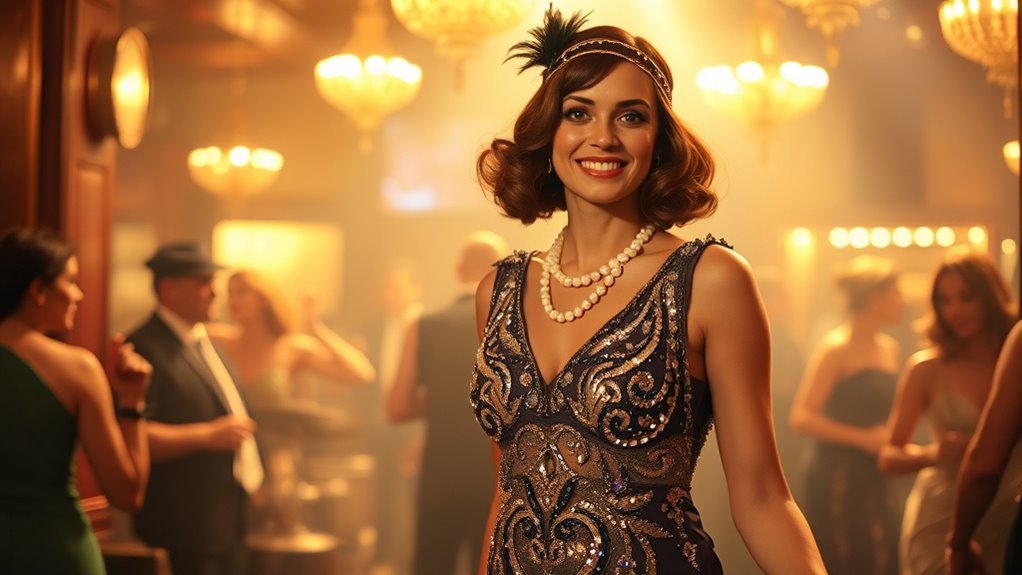

Flapper dresses symbolize the bold pursuit of independence and social change during the 1920s. They reflect women’s desire to break free from traditional norms, embracing shorter hems, loose fits, and embellishments that symbolize freedom. Paired with jazz music and speakeasies, these dresses embodied rebellion and self-expression. If you keep exploring, you’ll discover how these fashion choices powered a movement toward feminism and transformed societal roles forever.

Get your wardrobe favorites delivered free — and shop member deals
- Fast, free delivery on millions of items
- Access to Prime Big Deal Days deals on October 6–7
- Prime Video, Amazon Music and more included
Key Takeaways
- Flapper dresses symbolize women’s rebellion against traditional norms, embodying independence and self-expression during the 1920s.
- The style’s bold design reflected the era’s social shifts and women’s pursuit of freedom and equality.
- Jazz music and speakeasies fostered a cultural environment where women expressed their autonomy through fashion.
- Flapper dresses served as a visual declaration of feminism and the embrace of new social roles for women.
- The era’s fashion and music together empowered women to challenge societal constraints and redefine their identities.
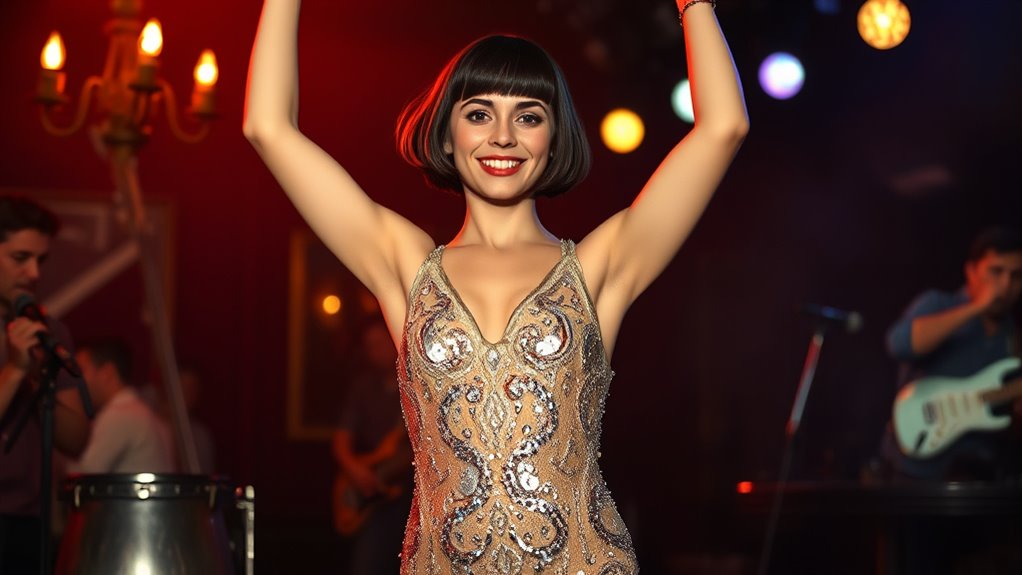
Flapper dresses symbolize the bold, liberated spirit of the 1920s, capturing the era’s excitement and changing social norms. When you see one, you’re witnessing more than just a style—you’re witnessing a statement of independence. During this dynamic decade, women embraced new freedoms, and fashion became a powerful expression of their evolving identity. The flapper dress, with its loose fit, shorter hemline, and shimmering embellishments, was revolutionary. It allowed women to move freely, dance effortlessly, and challenge traditional notions of femininity.
Flapper dresses embody 1920s independence, freedom, and the bold spirit of a transforming era.
Jazz music played a vital role in shaping the atmosphere of the 1920s, especially in the context of flapper culture. As you listen to lively jazz tunes, think about how they fueled the energy of dance halls and speakeasies. Jazz, with its spontaneous rhythms and improvisational spirit, embodied the rebellious and carefree attitude of the decade. It became the soundtrack for women who wanted to break free from societal constraints. The lively beats encouraged movement and self-expression, empowering women to dance in ways that defied convention and showcased their independence. Jazz and flapper dresses together created a vibrant cultural scene that celebrated freedom and individuality.
The Prohibition era, which lasted from 1920 to 1933, inadvertently contributed to the rise of the flapper lifestyle. With alcohol banned, people flocked to speakeasies—hidden bars where they could drink and socialize freely. As you imagine these secret gatherings, picture women dressed in their flapper dresses, mingling and dancing to jazz. The prohibition made these social spaces more daring and rebellious, reinforcing the idea that women were asserting their autonomy. Flapper dresses were perfect for this environment—they were stylish, daring, and practical enough to move quickly if needed. The dress became a symbol of defiance against restrictive social norms, highlighting how women were taking control of their lives despite the constraints of the era.
In essence, the flapper dress encapsulates a period of transformation. It’s more than fashion; it’s a declaration of independence, a reflection of the jazz-fueled energy, and a response to the social upheaval brought on by Prohibition. As you explore this iconic style, remember that each dress represents a movement toward feminism and freedom—an unapologetic celebration of women’s right to define themselves on their own terms during one of the most exciting times in history. Additionally, understanding the subconscious power during this era helps explain how fashion and cultural shifts were tools for women to express and reinforce their evolving identities.
As an affiliate, we earn on qualifying purchases.
Frequently Asked Questions
How Did Flapper Fashion Influence Later Women’s Clothing Styles?
You see, flapper fashion revolutionized women’s clothing by embracing artistic innovation and challenging traditional norms. It introduced shorter hemlines, looser fits, and bold accessories, making style more expressive and freeing. This cultural symbolism of independence influenced future styles, inspiring women to prioritize comfort and self-expression. As a result, later fashion evolved to include more daring and diverse choices, reflecting ongoing shifts toward individuality and empowerment in women’s fashion.
Were All Women in the 1920S Interested in Flapper Dresses?
You might think all women embraced flapper dresses, but social class and regional differences shaped their choices. While some women, especially in urban areas and higher social classes, enthusiastically adopted the style, others in rural or conservative communities preferred traditional attire. Not everyone saw flapper dresses as a symbol of freedom; for many, they represented a challenge to societal norms. Ultimately, preferences varied based on background, location, and personal beliefs.
Did Flapper Dresses Have Any Impact Outside the United States?
You might wonder if flapper dresses had an impact outside the US. They certainly did, as their style influenced international fashion, showcasing a bold, modern look. Cultural adoption spread these trends across Europe and beyond, inspiring new trends in women’s clothing worldwide. This global influence highlights how the flapper symbolized more than just American culture; it became a worldwide icon of change and liberation in fashion.
What Materials Were Commonly Used in Flapper Dresses?
You might be surprised, but flapper dresses often featured luxurious fabric textures like silk, chiffon, and satin, which added elegance and movement. They used sewing techniques that emphasized fluidity, such as intricate beadwork and delicate pleats. These materials and methods created the shimmering, carefree look that defined the era, making every dance feel like a celebration of newfound freedom. You can see how fabric choice truly brought the style to life.
How Did Flapper Dresses Challenge Traditional Gender Norms?
You see that flapper dresses challenge traditional gender norms by allowing more expressive gender expression, breaking away from societal expectations of modesty and femininity. Wearing shorter hemlines, looser fits, and bold accessories, you defy conventional ideas of femininity. These dresses empower you to embrace independence, assert individuality, and question societal norms, signaling a shift toward greater gender freedom and the desire for self-expression beyond traditional roles.
Conclusion
As you embrace the spirit of the 1920s flapper dress, remember it symbolized more than fashion—it was a statement of feminism and freedom. Imagine a young woman at a jazz club, dancing confidently in her fringed gown, breaking social norms and celebrating independence. That dress wasn’t just about style; it was about daring to challenge traditions and embrace your voice. Today, it reminds us that fashion can empower you to stand tall and assert your freedom.
Fall Picks
fall essentials
As an affiliate, we earn on qualifying purchases.