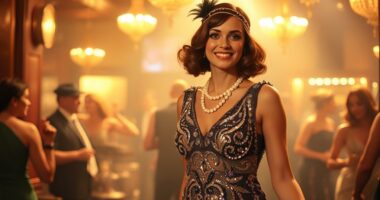
During WWII, rationing and fabric shortages pushed women to get creative with their fashion choices. You’d repurpose old clothes, mix and match pieces, and use accessories to refresh outfits without new purchases. Vintage styles reflected practicality and resourcefulness, while accessories like scarves and brooches became key fashion statements. This shift encouraged personal expression through clever details and adaptability. Keep exploring to discover more about how wartime fashion became a symbol of resilience and ingenuity.

Get your wardrobe favorites delivered free — and shop member deals
- Fast, free delivery on millions of items
- Access to Prime Big Deal Days deals on October 6–7
- Prime Video, Amazon Music and more included
Key Takeaways
- Fabric shortages and restrictions on luxury goods limited clothing options, encouraging women to adapt and repurpose garments.
- Vintage styles gained popularity as practical, resourceful fashion choices that extended clothing usability.
- Accessories like scarves, gloves, and jewelry became essential for personal expression and style enhancement within limited resources.
- Mixing, matching, and altering existing wardrobe pieces fostered versatility and creative self-expression.
- Fashion shifted from ostentation to subtle ingenuity, reflecting resilience and resourcefulness during wartime restrictions.

During World War II, rationing considerably impacted women’s fashion, forcing many to adapt their clothing choices to conserve scarce resources. With fabric shortages and restrictions on luxury goods, women found creative ways to maintain their sense of style while adhering to wartime limitations. Vintage styles gained popularity because they emphasized practicality and resourcefulness. Women repurposed old garments, turning worn-out dresses into new outfits or refashioning garments to extend their use. This approach not only saved fabric but also created unique, personalized looks that reflected ingenuity and resilience. As a result, vintage styles became symbols of the wartime spirit, blending functionality with a touch of elegance.
Wartime accessories also played a vital role in shaping women’s fashion during this period. Since fabric was scarce, accessories like hats, gloves, and jewelry became more prominent, allowing women to elevate simple outfits without using much material. Practical accessories like brooches and pins often served dual purposes, functioning as both decorative pieces and tools—such as a compact mirror or a functional badge. Scarves and headbands were popular because they could transform a basic hairstyle into something stylish, while also providing coverage and warmth. These wartime accessories weren’t just about fashion; they helped women express their individuality and morale during challenging times. Additionally, the use of accessories for versatility encouraged women to maximize their wardrobe options with fewer items, further demonstrating resourcefulness.
You learn to be resourceful, mixing and matching pieces to create versatile looks that could be worn multiple times. Because buying new clothes was often impossible or discouraged, women learned to love their existing wardrobe, accessorizing cleverly to make each outfit feel fresh. The emphasis shifted from ostentatious displays of wealth to subtle details that demonstrated creativity and pride. Thrift shopping became commonplace, and women often altered or customized clothing to suit their tastes. This spirit of innovation meant that even under restrictions, fashion remained a form of self-expression, with vintage styles and wartime accessories reflecting both practicality and personality.
As an affiliate, we earn on qualifying purchases.
Frequently Asked Questions
How Did Rationing Influence Men’s Fashion Trends During WWII?
During WWII, rationing influenced men’s fashion by making military uniforms more common in daily life, blending practicality with style. You notice that casual wear becomes more subdued and functional, often borrowing elements from military attire to conserve materials. Men adapt by choosing simple, durable clothing, and military-inspired designs gain popularity. This shift highlights how rationing pushed men towards utilitarian fashion, emphasizing comfort and resourcefulness over extravagance.
Were There Any Exclusive Fashion Items Available Despite Rationing?
You might think luxury accessories and limited edition garments disappeared during rationing, but some exclusive items still existed. Despite shortages, a few high-status women managed to acquire luxury accessories or limited edition garments, often through clever sourcing or by trading. These rare pieces symbolized status and individuality, proving that even in tough times, a touch of glamour persisted for those who could access them.
Did Wartime Fashion Impact Post-War Women’s Clothing Styles?
You notice that wartime fashion profoundly influenced post-war styles. Vintage accessories become popular, adding individuality to simpler wartime silhouettes. After the war, women embrace more relaxed, practical clothing inspired by rationing’s emphasis on functionality. This shift leads to the emergence of streamlined designs, reflecting a blend of nostalgia and modernity. As a result, wartime fashion leaves a lasting impact, shaping women’s clothing styles well into the post-war era.
How Did Fashion Designers Adapt to Rationing Restrictions?
Imagine you’re a fashion designer during WWII, facing fabric rationing. You adapt by embracing fabric recycling and costume creativity, transforming leftover materials into stylish garments. For example, designers like Christian Dior repurposed fabrics creatively, making new silhouettes with limited resources. This necessity pushed innovation, encouraging sustainable practices that influenced post-war fashion. You realize that restrictions sparked ingenuity, leading to unique styles rooted in resourcefulness and eco-consciousness.
Were There Regional Differences in Rationing’s Effect on Fashion?
You’ll notice regional variations in how rationing affected fashion, as local resources and cultural influences played a role. In some areas, you might see more utilitarian styles due to stricter restrictions, while others maintained traditional fashion elements. These differences reflect how local customs and available materials shaped women’s clothing choices, making regional influences a key factor in understanding WWII-era fashion adaptations across different communities.
Conclusion
As you step back in time, imagine the fabric of history woven into every stitch of a woman’s wardrobe. WWII rationing was like a master painter, transforming everyday clothing into a canvas of ingenuity and resilience. It’s a reminder that even in scarcity, women’s fashion blossomed like a resilient flower pushing through cracks in concrete. You see, limitations may bend the needle, but they can’t unravel the thread of creativity woven into history’s fabric.
Fall Picks
fall essentials
As an affiliate, we earn on qualifying purchases.