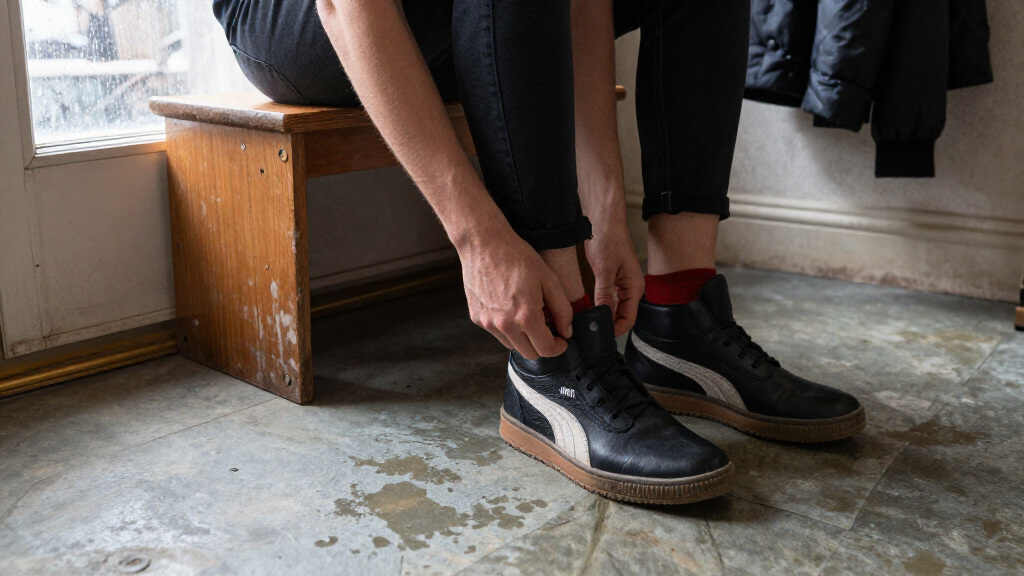

Searching for PUMA slip-on boots means choosing between two different kinds of footwear in this lineup: pull-on work boots with elastic side gores and a casual ankle boot with sneaker-inspired cushioning. I rank the Tanami Double Gore first for its combination of heat-, oil-, and slip-resistant outsole features and water-resistant construction. The second Tanami listing describes a similar work-ready package, with a stabilizing shank and scuff cap called out; the Mayra is the casual pick for buyers who care more about cushioning and recycled materials than jobsite protection.

Get your wardrobe favorites delivered free — and shop member deals
- Fast, free delivery on millions of items
- Access to Prime Big Deal Days deals on October 6–7
- Prime Video, Amazon Music and more included
The main tradeoff is clear: both Tanamis are designed around practical work features, but they have soft toes, so the supplied details do not establish impact protection from a safety toe. Mayra offers a more sneaker-like approach, yet its description does not claim the work protections specified for the Tanamis. I compare the options by how well their construction, entry style, and stated features suit the buyer’s intended use—not by treating every ankle boot as an equivalent work boot.
Key Takeaways
- The Tanami Double Gore models are the lineup’s true slip-on work boot picks, with elastic side panels and a six-inch shaft.
- Both Tanamis list an HRO outsole rated to 572°F, with oil, heat, and slip resistance; the product details also describe water resistance.
- The Tanamis have soft toes, so buyers who need impact protection should look for a boot with a clearly specified protective toe.
- The second Tanami listing specifically mentions a stabilizing shank, while the first explicitly lists a metal-free design and three standards.
- Mayra is the casual ankle-boot choice for SoftFoam+ cushioning and recycled materials, but it is not presented with the Tanami work-protection features.
| PUMA Men’s Tanami Double Gore 6-Inch Soft Toe Work Boot |  | Best Overall Slip-On Work Boot | Upper: 100% leather | Shaft: 6 inches | Toe: Soft toe | VIEW LATEST PRICE | See Our Full Breakdown |
| PUMA Men’s Tanami Double Gore 6-Inch Soft Toe Work Boot |  | Best for Buyers Who Want a Stabilizing Shank | Upper: 100% leather | Shaft: 6 inches | Toe: Soft toe | VIEW LATEST PRICE | See Our Full Breakdown |
| PUMA Women’s Mayra Ankle Boots |  | Best Casual Cushioned Ankle Boot | Upper: Leather | Height: Ankle | Shaft circumference: 9.4 inches | VIEW LATEST PRICE | See Our Full Breakdown |
| Puma slip-on boot | Upper | Sole | Shaft | Toe |
|---|---|---|---|---|
| PUMA Men’s Tanami Double Gore | 100% leather | PU and rubber | 6 inches | Soft toe |
| PUMA Men’s Tanami Double Gore | 100% leather | PU and rubber | 6 inches | Soft toe |
| PUMA Women’s Mayra Ankle Boots | Leather | Rubber midsole and outsole | — | — |
More Details on Our Top Picks
PUMA Men’s Tanami Double Gore 6-Inch Soft Toe Work Boot
This Tanami is the strongest all-around fit for a buyer specifically seeking a pull-on work boot. Its six-inch leather upper gives more coverage than the Mayra ankle boot, while elastic side panels make entry and removal simpler than laces. The listed oil-, heat-, and slip-resistant HRO outsole is rated for temperatures up to 572°F, and the description adds water resistance and electrical hazard protection. Together, those details make it the most work-oriented choice in this group.
Compared with the other Tanami listing, this version spells out a metal-free design and cites ASTM F2892-18 EH, ASTM F2913-19, and ASTM F3445-21. Those details can help a buyer compare stated requirements, though they do not replace checking the exact standards demanded by a workplace. The other Tanami calls out a stabilizing shank, which may be a deciding detail for someone prioritizing that feature. The available information does not establish a meaningful difference in fit or overall performance between these near-matching listings.
The important limitation is its soft toe. The provided specifications do not identify a protective toe cap, so this boot is not the one to choose when impact or compression protection is required. It also weighs in as a work-focused boot rather than a casual sneaker boot, and the listing supplies no customer review information. I would rank it first for stated slip-on work features, but only for jobs where its documented protection matches the site’s rules.
Pros:- Elastic side panels allow easy pull-on entry and removal.
- HRO rubber outsole is listed as oil-, heat-, and slip-resistant, with heat resistance up to 572°F.
- Water-resistant and metal-free construction is specified.
- Electrical hazard protection and three ASTM standards are listed.
Cons:- Soft toe does not provide stated impact protection.
- No customer review information is supplied.
- The listing does not provide fit guidance or a weight specification.
Best for: Workers who want a six-inch, elastic-gore work boot with stated water resistance, electrical hazard protection, and heat-, oil-, and slip-resistant outsole features, where a soft toe meets workplace requirements.
Not ideal for: Anyone required to wear a safety toe or needing confirmed impact protection; also a poor match for buyers seeking a light casual sneaker-style ankle boot.
- Upper:100% leather
- Shaft:6 inches
- Toe:Soft toe
- Entry:Elastic side panels
- Sole:PU and rubber
- Outsole:Oil-, heat-, and slip-resistant HRO rubber
- Heat resistance:Up to 572°F
- Protection:Water-resistant; electrical hazard protection; metal-free
- Standards:ASTM F2892-18 EH, ASTM F2913-19, ASTM F3445-21
Our verdict“I recommend this as the most complete slip-on work option here when its soft-toe design meets the buyer’s job requirements.”
PUMA Men’s Tanami Double Gore 6-Inch Soft Toe Work Boot
This second Tanami listing lands close to my top pick because it shares the main slip-on work-boot formula: a leather upper, elastic side gores, six-inch height, and soft toe. Its outsole is also described as oil-, heat-, and slip-resistant, with a rating up to 572°F, and the boot is listed as water-resistant with electrical hazard protection. For a buyer comparing the two Tanamis, the core use case looks much the same.
The distinction in the supplied details is that this version specifically names a stabilizing shank, alongside an extra-high scuff cap. Those are useful points of comparison for someone seeking underfoot structure and toe-area abrasion coverage. The first Tanami listing gives more explicit detail on its metal-free construction and lists ASTM F3445-21 in addition to the EH and slip-resistance standards. I would use those specification differences to narrow the choice against work requirements rather than assume one is universally more durable or comfortable.
As with the first Tanami, the soft toe is the key compromise. No impact protection is stated, so a job that mandates protective footwear calls for a different model unless its requirements explicitly allow this construction. Mayra is less suited to that work setting because its listed features center on cushioning and recycled content rather than jobsite resistance. This Tanami makes the most sense when its shank detail matters and the buyer has confirmed the soft-toe boot is permitted.
Pros:- Elastic side gores make the six-inch boot easier to put on and remove.
- The listing specifically identifies a stabilizing shank.
- HRO outsole is described as oil-, heat-, and slip-resistant up to 572°F.
- Water resistance, electrical hazard protection, and an extra-high scuff cap are listed.
Cons:- Soft toe has no stated impact protection.
- The listed standards are less extensive than those shown for the other Tanami listing.
- No customer review information is supplied.
Best for: A worker comparing pull-on work boots who values a specifically listed stabilizing shank and extra-high scuff cap, and whose job permits a soft toe.
Not ideal for: Buyers who need a clearly specified safety toe, or those who want casual everyday cushioning and a sneaker-like profile.
- Upper:100% leather
- Shaft:6 inches
- Toe:Soft toe
- Entry:Elastic side gores
- Sole:PU and rubber
- Outsole:Oil-, heat-, and slip-resistant HRO rubber
- Heat resistance:Up to 572°F
- Named features:Stabilizing shank; extra-high scuff cap
- Standards:ASTM F2892-18 EH; ASTM F2913-19 slip-resistance testing
Our verdict“Choose this Tanami over the near-identical sibling when the named stabilizing shank is the specification that matters to you.”
PUMA Women’s Mayra Ankle Boots
Mayra is the lineup’s casual alternative, not a work-boot substitute. Its ankle-height sneaker-boot shape, leather upper, rubber midsole and outsole, and SoftFoam+ sockliner point toward everyday wear where cushioning matters more than jobsite protection. Unlike either Tanami, it does not use elastic side gores in the supplied description, so I would not rank it as the best match for someone specifically seeking the quick on-and-off entry of a pull-on work boot.
Its strongest distinction is the combination of SoftFoam+ cushioning and recycled content: the upper uses at least 20% recycled material and the bottom at least 10%. That gives it a more casual, materials-conscious role than the Tanamis, whose details center on resistance and work features. Buyers who spend the day in a setting where a soft casual boot is suitable may prefer Mayra’s sneaker-inspired direction; buyers exposed to hot surfaces, oils, or workplace slip hazards should look to the Tanami specifications instead.
The tradeoff is the absence of stated work protections. The provided details do not list electrical hazard protection, water resistance, heat resistance, or slip-resistance testing, and they do not identify a protective toe. That does not establish how the boot performs in every condition, but it means I cannot recommend it for a work requirement based on this listing. Mayra earns its place as the most comfort-oriented casual option here, while the Tanamis remain the clear choices for the roundup’s slip-on workwear angle.
Pros:- SoftFoam+ sockliner provides a cushioning feature absent from the Tanami listings.
- Rubber midsole and outsole are specified.
- The upper contains at least 20% recycled material.
- The bottom contains at least 10% recycled material.
Cons:- The description does not list worksite resistance or electrical hazard protection.
- No protective toe is specified.
- The listing does not describe elastic side panels or another pull-on closure.
Best for: Women seeking a casual ankle boot with a sneaker-inspired feel, a SoftFoam+ sockliner, and specified recycled content.
Not ideal for: Workers who need documented heat, oil, slip, water, or electrical hazard protection, or anyone specifically shopping for elastic-gore slip-on entry.
- Upper:Leather
- Height:Ankle
- Shaft circumference:9.4 inches
- Cushioning:SoftFoam+ sockliner
- Sole:Rubber midsole and outsole
- Upper recycled content:At least 20%
- Bottom recycled content:At least 10%
Our verdict“Mayra is the right pick for casual cushioned ankle-boot wear, but its listed features do not make it a Tanami alternative for work protection.”

How We Picked
I compared these three listings against the specific promise of PUMA slip-on boots: easy entry, boot coverage, and a useful distinction between work and everyday wear. The Tanami models lead because their elastic side gores support pull-on use and their descriptions specify outsole resistance, water resistance, and electrical hazard protection. Mayra stays in the roundup as a different kind of option: it has ankle coverage and cushioning, but the available details do not describe it as a work boot or claim equivalent protective features.
I gave weight to features that change a buyer’s decision. That includes the Tanamis’ soft-toe construction, since it does not establish impact protection; the 572°F outsole rating, which is a specific heat-resistance claim rather than a general durability promise; and the different secondary features named in each Tanami listing. One listing provides more explicit standards and metal-free details, while the other calls out a stabilizing shank. I treat them as closely related options and avoid claiming that the descriptions prove a difference in fit or performance.
The ranking reflects suitability for the title’s slip-on focus and the evidence supplied for each product. It does not rely on customer feedback or hands-on testing, neither of which is provided here. Buyers should check sizing, workplace requirements, and the complete manufacturer information before choosing; a listed feature is useful only when it matches the demands of the job or daily routine.
| Puma slip-on boot | Entry | Sole | Standards |
|---|---|---|---|
| PUMA Men’s Tanami Double Gore | Elastic side panels | PU and rubber | ASTM F2892-18 EH, ASTM F2913-19, ASTM F3445-21 |
| PUMA Men’s Tanami Double Gore | Elastic side gores | PU and rubber | ASTM F2892-18 EH; ASTM F2913-19 slip-resistance testing |
| PUMA Women’s Mayra Ankle Boots | — | Rubber midsole and outsole | — |
Factors to Consider When Choosing Best Puma Slip-on Boots
I would start by deciding whether you need a work boot or a casual ankle boot. The products share a boot-like shape, but their listed purposes and features differ sharply.Decide whether soft-toe construction meets your job requirements
Both Tanamis have a soft toe. Their descriptions do not claim impact or compression protection, so the elastic-gore convenience should not outweigh a job’s protective-toe rules. Check the requirements for your workplace and the manufacturer’s full product documentation before choosing. Mayra also has no protective toe listed, and its description positions it as a casual ankle boot.
Match outsole claims to the surfaces you work on
The Tanamis list an HRO outsole rated up to 572°F, plus oil and slip resistance. Those claims distinguish them from Mayra, whose supplied specifications list a rubber sole but no equivalent resistance details. A rating does not tell me every aspect of a boot’s performance on a particular floor, so consider the actual surfaces and hazards you encounter and check applicable workplace standards.
Compare the Tanami listings by their named details
The two work boots share a great deal, so I would focus on the details that differ in the descriptions. The first Tanami specifies metal-free construction and lists three ASTM standards. The second specifically calls out a stabilizing shank and extra-high scuff cap. Confirm which features and certifications you need; the listings alone do not establish a fit or performance advantage for either version.
Choose the right kind of easy entry
Elastic side panels or gores make the Tanamis the clear pull-on options in this comparison. Mayra is an ankle boot, but the available description does not say it has a slip-on closure. If speed at entry is the priority, the Tanamis match the request more directly. If everyday cushioning matters more, Mayra’s SoftFoam+ sockliner gives it a different role.
Treat cushioning and recycled content as casual-use differentiators
Mayra names a cushioning sockliner and recycled material in both upper and bottom, making it the distinct casual pick. Neither Tanami listing provides a cushioning technology or recycled-content figure in the supplied specs. Buyers who spend most of their time on casual routes may value Mayra’s comfort-focused profile, while those choosing footwear around listed work hazards should prioritize the Tanami details and verify suitability for their job.
Frequently Asked Questions
Which option is the best PUMA slip-on boot for work?
I rank the PUMA Men’s Tanami Double Gore first for work because its listing combines elastic side panels with stated water resistance, electrical hazard protection, and a heat-, oil-, and slip-resistant outsole. The second Tanami is also a strong match and specifically names a stabilizing shank. Both have soft toes, so neither should be treated as impact-protective without further documentation.
Are the Tanami Double Gore boots safety-toe boots?
The supplied specifications identify both Tanami models as soft toe and do not state that they have a safety toe or provide impact protection. Electrical hazard protection is a separate feature and does not answer the protective-toe question. If your job requires a safety toe, check the manufacturer’s complete documentation and choose a model that explicitly meets the required toe-protection standard.
What is the difference between the two Tanami listings?
They share the six-inch leather upper, soft toe, elastic side entry, water resistance, and HRO outsole claims. The first listing specifies a metal-free design and cites three ASTM standards, while the second specifically lists a stabilizing shank and extra-high scuff cap. The information provided does not establish a difference in fit, so compare the exact specifications you need before deciding.
Is the PUMA Mayra a work boot?
The Mayra listing describes a casual ankle boot with a SoftFoam+ sockliner, rubber midsole and outsole, and recycled materials. It does not list the Tanamis’ heat-, oil-, and slip-resistance claims, water resistance, or electrical hazard protection. I would choose it for casual wear rather than rely on it for a jobsite requirement that needs documented protective features.
Which boot is the most cushioning-focused?
PUMA Women’s Mayra is the only option in this comparison that specifically names a cushioning technology: the SoftFoam+ sockliner. That makes it the clearest choice for a buyer focused on a sneaker-like casual ankle boot. The Tanamis are described around work features and easy pull-on entry, with no cushioning technology listed in their supplied specifications.
Conclusion
For a buyer whose priority is a slip-on work boot, I would start with the first Tanami: it has the broadest set of explicitly listed details, including metal-free construction and three ASTM standards. Choose the second Tanami if its named stabilizing shank and scuff cap better match your needs. In either case, verify that a soft toe is allowed for your work.
If you want a casual women’s ankle boot with SoftFoam+ cushioning and specified recycled content, Mayra is the distinct choice. I would not select it based on the Tanamis’ work-protection claims, which are not listed for Mayra. The right pick depends on whether your day calls for documented work features and elastic-gore entry or a more casual, cushioning-focused boot.
Halloween Picks
halloween
As an affiliate, we earn on qualifying purchases.