
Digital try-on tools do a good job of providing realistic previews that help you visualize how clothes and accessories will look on your body. They boost confidence and make shopping more interactive. However, they aren’t perfect—limitations in technology and hardware can affect accuracy, making some try-ons less realistic or precise. If you want to discover how these tools are evolving and what to expect in the future, keep exploring this topic further.
Key Takeaways
- Digital try-on tools accurately simulate clothing fit and appearance, enhancing customer confidence and decision-making.
- They offer advanced visualization features like zoom and rotate, improving detail viewing and user engagement.
- Limitations in current AR technology can reduce realism, leading to potential user dissatisfaction and misaligned expectations.
- Hardware constraints and software algorithms impact the accuracy and quality of virtual try-ons.
- Ongoing technological advancements, such as machine learning, promise improved realism and more immersive experiences in the future.
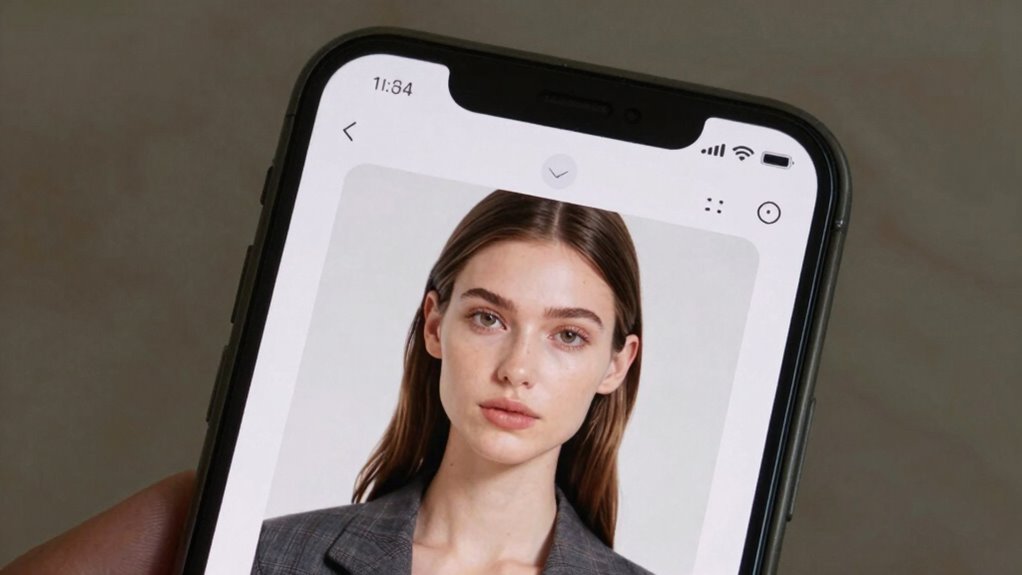
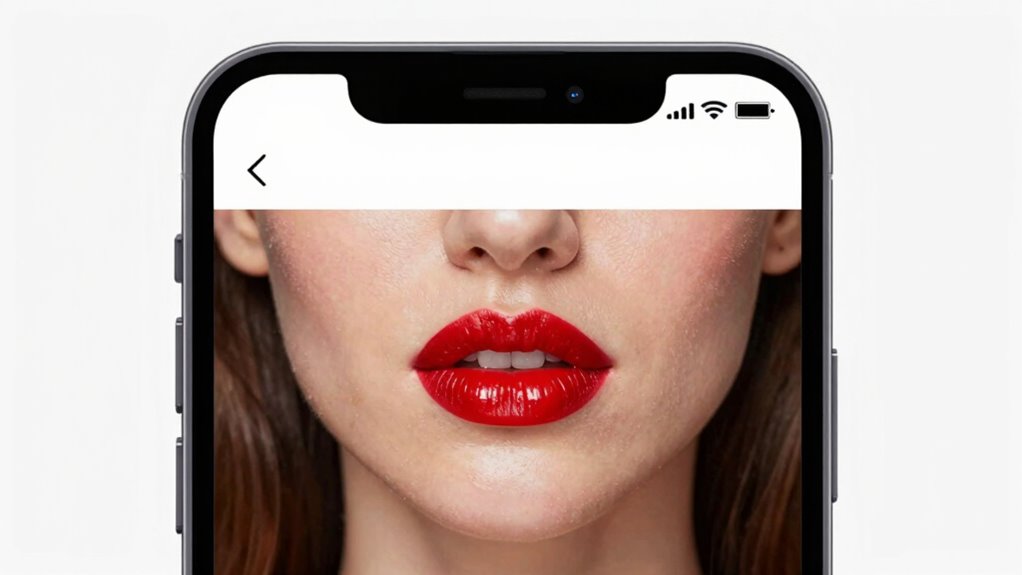
One thing they get right is the realism of the virtual try-on. When augmented reality is implemented effectively, it accurately represents how a piece of clothing or accessory will look on you, considering your body shape, skin tone, and proportions. This helps you visualize the product better than traditional photos or videos, which often lack context. The real-time feedback and immediate visual representation boost your confidence, giving you a clearer sense of whether the item fits your style and preferences. Additionally, many platforms offer features like zoom, rotate, and different lighting conditions, further enhancing the user experience by allowing you to see details and variations. This level of realism encourages you to spend more time exploring options and reduces the uncertainty that often accompanies online shopping. However, despite these advances, some augmented reality limitations can hinder the overall accuracy and satisfaction with digital try-on tools. Understanding the technological constraints involved can help set realistic expectations for users and developers alike. Recognizing these limitations is important as hardware capabilities continue to evolve, potentially improving future experiences. Moreover, ongoing improvements in software algorithms can help address some of these current challenges, making virtual try-ons more precise over time. For example, advancements in machine learning are increasingly enabling more accurate body and item fitting, which could significantly enhance realism.
virtual fitting room clothing try-on
As an affiliate, we earn on qualifying purchases.
As an affiliate, we earn on qualifying purchases.
Frequently Asked Questions
How Accurate Are Digital Try-On Tools Compared to Real-Life Fitting?
Digital try-on tools offer a decent virtual fit, but they’re not perfectly accurate compared to real-life fitting. You might notice some discrepancies in size or how the item drapes on your body. Color accuracy can also be off due to screen calibration, so the product may look different online than in person. Overall, these tools give a helpful preview, but actual fitting remains essential for the best choice.
Can Digital Try-On Tools Work With All Skin Tones?
Imagine a painter with a palette as diverse as your skin tones—that’s how digital try-on tools approach color matching. They can work with all skin tones, thanks to advanced skin tone calibration algorithms that guarantee inclusive color matching accuracy. However, some tools may struggle with very deep or very light tones if their databases aren’t thorough enough. Overall, they aim to reflect real-life diversity, but continuous updates are essential for true inclusivity.
Do Digital Try-On Tools Collect Personal Data?
Yes, digital try-on tools do collect personal data, like images and facial features, which can raise privacy concerns. You should be aware of how your data is stored and used, so check the platform’s privacy policies. Data security is essential to protect your information from breaches. Always opt for trusted tools that prioritize privacy and give you control over your personal data to prevent misuse or unauthorized access.
How Do Digital Try-On Tools Handle Different Body Sizes and Shapes?
A well-designed digital try-on tool is like a chameleon, adapting seamlessly to different body shapes and sizes. You’re provided with body shape customization options, ensuring the fit feels personalized. These tools use size variability adaptation technology to accurately reflect your unique proportions. This approach allows you to visualize how clothing looks on your specific body, making the experience more inclusive, confident, and satisfying.
Are Digital Try-On Tools Accessible for Users With Disabilities?
Digital try-on tools are increasingly accessible for users with disabilities through the integration of assistive technology and inclusive user interface design. You can navigate these tools using screen readers, voice commands, or alternative input devices, making the experience seamless. Developers focus on clear, simple interfaces and compatibility with assistive tech, ensuring that users with varied abilities can try on clothing virtually without frustration or barriers.
Conclusion
Digital try-on tools are like your trusty mirror—reflecting styles with a splash of magic, yet sometimes distorting the view. While they bring your favorite looks to life with a flick of a virtual wand, they still stumble over the details, leaving you to wonder if reality matches the screen. Embrace their potential, but remember, they’re a sketch—not the masterpiece. With patience and a keen eye, you’ll navigate this digital wardrobe and find your perfect fit.