When deciphering outlet store tags, you’ll notice that the original prices are often inflated to exaggerate discounts. Retailers use these high, sometimes unrealistic, prices to make deals look more attractive. To find genuine savings, compare these prices with typical retail prices for the same item. Recognizing marketing tactics like inflated original prices helps you see through the illusions. Keep exploring, and you’ll gain even more tips to identify true deals behind those tags.
Key Takeaways
- Recognize that inflated original prices on tags often exaggerate discounts and may not reflect actual retail value.
- Research standard retail prices to compare and determine genuine savings from outlet deals.
- Pay attention to labels like “sample,” “irregular,” or “seasonal,” which can affect the original price and perceived value.
- Understand that marked-up original prices are a marketing tactic designed to make discounts seem more attractive.
- Use pricing knowledge and comparison to evaluate whether outlet discounts are truly beneficial or just marketing tricks.
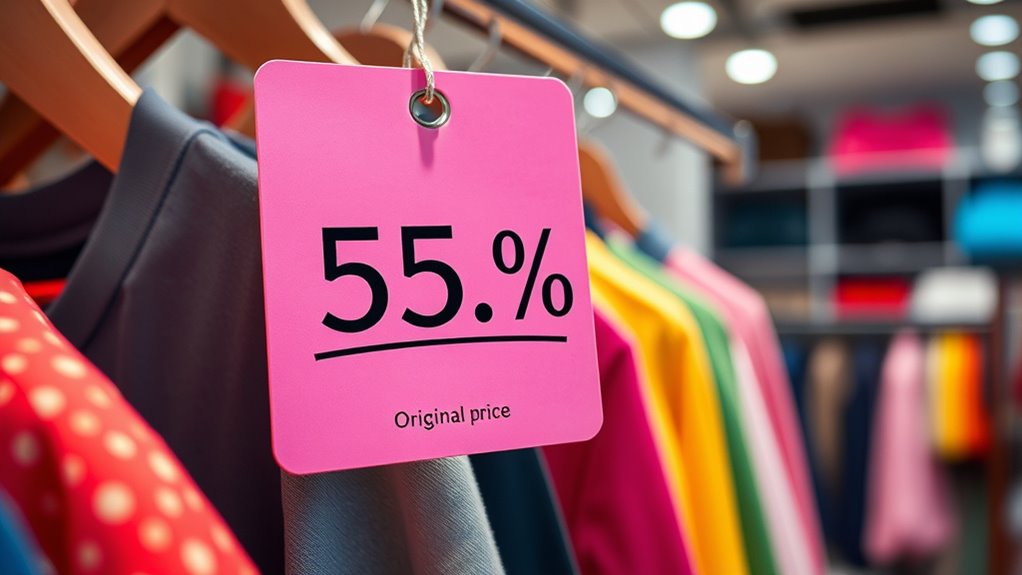
Have you ever wondered how outlet store tags help you identify real deals? It’s a great question, especially when you’re trying to determine whether those discounted prices truly reflect the original value of designer labels. Outlet stores often use tags as a way to communicate savings, but understanding what these tags mean requires some insight into how pricing strategies work in these settings. Retailers frequently employ specific tactics to make their deals look more appealing, which can sometimes be misleading if you’re not familiar with the usual pricing patterns.
When you see tags in outlet stores, they often display two prices: the original price and the sale price. This comparison is key to understanding the real deal. However, the original price listed might not always be the manufacturer’s suggested retail price (MSRP). Instead, it could be a higher, inflated figure meant to exaggerate the discount. This is part of a common pricing strategy retailers use to make the savings seem more significant. Some stores might mark up the original price just enough to create a compelling difference once discounted. So, a designer label with a tag showing a 50% reduction may not necessarily mean you’re getting a steal if the original was artificially inflated.
Another thing to keep in mind is that outlet store tags often reflect the retailer’s own pricing strategies rather than the actual retail value of the product. For example, luxury brands often have a set retail price, but outlet stores might list a higher “original” price to make discounts look more substantial. This tactic is designed to attract bargain hunters who are *enthusiastic* to score designer labels at a fraction of the cost. To see through this, it helps to research the typical retail prices of items you’re interested in beforehand. By doing so, you get a clearer sense of whether the outlet price is genuinely a good deal or just a cleverly marketed discount. Recognizing pricing tactics can further sharpen your ability to evaluate discounts accurately.
Additionally, some outlet store tags include terms like “sample,” “irregular,” or “seasonal,” which can also impact the perceived value. These labels indicate that the item might have minor flaws or was produced for a specific season, affecting its original price. Knowing this, you can better judge whether the discounted price is fair or if you’re paying more than the item’s true worth. Ultimately, understanding the nuances behind outlet store tags—especially the way they incorporate designer labels and pricing strategies—empowers you to make smarter purchasing decisions. It’s all about being a savvy shopper who recognizes the difference between genuine savings and marketing tricks.
Frequently Asked Questions
How Can I Verify the Authenticity of Outlet Store Tags?
To verify the authenticity of outlet store tags, start with a thorough price comparison. Check if the listed price aligns with the brand’s standard retail prices. Genuine tags often include specific branding details and quality printing. Be cautious of inconsistent fonts or misspellings. If the price seems too good to be true, it might signal a fake. Always trust reputable sources and compare tags with official brand packaging to guarantee brand authenticity.
Are There Regional Differences in Outlet Store Pricing Strategies?
Regional pricing varies based on store location, so you might notice differences in outlet store prices depending on where you shop. Store location influences how retailers set prices, considering local demand, taxes, and competition. You should compare prices across different regions to get a sense of the typical pricing strategy. Keep in mind that regional pricing strategies aim to optimize sales and profitability, so prices can fluctuate considerably between areas.
Do Outlet Store Tags Include Information on Seasonal Discounts?
You might notice outlet store tags sometimes indicate seasonal discounts, but they often don’t show the full picture. Retailers use seasonal discounting to create price fluctuation, making it tricky to determine the original price. Instead of relying solely on tags, you should compare prices across different seasons and look for patterns. This helps you understand true value, especially during promotional periods when discounts are most significant.
Can Outlet Store Tags Help Identify Counterfeit Products?
You might think it’s a tall order, but outlet store tags can sometimes help you spot counterfeits. Look closely at the tag design—authentic brands maintain consistent, high-quality labels, while fakes often have sloppy or mismatched details. Brand authenticity hinges on these subtle cues. While tags alone aren’t foolproof, paying attention to design inconsistencies can steer you clear of fake products and guarantee you’re buying genuine items.
How Often Do Outlet Store Prices Change Compared to Regular Retail?
You might notice that outlet store prices fluctuate more often than regular retail, mainly due to pricing fluctuations and promotional cycles. Outlet stores often adjust prices to clear inventory and attract customers, so discounts can change frequently. In contrast, regular retail tends to have more stable pricing, with fewer fluctuations. Keep an eye on these cycles to snag the best deals and better understand when prices are at their lowest.
Conclusion
Now that you know how to decode outlet store tags, shopping smarter becomes second nature. You’ll spot genuine deals faster than a lightning bolt, saving you a fortune and avoiding the trap of fake discounts. With this knowledge, every trip feels like uncovering hidden treasure — and trust me, your wardrobe will thank you. So go ahead, confidently navigate those tags and snag the most incredible deals out there. Happy shopping, savvy shopper!