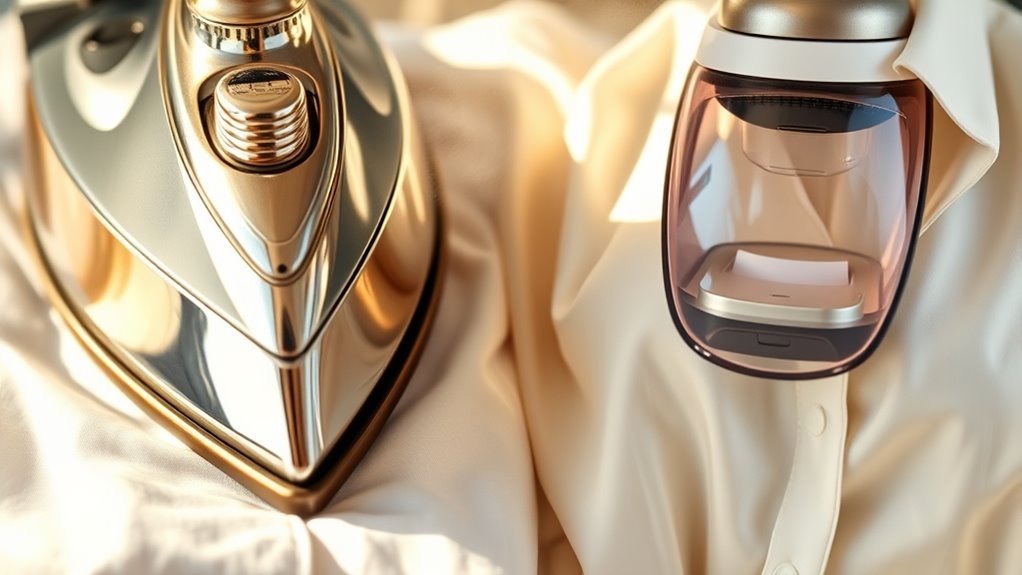

When choosing between steam and an iron, consider your fabric type and safety needs. Steam is gentler, making it ideal for delicate materials like silk, lace, or chiffon, as it penetrates fibers evenly without risking burns or shiny marks. An iron offers a crisp finish suitable for sturdy fabrics but can damage sensitive textiles if used improperly. Understanding these differences helps you select the best tool for each fabric, and if you keep exploring, you’ll discover more tips to protect your clothes and save energy.
Key Takeaways
- Use steam for delicate fabrics like silk, chiffon, and lace to minimize damage and achieve gentle smoothing.
- Choose an iron for sturdy, heavy fabrics that require crisp pressing and a permanent finish.
- Steam operates at lower temperatures, making it safer and more energy-efficient for frequent or quick touch-ups.
- Ironing provides a more precise, lasting press suitable for formal or professional clothing.
- Consider fabric type and safety needs to select the most appropriate tool, reducing garment damage and energy use.

Are you wondering whether to use steam or an iron for your clothes? Deciding between the two depends on the fabric you’re working with and your priorities, like fabric safety and energy efficiency. Both tools serve their purpose, but understanding their differences helps you make smarter choices that protect your clothes and save energy.
Choosing between steam and an iron depends on fabric type and priorities like safety and energy efficiency.
When it comes to fabric safety, steam is often gentler on delicate fabrics like silk, chiffon, or lace. The moist heat penetrates fibers more evenly, reducing the risk of scorching or burning fragile materials. Ironing directly with a heated plate can sometimes cause shiny marks or burns on sensitive fabrics, especially if the temperature isn’t perfectly adjusted. With steam, you can often set a lower heat level, giving you a safer, more controlled way to smooth out delicate textiles without damaging them. That makes steam the better option for ensuring your fabrics stay in good condition over time.
Energy efficiency is another key factor in your choice. Using an iron typically consumes more energy because it heats up a solid metal plate to a high temperature and maintains that heat throughout the ironing process. Plus, if you’re ironing large loads or thick fabrics, the energy drain increases. Steamers, especially modern ones, tend to be more energy-efficient because they generate steam at lower temperatures and often have shorter warm-up times. If you’re aiming to cut down on electricity use, a steamer might be the better choice, especially for quick touch-ups or for working on multiple delicate garments without constantly adjusting the heat. Additionally, understanding the security measures involved in modern payment processing can help safeguard your transactions when purchasing these tools online.
Frequently Asked Questions
Can Steamers Damage Delicate Fabrics Like Silk?
You might wonder if steamers can damage delicate fabrics like silk. Generally, steamers are safe because they use lower heat, which reduces the risk of damage. However, for fabric safety, always keep the steamer at a safe distance and avoid direct contact with the fabric. Be mindful of heat sensitivity, and test on a small area first. Proper technique helps you preserve your delicate fabrics while removing wrinkles effectively.
Which Tool Is More Energy-Efficient for Daily Use?
Picture yourself in a busy morning routine, choosing between tools. For daily use, a steamer often consumes less energy, thanks to its quick heat-up and lower power draw. It’s more power-efficient when you need fast, gentle touch-ups. An iron, while effective for crispness, typically uses more energy due to higher heat requirements. So, for energy-conscious choices, a steamer helps you save on energy consumption while still keeping your clothes fresh.
How Long Does It Take to Heat an Iron Versus a Steamer?
When comparing heating times, a typical iron heats up in about 2-5 minutes, depending on its temperature control features. Steamers usually heat faster, often within 1-3 minutes, making them more convenient for quick touch-ups. Your choice depends on how quickly you need to get started and the level of temperature control you prefer, with steamers offering faster heat-up times and easier adjustments.
Are There Safety Concerns With Using Steamers on Certain Materials?
While steamers are gentle, you should still watch out for safety concerns. Some fabrics, like silk or polyester, can burn or get damaged if exposed to excessive heat or prolonged steam. Always verify proper electrical safety by inspecting cords and outlets. Be cautious with delicate materials to prevent fabric burns, and avoid using steamers on fabrics with embellishments or sensitive finishes, as they might weaken or ruin the material.
Can Steamers Replace Traditional Irons Entirely?
You might wonder if steamers can fully replace traditional irons. While steamers offer great steaming versatility and allow for gentle fabric flexibility, they may not handle stubborn wrinkles or precise creases as effectively. For delicate fabrics, steamers are ideal, but for crisp, professional-looking results, irons still excel. So, consider your needs—steamers complement, but don’t entirely replace, irons depending on the fabric and desired finish.
Conclusion
Think of your fabrics as characters in a story—each one needs the right hero to bring out its best. The iron is your steadfast knight, tackling stubborn wrinkles with precision. Meanwhile, steam is your gentle wizard, softening and smoothing with a whisper. By choosing the right tool, you’re guiding your wardrobe’s narrative toward flawless style. So, pick your hero wisely and let your clothes tell their best story every day.