In modern luxury, choosing between bespoke and made-to-measure tailoring affects the level of craftsmanship, personalization, and exclusivity you get. Bespoke offers full customization with handwork, unique materials, and the perfect fit, but it’s more costly and time-consuming. Made-to-measure provides a high-quality, streamlined experience with adjustments based on standard patterns. If you want to explore how each option aligns with your style and expectations, you’ll find more insights ahead.
Key Takeaways
- Bespoke offers full customization with handcraftsmanship, making each piece uniquely tailored, while made-to-measure adjusts pre-existing patterns for a precise fit.
- Bespoke is more labor-intensive, time-consuming, and costly, emphasizing tradition and exclusivity, whereas made-to-measure provides a quicker, more accessible luxury option.
- Both cater to personal style, but bespoke delivers a highly personalized, one-of-a-kind garment, while made-to-measure offers a high-quality fit with less individual customization.
- In modern luxury, bespoke maintains its status as a symbol of craftsmanship and tradition, whereas made-to-measure balances quality with practicality and efficiency.
- The choice depends on individual priorities: full customization and craftsmanship for bespoke, or convenience and a refined fit for made-to-measure.
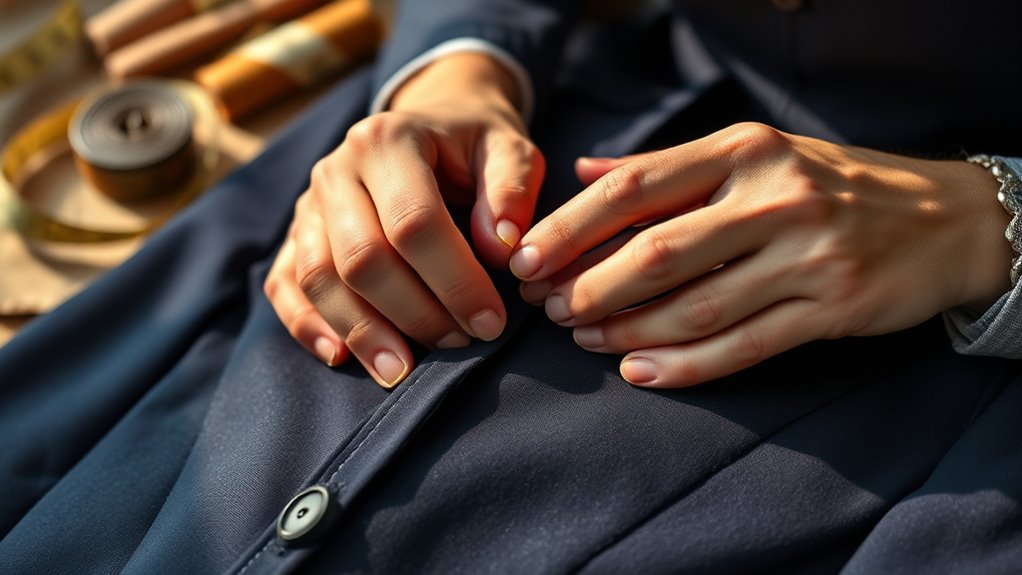
When choosing between bespoke and made-to-measure clothing, understanding their key differences can help you make an informed decision. Both options fall under the umbrella of luxury customization, but they cater to different expectations and levels of craftsmanship rooted in tailoring tradition. Bespoke clothing is the epitome of personalized luxury; it’s crafted entirely from scratch, often starting with a detailed consultation where your measurements, style preferences, and fabric choices are considered. Every detail is tailored specifically to your body and taste, making each piece unique. This process involves multiple fittings, allowing adjustments at every stage to ensure a perfect fit. With bespoke, you’re engaging in a centuries-old tailoring tradition that emphasizes handwork, quality materials, and meticulous craftsmanship. It’s a labor-intensive process that results in a garment you’ll likely cherish for years because it’s made precisely for you, reflecting your personal style and fit. Additionally, bespoke tailoring often incorporates aesthetic elements that enhance the overall elegance and individuality of the garment.
In contrast, made-to-measure clothing begins with a pre-existing pattern that’s adjusted to your measurements. While it also offers a level of luxury customization, it’s generally faster and less costly than bespoke. The process involves selecting a design from a range of options, then tailoring those options to your size. The fit is refined through a few fittings, but because the pattern is based on a standard template, it may not achieve the same level of precision or personal flair as bespoke. Made-to-measure suits and shirts are popular among those who desire a close fit without the extensive time and expense of bespoke tailoring. They still rely on high-quality fabrics and craftsmanship, but the process is more streamlined, making it accessible for a broader audience seeking luxury with practicality.
Ultimately, your choice depends on how much you value tradition, personalization, and craftsmanship versus convenience and cost. If you’re after a piece that embodies true tailoring tradition and offers complete luxury customization, bespoke is the way to go. It’s about investing in a garment that’s crafted entirely for you, reflecting your individual style and ensuring the perfect fit down to the finest detail. On the other hand, if you prefer a garment that’s quickly tailored to your measurements with a slightly less personalized touch, made-to-measure provides a luxurious yet more efficient solution. Both options elevate your wardrobe, but they do so at different levels of commitment and craftsmanship.
Frequently Asked Questions
How Long Does the Bespoke Tailoring Process Typically Take?
When you ask about the bespoke tailoring process duration, expect a timeline of about 4 to 8 weeks. During this time, you’ll attend multiple fitting appointment durations, which are essential for perfecting your suit. Tailoring timeline expectations vary based on complexity and craftsmanship, so be prepared for a detailed process. You’ll find that patience results in a truly personalized, high-quality garment that fits you perfectly, reflecting expert craftsmanship.
What Materials Are Commonly Used in Made-To-Measure Garments?
Like a painter choosing their palette, you select fabrics that balance durability and elegance for made-to-measure garments. Common materials include wool, known for its resilience; cotton, valued for comfort; and linen, perfect for breathability. You might also opt for silk for luxury or blends that enhance fabric durability. Your material choices reflect your style and needs, ensuring each piece offers the perfect mix of quality and fit.
Can Bespoke Tailoring Accommodate Complex Design Requests?
Bespoke tailoring offers remarkable flexibility, allowing you to accommodate complex design requests with ease. You can work closely with your tailor to customize every detail, from intricate patterns to unique fabric combinations. This level of tailoring flexibility guarantees your garment perfectly reflects your vision, no matter how complex the design. So, if you have specific, elaborate ideas, bespoke tailoring is your best choice to bring them to life with precision.
How Do Costs Compare Between Bespoke and Made-To-Measure Options?
When comparing costs, you’ll notice a clear pricing difference between bespoke and made-to-measure options. Bespoke tailoring usually costs more due to its extensive customization and craftsmanship, offering higher value for personalized details. Made-to-measure provides a more affordable alternative with quicker turnaround times, but it may lack the same level of exclusivity. Consider your priorities: if you seek ultimate customization and quality, bespoke offers better value despite the higher price.
What Are the Environmental Impacts of Bespoke Versus Made-To-Measure Production?
While it might seem that all luxury production is eco-friendly, your choices reveal the truth. Made-to-measure often uses fewer resources, reducing its carbon footprint, especially with sustainable sourcing. Bespoke, with its meticulous craftsmanship, can generate more waste and emissions. By choosing made-to-measure, you support a more sustainable approach, minimizing environmental impact. Your decision can align luxury with responsibility, making a subtle yet meaningful difference for the planet.
Conclusion
So, next time you choose a tailor, remember that bespoke isn’t just a label—it’s a craft rooted in tradition, offering unmatched personalization. Made-to-measure, while more accessible, still delivers a tailored feel. Some say modern luxury favors convenience over craftsmanship, but true elegance lies in knowing the story behind your clothing. Perhaps, the real secret is that the finest pieces blend timeless artistry with your unique style, proving that luxury is still very much about authenticity.